Concrete4U | Concrete Admixtures, Tools, and Production Machines

Manual Concrete Pump Boom
PRODUCT PARAMETERS
Description
Overview of Manual Concrete Pump Boom
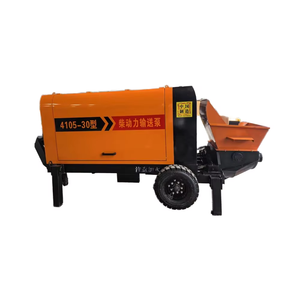
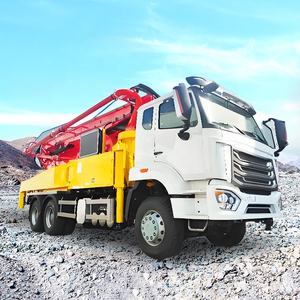
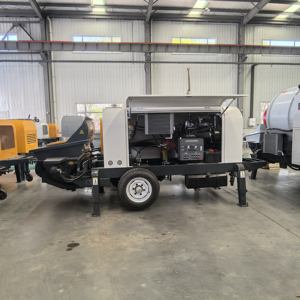
Manual Concrete Pump Boom offers excellent mobility and reach for mid-size projects and residential construction. For large-scale commercial and infrastructure work, we provide robust Boom Pumps with multi-section articulating arms that place concrete precisely at high volumes over significant horizontal and vertical distances. We also offer compact and agile Line Pumps for smaller jobs, renovations, and sites with limited access. Each pump in our lineup is built with powerful hydraulic systems and engineered to handle a wide range of mix designs reliably. This portfolio provides contractors with the precise tools to place concrete faster, farther, and more efficiently than traditional methods, ensuring optimal placement and superior finished quality.
Features of Manual Concrete Pump Boom
1. High-Efficiency Placement and Unmatched Reach:
The core feature of our concrete pumps is their ability to transport concrete rapidly over long distances and heights. This is achieved through high-output hydraulic systems and robust placing booms or pipeline systems. The direct benefit is unparalleled job site efficiency; concrete can be placed precisely where it is needed, directly from the truck, eliminating the need for costly and time-consuming secondary handling with cranes and buggies. This allows for faster cycle times, continuous pours for superior structural integrity, and access to challenging locations like deep foundations or high-rise structures, dramatically accelerating project timelines.
2. Robust Reliability and Reduced Labor Intensity:
Our pumps are built with durable components and simple, serviceable designs to withstand the harsh environment of a construction site. This engineering focus on reliability translates into the benefit of minimized downtime and consistent performance pour after pour. Furthermore, by mechanizing the concrete placement process, a single pump operation significantly reduces the manual labor required. This leads to substantial savings on labor costs, mitigates the physical strain on workers, and enhances overall site safety by reducing crew exposure to heavy lifting and repetitive tasks.
3. Versatility and Enhanced Concrete Quality:
The versatility of our product line, from massive boom pumps to nimble line pumps, ensures there is an optimal solution for any project scale and site constraint. This feature provides the benefit of maximum job site adaptability. Additionally, the controlled, continuous placement achieved by pumping minimizes the risk of concrete segregation and cold joints. This results in a more uniform, denser, and higher-quality finished concrete structure with improved durability and surface finish, reducing the potential for future defects.

Specifications of Manual Concrete Pump Boom
Here are the specifications for a manual concrete pump boom. This equipment moves wet concrete to hard-to-reach spots on construction sites. Operators control the boom manually using levers. The boom extends and bends to place concrete exactly where needed.
The boom length typically ranges from 10 meters to 20 meters. Shorter booms work well for smaller jobs like house foundations. Longer booms reach higher floors or deeper trenches. Each boom section connects with strong hinges. These hinges let the boom fold for transport and unfold on site.
A hydraulic system powers the boom movements. Hydraulic cylinders push and pull the sections. Operators use control levers to manage these cylinders. The levers adjust the boom angle and extension precisely. This control allows careful concrete placement even in tight spaces.
The boom mounts on a sturdy base frame. This frame attaches to a truck or trailer. Some models sit on fixed stands for stationary pumping. The base provides stability during operation. Stability prevents tipping when the boom is fully extended.
Safety features are important. Manual booms include locking pins. Operators insert these pins to secure sections before working. Emergency stop buttons are also standard. They halt all movement instantly if something goes wrong. Always check the load capacity chart before pumping. Overloading risks boom failure.
The boom pipes are thick steel. Steel resists concrete abrasion. Replaceable wear parts line the inside. These parts take the most damage from the concrete mix. Replacing them keeps the pump working efficiently longer. External surfaces get weather-resistant paint. This paint protects against rust and corrosion.
Manual booms need regular grease. Operators grease the hinges and joints frequently. Proper lubrication prevents seizing and ensures smooth movement. Daily checks for leaks or damage are essential. Finding problems early avoids costly repairs and downtime. Operators must be trained on safe handling procedures. Good training prevents accidents. This equipment offers reliable concrete placement control.
Applications of Manual Concrete Pump Boom
Manual concrete pump booms get concrete exactly where you need it. They are vital when big truck pumps cannot fit. Their smaller size and manual control make them perfect for tricky spots. Builders use them constantly on house projects. Pouring foundations for homes or garages often needs a pump boom. The space is tight. A big pump truck cannot get close enough. The manual boom reaches over fences or around trees easily.
These pumps are essential for backyard work. Think patios, pool decks, or garden walls. Access is usually very limited. You cannot drive heavy machinery there. Workers carry the boom sections in. They set it up piece by piece. Then they guide the concrete hose precisely by hand. This control is key for small slabs or detailed shapes.
Repair jobs rely heavily on manual booms too. Fixing old steps, sidewalks, or damaged foundations requires small concrete placements. The boom lets workers put concrete only in the broken area. They avoid messing up surrounding surfaces. This precision saves time and material. It also minimizes cleanup later.
Urban construction sites love these pumps. Cities have narrow streets and alleys. Overhead wires and tight corners block big equipment. A manual pump boom fits. Crews assemble it on-site within confined spaces. It pumps concrete several stories up or deep into basements. This ability keeps projects moving downtown.
Small commercial jobs use them too. Pouring a shop floor, a warehouse section, or a small office foundation fits the pump’s capacity. It handles the volume efficiently. The setup is fast compared to wheelbarrows. It also delivers concrete more smoothly than chutes. You get a better finish on the slab.
The main advantage is reaching the unreachable. You need concrete placed behind a building? Under a low roof? In a crowded basement? A manual boom pump can do it. Workers control the flow completely. They see exactly where the concrete goes. This accuracy prevents waste and ensures strength. It’s the practical solution for tough pours.
Company Profile
We are the global leader in lightweight concrete and advanced engineered foam solutions. Known globally for its commitment to research, innovation, and applied expertise, we have been providing engineered foam solutions since the early 2012’s.
We can supply high-quality concrete admixture and foam concrete related products all over the world.
The company has a professional technical department and quality supervision department, a well-equipped laboratory, and equipped with advanced testing equipment and after-sales customer service center.
If you are interested, please feel free and contact us.
Payment
T/T, Western Union, Paypal, Credit Card etc.
Shipment
By air, by sea, by express, as customers request.
5 FAQs of Manual Concrete Pump Boom
What is a manual concrete pump boom?
It’s a truck-mounted arm for placing concrete. You control it directly by hand. Operators move the boom sections using levers near the truck. This puts wet concrete exactly where builders need it on a job site.
How does the manual boom work?
Hydraulic power moves the boom sections. The operator stands near the truck’s rear. They pull specific levers. Each lever controls one boom section’s movement – up, down, left, or right. The operator watches the concrete flow and adjusts the boom position constantly.
Why pick a manual boom over remote control?
Manual booms cost less. They are simpler machines. Fewer electronic parts mean fewer things can break. Training operators is often faster. You learn the levers and how the boom responds. For smaller jobs or tighter budgets, manual control works well.
Is operating the manual boom safe?
Safety depends on the operator. They must stay alert. The boom moves heavy concrete fast. Operators need clear sight lines to the pouring area. They must watch for people or obstacles nearby. Proper training is essential. Never stand under the boom when it’s holding concrete.
What problems happen with manual booms?
Concrete blockages in the pipeline are common. Operators need to clear these quickly. Leaks can develop in hydraulic hoses over time. Regular checks find worn hoses or loose fittings. Wear and tear on pivot points needs lubrication and inspection. Operators getting tired can lead to mistakes; breaks are important.