Concrete4U | Concrete Admixtures, Tools, and Production Machines

Ordinary Portland Cement International Standard Best
PRODUCT PARAMETERS
Description
Overview of Ordinary Portland Cement International Standard Best
Ordinary Portland Cement International Standard Best is a cementitious material manufactured using specialized materials, formulation techniques, and production technologies to meet specific engineering performance requirements. Compared to general-purpose Portland cement, specialty cement offers distinct advantages in particular properties, enabling it to withstand extreme environments, satisfy specialized process demands, and enhance the durability and functionality of building structures. It serves as a critical material for resolving major complex engineering challenges.
Features of Ordinary Portland Cement International Standard Best
1. Specialized Performance, Targeted Solutions: Provides professional solutions for specific engineering challenges (such as corrosion, shrinkage, extreme temperatures, etc.).
2. Enhanced Durability, Extended Lifespan: Fundamentally increases the service life of structures in harsh environments, resulting in lower total lifecycle costs.
3. Simplified Construction Processes, Improved Efficiency: Examples include fast-setting cement significantly reducing project timelines, and expansive cement enabling self-waterproofing structures while streamlining procedures.
4. Enables Special Functions, Expands Design Boundaries: Empowers architects and engineers to realize more complex design concepts, such as large-span structures, super-tall buildings, and unique decorative effects.
5. Green and Energy-Efficient: Certain products utilize industrial waste materials as raw ingredients, aligning with sustainable development principles. Simultaneously, enhanced structural durability reduces future maintenance resource consumption.

Specifications of Ordinary Portland Cement International Standard Best
Common Rose City Concrete (OPC) is the most usual cement kind globally. People use it for basic building and construction work. International criteria like ASTM C150 in the U.S.A. and EN 197 in Europe define its requirements. These rules make sure quality and uniformity.
OPC primarily contains clinker. Clinker comes from home heating sedimentary rock and clay together. Gypsum is included in the ground clinker. This manages the setting time. The criteria permit percentages of other materials also. This mix provides OPC its binding power.
Stamina is a vital step. OPC is rated based upon its compressive strength after specific durations. Typical qualities are 32.5, 42.5, and 52.5 MPa. This number demonstrates how strong the hardened concrete paste obtains. Higher grades indicate more powerful concrete capacity.
The fineness of the cement powder issues. Finer cement bits respond with water quicker. This typically indicates quicker stamina development early on. Standards specify a minimum surface area. Think of it like the excellence of flour.
Setting time is critical for contractors. Preliminary set offers time to location and finish concrete. Final set indicates it begins setting appropriately. Criteria established minimum times for preliminary collection and maximum times for final set. This ensures workability before it sets.
Sturdiness checks if the concrete expands securely. Unbalanced concrete can fracture after setting. Examinations like the Le Chatelier method check for extreme expansion. Excellent OPC remains secure.
The warm produced during hydration is important. For massive structures, reduced heat is much better to avoid splits. Some OPC kinds are specifically designed for reduced heat. Standard OPC produces moderate warm.
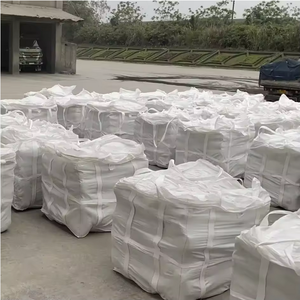
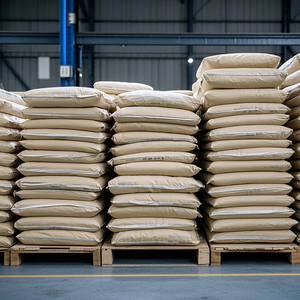
OPC generally comes in sturdy bags. Common dimensions are 25 kg or 50 kg bags. Maintain bags completely dry before use. Store them off the ground under cover. Concrete loses high quality gradually. Utilize it within the shelf life stated by the supplier.
Applications of Ordinary Portland Cement International Standard Best
Normal Portland Concrete International Standard Ideal, often called OPC, is a key structure material. Builders around the world use it daily. This cement is made to fulfill stringent global quality guidelines. That suggests you can rely upon it for stamina and performance.
One huge usage is in concrete. Individuals mix OPC with sand, gravel, and water. This makes concrete. Concrete is essential for developing foundations, floorings, wall surfaces, and driveways. It establishes tough and lasts a very long time. Houses, workplaces, and manufacturing facilities all need concrete made with OPC.
Another usual usage is in mortar. Mortar holds bricks or blocks with each other. Masons mix OPC with sand and water to make mortar. It creates solid bonds between stonework units. You see this in walls for homes, buildings, and border fencings.
Builders additionally use OPC for gluing. Plaster covers wall surfaces and ceilings. It provides a smooth surface. Plasterers blend OPC with fine sand. They use it to surfaces inside and outside buildings. It safeguards the structure and looks excellent.
OPC is very important for large building too. It helps make frameworks like bridges, dams, and roadways. These projects require very solid concrete. OPC offers that stamina. It manages heavy loads and hard climate.
Precast concrete parts usually utilize OPC. Manufacturing facilities make points like pipes, posts, and panels. They use molds and OPC concrete. This makes manufacturing quicker and parts extra regular. These parts go to construction websites ready to mount.
Often OPC is used for grouting. Cement fills up voids or anchors bolts. It locks points securely in place. Engineers utilize it under machinery bases or in rock bolts for passages. OPC cement guarantees security.
Builders pick OPC since it functions well. It blends conveniently and sets accurately. It satisfies the needs of various jobs. From little fixings to substantial projects, OPC is a basic product. Its quality makes building more secure and structures much longer lasting.
Company Profile
We are the global leader in lightweight concrete and advanced engineered foam solutions. Known globally for its commitment to research, innovation, and applied expertise, we have been providing engineered foam solutions since the early 2012’s.
We can supply high-quality concrete admixture and foam concrete related products all over the world.
The company has a professional technical department and quality supervision department, a well-equipped laboratory, and equipped with advanced testing equipment and after-sales customer service center.
If you are interested, please feel free and contact us.
Payment
T/T, Western Union, Paypal, Credit Card etc.
Shipment
By air, by sea, by express, as customers request.
5 FAQs of Ordinary Portland Cement International Standard Best
Ordinary Portland Cement is a common building material. Many people have questions about it. Here are some frequent ones answered.
What exactly is Ordinary Portland Cement? It’s a type of cement. It’s made mostly from limestone and clay. These materials are heated together. They form a hard substance called clinker. The clinker is then ground into a fine powder. Gypsum is added to control how fast it sets. This powder is OPC. It’s the basic cement used worldwide.
Are there different types of Ordinary Portland Cement? Yes, there are different grades. They are often called OPC 33, OPC 43, and OPC 53. The number refers to the minimum strength the cement should reach after 28 days. The strength is measured in Megapascals (MPa). OPC 53 is the strongest grade. It gains strength quickly. OPC 33 gains strength more slowly. Builders choose the grade based on the project’s needs.
How long does Ordinary Portland Cement take to set? The initial setting time matters. It must not set too quickly or too slowly. Standards usually say initial setting should take at least 30 minutes. Final setting should happen within about 10 hours. The exact time depends on the mix. Weather conditions also affect it. Hot weather makes it set faster. Cold weather makes it set slower.
Where is Ordinary Portland Cement used? It’s used for many things. It’s good for general construction work. People use it for making concrete. They use it for plastering walls. They use it for laying bricks and blocks. It’s suitable for foundations, beams, columns, and slabs. It’s not usually the best for special jobs like marine structures. Other types of cement are better for those.
How should I store Ordinary Portland Cement? Keep it dry. Moisture ruins cement. Store bags off the ground. Use wooden pallets. Keep them away from walls. Cover the bags with tarpaulins. Use old stock first. Cement loses quality over time. Try to use it within three months of manufacturing. Check the bag for the date.