Concrete4U | Concrete Admixtures, Tools, and Production Machines

Building Material Cement Composites Fiber Reinforced Cement Concrete Mortar Self-Leveling Cement
PRODUCT PARAMETERS
Description
Overview of Building Material Cement Composites Fiber Reinforced Cement Concrete Mortar Self-Leveling Cement
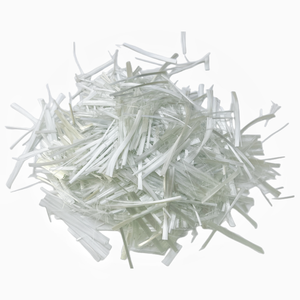
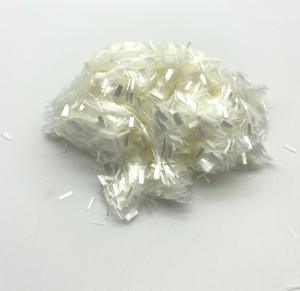
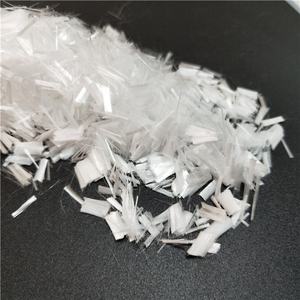
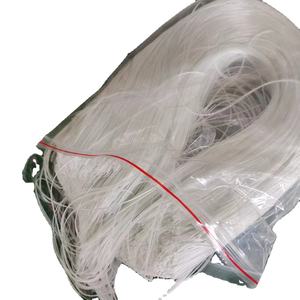
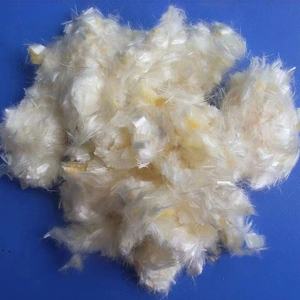
For high-impact resistance, we offer Steel Fibers, an ideal replacement for welded wire mesh in industrial floors and pre-cast elements. We also provide specialized Structural Synthetic Fibers that offer high tensile strength for demanding applications. These fibers are uniformly dispersed throughout the concrete mix, creating a multi-dimensional reinforcement network that traditional methods cannot achieve. This integrated approach simplifies construction, accelerates placement, and enhances the overall integrity and longevity of the concrete, providing a modern answer to age-old cracking and durability challenges.
Features of Building Material Cement Composites Fiber Reinforced Cement Concrete Mortar Self-Leveling Cement
1. Superior Crack Control and Enhanced Durability:
The primary feature of our fibers is their ability to bridge both micro-cracks that form during the plastic state and larger cracks in hardened concrete. This three-dimensional dispersion creates a more cohesive matrix that resists crack propagation. The direct benefit is a significant reduction in both plastic shrinkage cracking and long-term crack width. This leads to a much more durable concrete with lower permeability, which in turn enhances resistance to water ingress, freeze-thaw damage, and corrosion of any embedded steel. The result is a structure with a longer service life and reduced maintenance costs.
2. Increased Impact and Abrasion Resistance:
Fibers, particularly steel and robust synthetic macro fibers, dramatically improve the concrete’s toughness and post-crack performance. They absorb and distribute energy upon impact or loading. This feature provides the benefit of a more resilient surface that is less prone to spalling, chipping, and abrasion under heavy traffic or mechanical wear. This is a critical advantage for industrial floors, warehouse pavements, and infrastructure projects, leading to a harder-wearing surface that maintains its integrity over time.
3. Construction Efficiency and Cost Savings:
A key feature of using fiber reinforcement is the elimination of welded wire mesh (WWF) in many applications. This provides immense on-site benefits: it simplifies placement, as there is no mesh to be set up or potentially displaced, and it accelerates the entire construction process. By removing a labor-intensive step, projects see reduced labor costs and faster project timelines. The uniform distribution of fibers also ensures consistent reinforcement throughout the entire concrete section, unlike mesh, which can be improperly placed, leading to more reliable and predictable performance.

Specifications of Building Material Cement Composites Fiber Reinforced Cement Concrete Mortar Self-Leveling Cement
Cement compounds use building contractors versatile services. These products integrate cement with various other ingredients. Toughness and thickness vary by mix design. Regular compressive toughness varieties from 20 to 60 MPa. Density usually falls in between 1800 and 2400 kg/m THREE. Great resistance to fire and water is common. Fiber enhanced concrete adds fibers for extra strength. Glass or polymer fibers are common options. This enhances tensile strength substantially. It minimizes splitting under tension. Effect resistance obtains much better. Fiber strengthened concrete takes care of harsh weather condition well. Concrete usages accumulations like sand and crushed rock. Water and concrete bind every little thing with each other. Compressive toughness is its highlight. Standard mixes array from 20 to 40 MPa. Greater strength options go a lot additionally. The slump test procedures workability. A slump between 100 and 150 mm is typical. Correct treating guarantees optimal stamina advancement. Mortar bonds blocks or blocks with each other. It contains concrete, sand, and water. Lime is in some cases added also. Mortar needs to be easy to work with. It requires great bond to surface areas. Normal compressive toughness is lower than concrete. Values around 5 to 15 MPa are common. Setting time must be ideal for the task. Self-leveling concrete creates smooth floorings. It moves easily without requiring much work. This material locates its very own degree promptly. Circulation diameter commonly goes beyond 200 mm. Drying time is reasonably quick. Home builders can walk on it in a few hours. Final compressive strength is typically good. It bonds well to the subfloor beneath.
Applications of Building Material Cement Composites Fiber Reinforced Cement Concrete Mortar Self-Leveling Cement
Fiber-reinforced concrete blends small fibers into concrete. This makes it a lot stronger and harder. It doesn’t split easily. People utilize it for slim points like roof sheets and wall panels. It likewise works well for pipes bring water or drainage. It lasts a very long time outdoors also. Concrete uses cement blended with sand, gravel, and water. It’s extremely solid under stress. Home builders pour concrete for foundations, columns, beams, and floorings in buildings, bridges, and roadways. It’s the primary things for big structures. Mortar is a paste made from cement, lime, and sand. It’s sticky and holds points together. Employees utilize mortar to lay blocks or blocks when developing wall surfaces. They likewise utilize it to stick floor tiles onto floors and walls. It fills up the voids in between bricks nicely. Self-leveling cement is a special liquid mix. It moves efficiently across floors. It finds its very own degree. This produces a completely level surface area. People use it to fix irregular concrete pieces indoors. It’s excellent before putting down floor tiles, wood floor covering, or carpetings. It conserves a lot of effort and time. These concrete materials are essential for developing practically everything.
Company Profile
We are the global leader in lightweight concrete and advanced engineered foam solutions. Known globally for its commitment to research, innovation, and applied expertise, we have been providing engineered foam solutions since the early 2012’s.
We can supply high-quality concrete admixture and foam concrete related products all over the world.
The company has a professional technical department and quality supervision department, a well-equipped laboratory, and equipped with advanced testing equipment and after-sales customer service center.
If you are interested, please feel free and contact us.
Payment
T/T, Western Union, Paypal, Credit Card etc.
Shipment
By air, by sea, by express, as customers request.
5 FAQs of Building Material Cement Composites Fiber Reinforced Cement Concrete Mortar Self-Leveling Cement
Here are answers to five common questions about cement composites:
What are fiber-reinforced cement products used for? Fiber-reinforced cement adds strength and crack resistance. It’s good for thin sheets, siding panels, and pipes. The fibers stop cracks from spreading easily. This makes structures last longer.
What is the main difference between concrete and mortar? Concrete contains coarse aggregate like gravel or crushed stone. Mortar uses finer sand only. Concrete builds structural elements like foundations and slabs. Mortar bonds bricks or blocks together in walls. Mortar is not meant for standalone structural use.
How much water should I add when mixing cement? Always follow the instructions on the product bag. Adding too much water weakens the final cement mix. It makes it more likely to crack or crumble. Use just enough water to get a workable consistency. Do not make it soupy.
Can I use regular concrete for a smooth floor finish? Probably not. Regular concrete is hard to finish perfectly flat and smooth. Self-leveling cement is designed for this job. It flows easily to create a flat surface before it hardens. Use self-leveling cement for interior floors needing a smooth finish.
Why does my fresh concrete crack sometimes? Several reasons cause cracks. The concrete might dry too fast, especially in hot weather. Adding too much water makes it weak. Improper curing, meaning not keeping it moist enough after pouring, is another common reason. Good preparation and following steps help prevent cracks.