Concrete4U | Concrete Admixtures, Tools, and Production Machines

Fiber Glass Expansion Joints For Power Plant Cement Plant Smoke Duct Fabric Laminated Compensator
PRODUCT PARAMETERS
Description
Overview of Fiber Glass Expansion Joints For Power Plant Cement Plant Smoke Duct Fabric Laminated Compensator
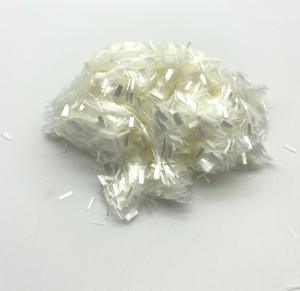
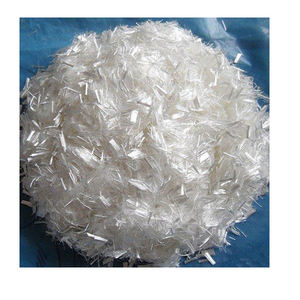
For high-impact resistance, we offer Steel Fibers, an ideal replacement for welded wire mesh in industrial floors and pre-cast elements. We also provide specialized Structural Synthetic Fibers that offer high tensile strength for demanding applications. These fibers are uniformly dispersed throughout the concrete mix, creating a multi-dimensional reinforcement network that traditional methods cannot achieve. This integrated approach simplifies construction, accelerates placement, and enhances the overall integrity and longevity of the concrete, providing a modern answer to age-old cracking and durability challenges.
Features of Fiber Glass Expansion Joints For Power Plant Cement Plant Smoke Duct Fabric Laminated Compensator
1. Superior Crack Control and Enhanced Durability:
The primary feature of our fibers is their ability to bridge both micro-cracks that form during the plastic state and larger cracks in hardened concrete. This three-dimensional dispersion creates a more cohesive matrix that resists crack propagation. The direct benefit is a significant reduction in both plastic shrinkage cracking and long-term crack width. This leads to a much more durable concrete with lower permeability, which in turn enhances resistance to water ingress, freeze-thaw damage, and corrosion of any embedded steel. The result is a structure with a longer service life and reduced maintenance costs.
2. Increased Impact and Abrasion Resistance:
Fibers, particularly steel and robust synthetic macro fibers, dramatically improve the concrete’s toughness and post-crack performance. They absorb and distribute energy upon impact or loading. This feature provides the benefit of a more resilient surface that is less prone to spalling, chipping, and abrasion under heavy traffic or mechanical wear. This is a critical advantage for industrial floors, warehouse pavements, and infrastructure projects, leading to a harder-wearing surface that maintains its integrity over time.
3. Construction Efficiency and Cost Savings:
A key feature of using fiber reinforcement is the elimination of welded wire mesh (WWF) in many applications. This provides immense on-site benefits: it simplifies placement, as there is no mesh to be set up or potentially displaced, and it accelerates the entire construction process. By removing a labor-intensive step, projects see reduced labor costs and faster project timelines. The uniform distribution of fibers also ensures consistent reinforcement throughout the entire concrete section, unlike mesh, which can be improperly placed, leading to more reliable and predictable performance.

Specifications of Fiber Glass Expansion Joints For Power Plant Cement Plant Smoke Duct Fabric Laminated Compensator
Fiberglass growth joints are necessary for power plants and cement plants. They handle the smoke ducts carrying warm gases. These joints make up for thermal expansion and tightening. They soak up pipeline activity caused by temperature modifications. They also lower vibrations and noise.
These joints are developed from multiple layers. The core material is special fiberglass fabric. This towel is saturated with a heat-resistant rubber substance. This produces a strong, versatile laminate. The laminate holds up against high temperatures and extreme chemicals. It resists deterioration from acidic flue gases. This is a large advantage over metal joints. Metal joints can rust and stop working faster.
The joints have flanges on each end. These flanges link straight to the ductwork. Bolts protect the joint between the duct sections. The layout is uncomplicated. It enables easy installment. The adaptability is critical. It prevents anxiety cracks in the air ducts. It quits leakages at connection factors.
Trick advantages include superb resilience. They last a very long time also in tough problems. They need extremely little maintenance. This saves money and time. They deal with temperatures up to 482 ° F( 250 ° C) quickly. Some unique kinds go even higher. They work well under vacuum pressure too. They manage percentages of imbalance in between pipelines. They soak up noise, making points quieter.
You locate these joints in numerous areas. They are in the flue gas desulfurization systems. They desire boilers and before scrubbers. They link ducts to electrostatic precipitators. They are on baghouse inlets and electrical outlets. They are near followers and stacks. Anywhere hot, unclean gases circulation, these joints assist.
Vital requirements issue. The dimension array is large. Joints are available in diameters from 8 inches to over 120 inches. Bigger dimensions are possible. The pressure rating is usually reduced stress or vacuum. Temperature level limitations depend on the rubber used. Requirement joints take care of up to 482 ° F(250 ° C). High-temp versions take care of 572 ° F (300 ° C). The building uses numerous layers of fabric and rubber. The variety of layers relies on the pressure requires. Flanges are usually carbon steel. They can be covered for additional rust defense. Other flange products are available.
Applications of Fiber Glass Expansion Joints For Power Plant Cement Plant Smoke Duct Fabric Laminated Compensator
Fiberglass growth joints take care of activity in huge pipe systems. They take in thermal development and resonance. This protects pipelines and tools. Nuclear power plant use these joints. Warm vapor lines broaden when warmed. The joints bend to take this expansion. This quits pipeline stress and leakages. Concrete plants require these joints as well. Hefty equipment creates strong resonances. The joints dampen these vibrations. This protects against damages to air ducts and supports. Smoke ducts encounter challenging conditions. Hot gases and chemical fumes attack products. Fiberglass joints resist these chemicals well. They manage high temperatures securely. Textile laminated flooring construction makes them flexible. Layers of fabric and rubber develop a strong, flexible unit. This layout permits movement in multiple instructions. It likewise offers excellent securing versus leakages. These joints last longer than steel ones in most cases. Chemical resistance reduces corrosion issues. Easy setup saves time and labor. They attach to flanges simply. Reduced upkeep is another benefit. They work accurately for many years. Nuclear power plant, concrete plants, and smoke air ducts all benefit. The joints keep systems running efficiently. They stop costly repair work and downtime.
Company Profile
We are the global leader in lightweight concrete and advanced engineered foam solutions. Known globally for its commitment to research, innovation, and applied expertise, we have been providing engineered foam solutions since the early 2012’s.
We can supply high-quality concrete admixture and foam concrete related products all over the world.
The company has a professional technical department and quality supervision department, a well-equipped laboratory, and equipped with advanced testing equipment and after-sales customer service center.
If you are interested, please feel free and contact us.
Payment
T/T, Western Union, Paypal, Credit Card etc.
Shipment
By air, by sea, by express, as customers request.
5 FAQs of Fiber Glass Expansion Joints For Power Plant Cement Plant Smoke Duct Fabric Laminated Compensator
Fiber glass expansion joints handle movement in smoke ducts. They absorb thermal expansion and vibration. This protects the ductwork from damage. They are essential in power plants and cement plants. Here are common questions about them.
What is a fiber glass expansion joint? It’s a flexible connector. It fits between sections of ductwork. It allows movement. This movement comes from heat changes and vibrations. It stops stress on the duct.
Why use fiber glass expansion joints? Metal ducts expand when hot. They contract when cool. This creates stress. Expansion joints absorb this movement. They prevent leaks and cracks. They extend the duct’s life.
What materials are used? The core is fiber glass fabric. It is laminated with special coatings. These coatings resist high temperatures. They resist chemical corrosion. Common coatings include PTFE or silicone. This depends on the specific smoke conditions.
How are they installed? They are bolted between duct sections. Proper installation is critical. The joint must be aligned correctly. It must allow free movement. Gaskets ensure a tight seal. This prevents smoke leakage.
How long do they last? Lifespan varies. It depends on operating conditions. High temperatures and chemicals affect it. Regular inspections help. Look for wear or damage. Timely replacement avoids bigger problems.