Concrete-mesa | Concrete Admixtures, Tools, and Production Machines

Filament Wound Fiberglass Tubes
PRODUCT PARAMETERS
Description
Overview of Filament Wound Fiberglass Tubes
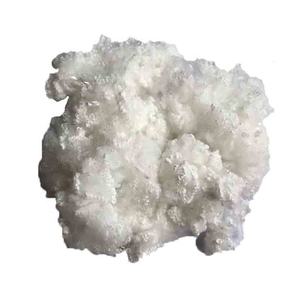
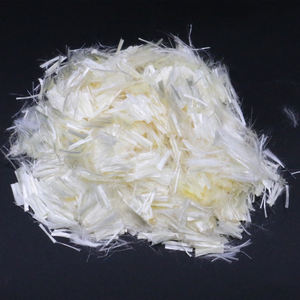
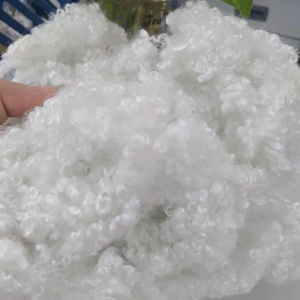
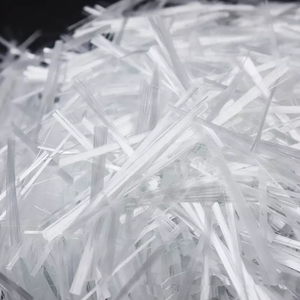
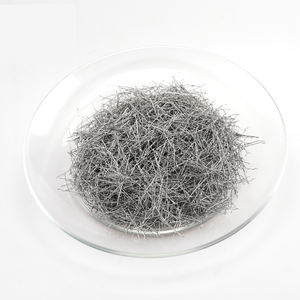
For high-impact resistance, we offer Steel Fibers, an ideal replacement for welded wire mesh in industrial floors and pre-cast elements. We also provide specialized Structural Synthetic Fibers that offer high tensile strength for demanding applications. These fibers are uniformly dispersed throughout the concrete mix, creating a multi-dimensional reinforcement network that traditional methods cannot achieve. This integrated approach simplifies construction, accelerates placement, and enhances the overall integrity and longevity of the concrete, providing a modern answer to age-old cracking and durability challenges.
Features of Filament Wound Fiberglass Tubes
1. Superior Crack Control and Enhanced Durability:
The primary feature of our fibers is their ability to bridge both micro-cracks that form during the plastic state and larger cracks in hardened concrete. This three-dimensional dispersion creates a more cohesive matrix that resists crack propagation. The direct benefit is a significant reduction in both plastic shrinkage cracking and long-term crack width. This leads to a much more durable concrete with lower permeability, which in turn enhances resistance to water ingress, freeze-thaw damage, and corrosion of any embedded steel. The result is a structure with a longer service life and reduced maintenance costs.
2. Increased Impact and Abrasion Resistance:
Fibers, particularly steel and robust synthetic macro fibers, dramatically improve the concrete’s toughness and post-crack performance. They absorb and distribute energy upon impact or loading. This feature provides the benefit of a more resilient surface that is less prone to spalling, chipping, and abrasion under heavy traffic or mechanical wear. This is a critical advantage for industrial floors, warehouse pavements, and infrastructure projects, leading to a harder-wearing surface that maintains its integrity over time.
3. Construction Efficiency and Cost Savings:
A key feature of using fiber reinforcement is the elimination of welded wire mesh (WWF) in many applications. This provides immense on-site benefits: it simplifies placement, as there is no mesh to be set up or potentially displaced, and it accelerates the entire construction process. By removing a labor-intensive step, projects see reduced labor costs and faster project timelines. The uniform distribution of fibers also ensures consistent reinforcement throughout the entire concrete section, unlike mesh, which can be improperly placed, leading to more reliable and predictable performance.

Specifications of Filament Wound Fiberglass Tubes
Filament wound fiberglass tubes are strong, lightweight structural parts. They are made by winding fiberglass strands soaked in resin onto a rotating form. This winding method creates a very durable product. The tubes handle heavy loads well. They resist bending and breaking under pressure.
These tubes weigh much less than solid metal parts. This light weight is a big advantage. It makes them easier to move and install. Using them can save energy. They are popular where saving weight matters. Think aerospace or moving equipment.
You can get these tubes in many sizes. Common diameters range from small to very large. Wall thickness varies too. It depends on the strength needed. Lengths are often cut to order. This allows for custom applications.
Filament wound fiberglass handles heat and cold. It works well in hot conditions without losing strength. It also performs reliably in freezing temperatures. This makes it useful outdoors or in tough climates.
The material does not conduct electricity. It acts as an electrical insulator. This property is important in electrical systems. It prevents unwanted current flow. It offers safety around wires and components.
The tubes resist damage from many chemicals. Acids, alkalis, and solvents often don’t affect them. This chemical resistance is valuable in harsh settings. Factories and labs use them for this reason.
These tubes appear in many industries. Construction uses them for poles and supports. The chemical industry relies on their resistance. Aerospace values their light weight. Electrical applications need their insulating power. They are versatile and dependable parts.
Applications of Filament Wound Fiberglass Tubes
Filament wound fiberglass tubes are incredibly strong yet lightweight. This makes them ideal for many tough jobs. People use them in aerospace parts. They build structures inside planes. They make drone frames. The tubes handle high stress without bending. They don’t add much weight either. This helps planes fly better.
The automotive world uses these tubes too. They build roll cages for race cars. Roll cages protect drivers. The tubes absorb crash energy well. They build chassis components for high-performance cars. The strength keeps the car rigid. The lightness helps speed and handling. They also build custom parts for special vehicles.
Sports and leisure equipment relies on these tubes. People make fishing rods from them. The rods are sensitive but strong. They make tent poles for camping. The poles are light and easy to carry. They make kite spars. The tubes are flexible but tough. They build handles for tools and luggage. The handles last a long time. They don’t break easily.
Industrial applications are common. Factories use them as rollers in machines. The rollers move materials smoothly. They resist wear from constant use. They build protective guards around moving parts. The guards are strong and see-through sometimes. People use them for chemical handling. The tubes don’t rust or corrode. They carry harsh liquids safely. They build frames for machinery. The frames are sturdy and stable.
Electrical uses are important too. These tubes are good insulators. They don’t conduct electricity. People use them as conduits for wires. The tubes protect wires from damage. They build antenna masts and poles. The poles hold their shape in wind and weather. They support antennas for communication. They make insulating parts for transformers.
Company Profile
We are the global leader in lightweight concrete and advanced engineered foam solutions. Known globally for its commitment to research, innovation, and applied expertise, we have been providing engineered foam solutions since the early 2012’s.
We can supply high-quality concrete admixture and foam concrete related products all over the world.
The company has a professional technical department and quality supervision department, a well-equipped laboratory, and equipped with advanced testing equipment and after-sales customer service center.
If you are interested, please feel free and contact us.
Payment
T/T, Western Union, Paypal, Credit Card etc.
Shipment
By air, by sea, by express, as customers request.
5 FAQs of Filament Wound Fiberglass Tubes
What are filament wound fiberglass tubes? They are tubes made by winding fiberglass strands soaked in resin onto a spinning mold. This process creates a very strong tube structure. The winding pattern gives them unique strength properties.
Why choose filament wound tubes over other types? They offer a great strength-to-weight ratio. This means they are very strong but also lightweight. They are often better than metal tubes in corrosive environments. Fiberglass doesn’t rust like steel. They are also more durable than many plastics.
How strong are these tubes? They are exceptionally strong, especially along their length. The continuous fibers wound around the tube provide this lengthwise strength. This makes them excellent for handling high pressures. They resist bending and crushing forces very well. The specific strength depends on the resin and fiber type used.
What temperatures can they handle? Filament wound tubes handle high temperatures well. The exact limit depends on the resin system. Epoxy resins are common and good up to about 250-350°F (120-175°C). Some special resins can handle even higher heat. They perform better than many plastics in hot conditions.
Where are these tubes commonly used? You find them in many demanding applications. They are popular in aerospace for lightweight structures. The chemical industry uses them for pipes handling corrosive fluids. They are also common in electrical insulation applications. Other uses include sporting goods, like fishing rods, and industrial rollers.