Concrete-mesa | Concrete Admixtures, Tools, and Production Machines

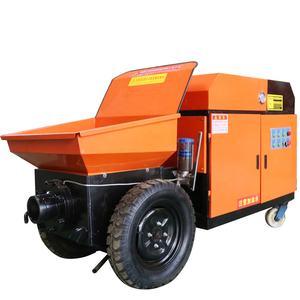
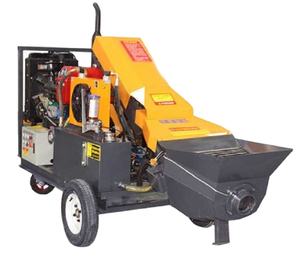
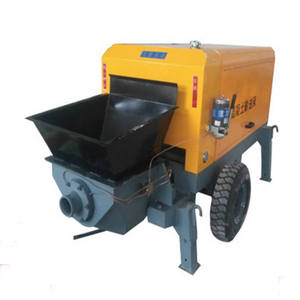
Manufacture Concrete Pumps for Concrete Pump Household Use
PRODUCT PARAMETERS
Description
Overview of Manufacture Concrete Pumps for Concrete Pump Household Use
Manufacture Concrete Pumps for Concrete Pump Household Use offers excellent mobility and reach for mid-size projects and residential construction. For large-scale commercial and infrastructure work, we provide robust Boom Pumps with multi-section articulating arms that place concrete precisely at high volumes over significant horizontal and vertical distances. We also offer compact and agile Line Pumps for smaller jobs, renovations, and sites with limited access. Each pump in our lineup is built with powerful hydraulic systems and engineered to handle a wide range of mix designs reliably. This portfolio provides contractors with the precise tools to place concrete faster, farther, and more efficiently than traditional methods, ensuring optimal placement and superior finished quality.
Features of Manufacture Concrete Pumps for Concrete Pump Household Use
1. High-Efficiency Placement and Unmatched Reach:
The core feature of our concrete pumps is their ability to transport concrete rapidly over long distances and heights. This is achieved through high-output hydraulic systems and robust placing booms or pipeline systems. The direct benefit is unparalleled job site efficiency; concrete can be placed precisely where it is needed, directly from the truck, eliminating the need for costly and time-consuming secondary handling with cranes and buggies. This allows for faster cycle times, continuous pours for superior structural integrity, and access to challenging locations like deep foundations or high-rise structures, dramatically accelerating project timelines.
2. Robust Reliability and Reduced Labor Intensity:
Our pumps are built with durable components and simple, serviceable designs to withstand the harsh environment of a construction site. This engineering focus on reliability translates into the benefit of minimized downtime and consistent performance pour after pour. Furthermore, by mechanizing the concrete placement process, a single pump operation significantly reduces the manual labor required. This leads to substantial savings on labor costs, mitigates the physical strain on workers, and enhances overall site safety by reducing crew exposure to heavy lifting and repetitive tasks.
3. Versatility and Enhanced Concrete Quality:
The versatility of our product line, from massive boom pumps to nimble line pumps, ensures there is an optimal solution for any project scale and site constraint. This feature provides the benefit of maximum job site adaptability. Additionally, the controlled, continuous placement achieved by pumping minimizes the risk of concrete segregation and cold joints. This results in a more uniform, denser, and higher-quality finished concrete structure with improved durability and surface finish, reducing the potential for future defects.

Specifications of Manufacture Concrete Pumps for Concrete Pump Household Use
Concrete pumps for home use handle small projects. Think patios, walkways, or small foundations. They are different from big construction site pumps. These household models are smaller and easier to handle. You need to know their specifications to pick the right one.
Look at the flow rate first. This tells you how much concrete the pump moves each hour. For home jobs, a flow rate of 20 to 30 cubic meters per hour is common. This is enough power for smaller volumes without wasting effort. The outlet pressure matters too. It pushes the concrete through the hose. Household pumps usually offer pressures around 5 to 8 Megapascals. This pressure is good for shorter distances and typical home pours.
Power is another key point. These pumps might run on electricity or small diesel engines. Electric models are quieter, good for neighborhoods. Diesel models give more flexibility, especially where power outlets are scarce. Check the engine power rating. Small pumps often use engines between 15 and 30 kilowatts. This provides the needed force without being oversized.
Size and weight are critical for home users. You need something you can move yourself. Look for pumps designed to be portable. They might weigh between 100 and 300 kilograms. Their dimensions should fit in a standard garage or shed. Compact designs make storage simple.
Safety features are included. Look for an emergency stop button. Overload protection helps prevent damage if something jams. The hopper size determines how much concrete you can add at once. A smaller hopper suits home mixing batches. The pipeline diameter affects the concrete flow. Smaller diameters, like 100 or 125 millimeters, are standard for these pumps. They handle the typical mixes used around the house.
Applications of Manufacture Concrete Pumps for Concrete Pump Household Use
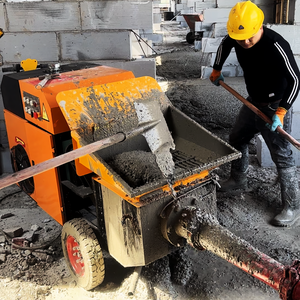
Concrete pumps help homeowners handle concrete work. These machines move concrete from the mixer truck directly to where you need it. Forget heavy wheelbarrows. Forget messy shovels. A pump gets the job done faster and with less effort. You save time and money on labor. You also get a better finish on your project.
Pumping concrete is perfect for pouring house foundations. The pump reaches tricky spots easily. It places concrete exactly where you want it. This means fewer weak spots. Your foundation becomes stronger. It also means less wasted concrete.
Driveways are another big job. Pouring a driveway by hand is hard work. A pump makes it much simpler. The concrete flows smoothly onto the driveway surface. You get a flatter, more even finish. This looks better and lasts longer.
Homeowners often need to fix damaged concrete. Maybe steps are crumbling. Maybe a patio slab is cracked. A pump is great for these repairs. It delivers small amounts of concrete precisely. You can fix just the broken part. You avoid tearing out good concrete. This saves money and hassle.
Pumps handle tight spaces well. Backyard paths or garden walls need concrete. A big truck might not fit. A pump hose can snake through narrow areas. You get concrete placed right at the spot. No dragging heavy loads long distances.
Small slabs for sheds or workshops are easy too. You don’t need a huge concrete truck. A pump works with smaller deliveries. This is cheaper and less messy on your property. You get the slab poured quickly and neatly.
Using a pump gives you better control. You can direct the flow exactly. This reduces spills and splatter. Your site stays cleaner. Cleanup becomes much faster. You get professional results without the professional headaches.
Pumps are versatile for home projects. They handle different mixes of concrete. They work on slopes or flat ground. They make pouring concrete safer and less tiring. Your back will thank you.
Company Profile
We are the global leader in lightweight concrete and advanced engineered foam solutions. Known globally for its commitment to research, innovation, and applied expertise, we have been providing engineered foam solutions since the early 2012’s.
We can supply high-quality concrete admixture and foam concrete related products all over the world.
The company has a professional technical department and quality supervision department, a well-equipped laboratory, and equipped with advanced testing equipment and after-sales customer service center.
If you are interested, please feel free and contact us.
Payment
T/T, Western Union, Paypal, Credit Card etc.
Shipment
By air, by sea, by express, as customers request.
5 FAQs of Manufacture Concrete Pumps for Concrete Pump Household Use
Okay, here are the 5 FAQs about manufacturing concrete pumps for home use:
FAQ 1: What is a household concrete pump?
A household concrete pump moves wet concrete mix. It takes the mix from a container. It pushes the mix through a hose. This hose delivers the concrete exactly where you need it. It helps you place concrete easily. You avoid heavy lifting and messy pouring.
FAQ 2: Why use a pump instead of mixing by hand?
Mixing concrete by hand is hard work. It takes a lot of time. It also uses a lot of energy. A pump saves you effort. It gets the concrete where you want it fast. This gives you a smoother finish. You also waste less concrete.
FAQ 3: Is a household concrete pump hard to use?
Manufacturers make these pumps easy to use. They are smaller than big construction pumps. They are also lighter. The controls are simple. You need basic knowledge. You follow the instructions. Most homeowners can learn to use one quickly.
FAQ 4: Are these pumps safe for home projects?
Safety is important for manufacturers. Home pumps have safety features. These stop the pump if pressure gets too high. They prevent blockages. You must wear safety gear. Always read the manual carefully. Use the pump correctly.
FAQ 5: How much maintenance does a home concrete pump need?
You need to clean the pump after every use. Concrete hardens inside. This can damage the pump. Cleaning prevents this. Check parts like hoses and seals often. Replace worn parts quickly. Follow the maintenance schedule. This keeps your pump working well for years.