Concrete4U | Concrete Admixtures, Tools, and Production Machines

Factory Low Manual Concrete Retaining Wall Block Mold Foam Hollow Concrete Block Manual Mold
PRODUCT PARAMETERS
Description
Overview of Factory Low Manual Concrete Retaining Wall Block Mold Foam Hollow Concrete Block Manual Mold
Factory Low Manual Concrete Retaining Wall Block Mold Foam Hollow Concrete Block Manual Mold is essential for shaping concrete into specific forms during construction and manufacturing processes. These molds come in various designs, materials, and sizes to cater to different applications such as decorative elements, structural components, or custom creations. They are commonly used in the production of concrete blocks, paving stones, wall panels, and architectural elements. Available in steel, plastic, silicone, and rubber materials, concrete molds are designed for easy release, providing clean edges and uniform shapes. They are widely used in both large-scale industrial projects and smaller, custom concrete works, offering efficiency, precision, and versatility. By ensuring accurate shapes and smooth finishes, concrete molds help improve production consistency and reduce labor time, making them a valuable tool in construction and manufacturing.
Characteristics of Factory Low Manual Concrete Retaining Wall Block Mold Foam Hollow Concrete Block Manual Mold
High Precision: Concrete molds are crafted with precision to create uniform, accurate shapes, ensuring consistent dimensions and quality in every piece of concrete. This is essential for both structural integrity and aesthetic appeal.
Versatile Designs: Available in various shapes and sizes, concrete molds cater to a wide range of applications, from simple concrete blocks to intricate decorative pieces. Custom molds can also be designed to meet specific project requirements.
Durable Materials: Concrete molds are typically made from robust materials such as steel, plastic, rubber, or silicone, offering strength and durability to withstand the pressure of concrete pouring and curing, ensuring long-term performance.
Easy Release and Cleanliness: Most concrete molds are designed with a non-stick surface or coating, allowing for easy release of the molded concrete without damage. This results in smoother, cleaner finishes and reduces cleanup time.
Reusable: Concrete molds are designed for repeated use, which makes them highly cost-effective for large-scale production runs or ongoing projects. They provide excellent value by reducing the need for new molds with each batch.
Customization Options: Custom concrete molds can be designed to create specific shapes, patterns, or sizes tailored to unique project needs. This flexibility allows for creative and highly specialized concrete products.
Efficient Production: By providing quick and easy molding, concrete molds significantly reduce labor time, increasing production efficiency and allowing for faster project completion.
Consistent Quality: Using molds ensures uniformity in concrete components, reducing variations in shape and size that can occur with manual methods. This leads to more reliable and consistent results.
Cost-Effective: Concrete molds reduce the amount of labor required for shaping and finishing concrete, cutting down on time and labor costs. They also reduce material waste, as they create precise forms and minimize errors during production.
Weather and Chemical Resistance: Depending on the material used, some concrete molds are resistant to harsh weather conditions and chemical exposure, making them suitable for both indoor and outdoor applications, including landscaping, pavements, and structural elements.
Ease of Use: Concrete molds are designed to be user-friendly, allowing for easy setup, pouring, and demolding. This reduces the complexity of the concrete molding process and ensures a smooth workflow for operators.
Enhanced Aesthetic Appeal: When used for decorative purposes, concrete molds help achieve intricate patterns, textures, and shapes, enhancing the visual appeal of architectural elements, garden features, and paving designs.

Specification of Factory Low Manual Concrete Retaining Wall Block Mold Foam Hollow Concrete Block Manual Mold
This Manufacturing Facility Reduced Handbook Concrete Retaining Wall surface Block Mold makes solid hollow blocks. It is made for manual use. You don’t need makers or electricity. It’s ideal for small jobs or DIY contractors. The mold and mildew produces foam concrete obstructs. These blocks are light-weight. They are also really solid. The blocks are perfect for building keeping walls. They can likewise be utilized for yard wall surfaces or various other frameworks.
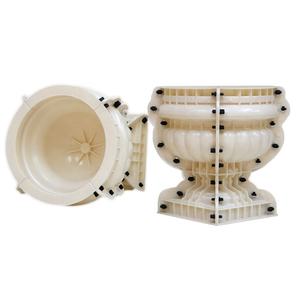
The mold is built difficult. It uses top quality ABS plastic. This plastic is durable. It resists fracturing and warping. The mold and mildew deals with duplicated use. It withstands the pressure of concrete. The mold components fit together precisely. This ensures your blocks have smooth, straight sides. Your blocks will certainly look expert. The mold layout includes hollow cores. These cores decrease the block weight. They save on concrete material. This cuts your expenses.
Common block sizes are common. The mold and mildew generates blocks around 400mm long, 200mm large, and 150mm high. Precise sizes depend on the certain version. The mold and mildew itself is small. It is easy to store and transport. A single person can manage it. Setting up is straightforward. The mold and mildew splits up promptly. This permits easy block removal after the concrete collections. Cleaning up the mold is simple. Simply wash it with water.
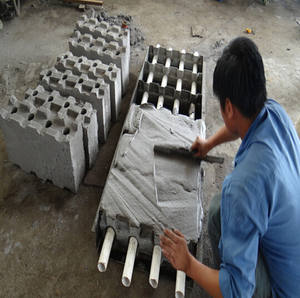
Making use of the mold is efficient. Load the mold cavity with your concrete mix. Vibrate or tamp the concrete manually. This eliminates air pockets. It makes the block thick. Allow the concrete harden somewhat. After that dismantle the mold. Raise it off the developed block. Your block awaits treating. This process repeats quickly. You can produce lots of blocks in a day. The mold creates consistent blocks every time. This is vital for secure wall construction.
This mold supplies a low-priced remedy. It avoids costly machinery. It saves you cash. The hands-on procedure is basic. Any person can learn it promptly. You obtain strong, trustworthy foundation. Construct walls on your own. Save money on labor expenses. The mold and mildew is a useful financial investment. It pays for itself quick. Get building now.
Applications of Factory Low Manual Concrete Retaining Wall Block Mold Foam Hollow Concrete Block Manual Mold
Factory Reduced Guidebook Concrete Retaining Wall Block Mold And Mildew Foam Hollow Concrete Block Guidebook Mold and mildew aids you make strong foundation conveniently. You don’t need huge equipments or a lot of power. This mold and mildew is for manual labor. It’s perfect for smaller jobs or areas with restricted resources.
You utilize this mold and mildew to develop hollow cinder block. These blocks are lighter than strong ones. They conserve product. They are still very solid. The hollow design is good for insulation also. You make blocks for retaining walls with this mold. Preserving walls keep back soil. They protect against erosion. They develop degree locations on slopes.
Making blocks is uncomplicated. You prepare your concrete mix. You fill the mold and mildew cavities. You compact the concrete well. This eliminates air pockets. It makes the block dense. You level the leading surface. After that you very carefully eliminate the mold and mildew. The block remains in area to harden. You repeat the process for even more blocks. The mold is difficult steel. It lasts through many uses.
This mold offers huge benefits. It keeps costs low. No pricey machinery is required. You reduce fuel or electrical energy. Operation is straightforward. Workers learn it fast. It gives you manage. You produce blocks specifically when you require them. You don’t count on deliveries. You make blocks near your structure website. This cuts transport expenses. You make blocks to your specific dimension. The mold produces consistent shapes. This ensures stable walls.
It’s perfect for neighborhood builders. Little building teams utilize it well. Rural development tasks benefit. House owners taking on do it yourself walls locate it practical. It encourages local business. You begin block production with little financial investment. You develop crucial frameworks affordably. You develop retaining wall surfaces, garden borders, or tiny structures. It places trusted structure product development in your hands.
Company Profile
We are the global leader in lightweight concrete and advanced engineered foam solutions. Known globally for its commitment to research, innovation, and applied expertise, we have been providing engineered foam solutions since the early 2012’s.
We can supply high-quality concrete admixture and foam concrete related products all over the world.
The company has a professional technical department and quality supervision department, a well-equipped laboratory, and equipped with advanced testing equipment and after-sales customer service center.
If you are interested, please feel free and contact us.
Payment
T/T, Western Union, Paypal, Credit Card etc.
Shipment
By air, by sea, by express, as customers request.
5 FAQs of Factory Low Manual Concrete Retaining Wall Block Mold Foam Hollow Concrete Block Manual Mold
Here are five common questions about our Factory Low Manual Concrete Retaining Wall Block Mold:
What makes this mold strong? The mold uses tough foam. This foam handles heavy concrete mix. It keeps its shape under pressure. You get consistent blocks every time. The foam is dense. It resists breaking or bending. This ensures long mold life.
Is the mold easy to use? Yes. The design is simple. You assemble it quickly. No special tools are needed. Fill it with your concrete mix. Level the top surface. Disassemble the mold carefully. The block stays in place. The foam parts release cleanly. You handle the mold by hand.
What block size does it make? This mold makes hollow blocks. The blocks suit retaining walls. The standard size is common. Each block is hollow inside. This saves concrete material. The blocks are strong enough for walls. They interlock well for stability. Check the product page for exact dimensions.
How long before removing the block? Wait 24 to 48 hours. The concrete needs time to harden. This curing time is important. The block gains strength. Early removal damages the block. Weather affects drying time. Hot dry weather is faster. Cold damp weather is slower.
How long will the mold last? The mold lasts many cycles. Proper care extends its life. Clean the mold thoroughly after each use. Remove all dried concrete bits. Rinse it well with water. Let it dry completely. Store it flat in a shaded area. Avoid direct sun. Avoid extreme heat. Avoid sharp impacts. Handle the foam parts gently. Good care prevents cracks. Good care prevents warping.
This covers the key points users ask about.