Concrete4U | Concrete Admixtures, Tools, and Production Machines

How Advanced Admixtures Are Revolutionizing 3D-Printed Concrete Construction
1. Introduction
Just 48 hours ago, a new milestone was reached in sustainable construction: a fully habitable 3D-printed home using advanced concrete admixtures was unveiled in Austin, Texas. This project leverages next-generation superplasticizers and fiber-reinforced mixes to achieve structural integrity without traditional formwork—showcasing how niche applications of concrete admixtures are reshaping modern building techniques.
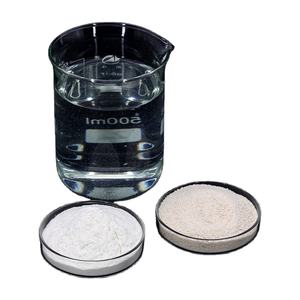
Unlike conventional concrete, 3D-printed concrete must flow smoothly through nozzles yet hold its shape instantly after deposition. Achieving this balance demands precision-engineered admixtures that go far beyond basic water reducers or set-time modifiers.
2. Why Standard Concrete Doesn’t Work for 3D Printing
Traditional concrete mixes slump, crack, or lack early strength—fatal flaws in layer-by-layer printing. Without the right chemical support, printed walls can collapse under their own weight before curing.
That’s where specialized concrete admixtures come in. These aren’t your grandfather’s additives; they’re high-performance concrete chemicals engineered for rheology control, rapid stiffening, and long-term durability.
3. Key Admixture Types Powering 3D-Printed Concrete
3.1 Superplasticizers: The Flow Masters
Superplasticizer in concrete is non-negotiable for 3D printing. Specifically, polycarboxylate ether (PCE)-based superplasticizers deliver extreme fluidity without excess water—critical for pumpability through narrow printer nozzles.
These super plasticizers reduce water content by up to 40% while maintaining workability, resulting in denser, stronger prints. They’re often called high-range water reducers and are the backbone of any printable mix design.
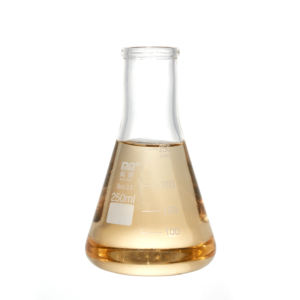
- Polycarboxylate superplasticizer enables precise extrusion
- Naphthalene or melamine-based alternatives are less effective due to shorter slump retention
- PCE-based admixtures also improve surface finish and reduce nozzle clogging
3.2 Concrete Accelerators and Retarders: Timing Is Everything
In 3D printing, you need fast curing concrete additives to stabilize each layer—but not so fast that the mix hardens inside the pump. That’s why dual-action systems are common: a slight concrete retarder admixture keeps the mix fluid during pumping, followed by an accelerating admixtures for concrete at the nozzle exit.
Concrete accelerator curing time is carefully calibrated—often achieving initial set in under 15 minutes. This prevents slumping between layers while allowing continuous printing.
3.3 Fiber Reinforcement: Building Strength Without Rebar
Since 3D-printed structures rarely use traditional rebar, fiber reinforcement is essential. Polypropylene fibres for concrete, steel fibers for concrete, and even carbon fiber reinforcement in concrete provide tensile strength and crack resistance.
Macro fibers and microfibers are blended into the mix to create fiber reinforced concrete that behaves like a continuous composite. Brands like Fibermesh concrete offer ready-to-use solutions, but custom blends with coconut fiber reinforced concrete are also being tested for sustainability.
- PP fiber concrete improves ductility
- Steel fiber reinforced concrete boosts load-bearing capacity
- Carbon fiber concrete enhances flexural strength in thin-shell designs

4. Waterproofing and Durability Enhancements
Outdoor 3D-printed structures demand robust protection. Here, waterproofing admixture for concrete plays a vital role. Crystalline waterproofing admixture reacts with moisture to form insoluble crystals that block capillary pores.
Integral waterproofer and cement waterproofing additive options eliminate the need for external membranes—ideal for seamless printed geometries. These concrete waterproof admix solutions also resist freeze-thaw cycles when paired with air entraining admixture.
Air entraining concrete introduces microscopic bubbles that relieve internal pressure during freezing—critical in cold climates. An air entraining agent ensures consistent bubble distribution without compromising print fidelity.
5. Real-World Applications and Cost Considerations
From emergency shelters to luxury homes, 3D-printed concrete is scaling fast. Companies like Certainteed and Hardie are exploring concrete siding that looks like wood using fiberfor concrete mixes enhanced with colored concrete powders and release agents.
While concrete siding cost remains higher than vinyl, the labor savings from rapid printing offset material premiums. Home Depot now stocks select concrete additives fiber and superplasticizer near me options for DIY builders experimenting with small-scale printers.
6. Conclusion
The future of construction isn’t just digital—it’s chemical. By tailoring admixture types like superplasticizer admixture, concrete retarder, and waterproof admix to the unique demands of 3D printing, engineers are unlocking faster builds, lower emissions, and unprecedented design freedom. As research advances, the best admixture for concrete in this space will keep evolving—but one thing is clear: without smart concrete chemicals, 3D-printed architecture simply wouldn’t stand.
Our Website founded on October 17, 2012, is a high-tech enterprise committed to the research and development, production, processing, sales and technical services of ceramic relative materials such as How. Our products includes but not limited to Boron Carbide Ceramic Products, Boron Nitride Ceramic Products, Silicon Carbide Ceramic Products, Silicon Nitride Ceramic Products, Zirconium Dioxide Ceramic Products, etc. If you are interested, please feel free to contact us.