Concrete4U | Concrete Admixtures, Tools, and Production Machines

Lightweight Concrete vs Normal Weight Concrete: Structural Comparison
Key takeaways
- Lightweight concrete and normal weight concrete differ mainly in density, which affects dead load, strength, stiffness, and thermal behavior.
- Normal weight concrete typically has higher density and is widely used for strength-critical structural elements.
- Lightweight concrete can reduce self-weight and improve thermal insulation, which matters in high-rise and long-span applications.
- Durability depends on mix design, exposure conditions, and construction quality rather than density alone.
- Selection should follow the governing design requirement: strength, stiffness, dead load, thermal performance, or constructability.
Lightweight Concrete vs Normal Weight Concrete: What Is the Structural Difference?
Lightweight concrete and normal weight concrete are two categories of concrete distinguished primarily by their density, which in turn shapes how each material behaves in a structure. Lightweight concrete is produced with lightweight aggregates or by introducing air voids, giving it a lower unit weight than conventional concrete. Normal weight concrete uses dense natural aggregates such as crushed stone or gravel and is the default material for most structural work. The core structural difference is that lower density reduces dead load and can improve thermal insulation, while normal weight concrete generally offers higher stiffness, compressive strength, and familiarity in design codes.
The choice between them is not a simple matter of one being better. It depends on what the structure needs: reduced self-weight, thermal performance, or maximum load-carrying capacity. This comparison sets out the main dimensions engineers and specifiers consider, including density, strength, dead load, thermal behavior, durability, workability, and typical applications. Each dimension is explained in terms of the object being compared, the conditions under which the difference matters, and the practical conclusion that follows.
| Comparison Dimension | Lightweight Concrete | Normal Weight Concrete |
|---|---|---|
| Typical density | Generally below about 1,850 kg/m³, with structural mixes often around 1,400–1,850 kg/m³ | Typically about 2,200–2,500 kg/m³ |
| Compressive strength | Can reach structural grades when properly designed, but very low-density mixes tend to be lower strength | Available across a wide range, including high-strength structural grades |
| Dead load | Lower self-weight reduces load on foundations and supporting elements | Higher self-weight increases dead load |
| Stiffness and deflection | Lower modulus generally means more deflection control attention | Higher modulus generally helps control deflection |
| Thermal insulation | Generally lower thermal conductivity, offering better insulation value | Higher thermal conductivity, transfers heat more readily |
| Fire behavior | Non-combustible; fire resistance determined by testing and code evaluation | Non-combustible; fire resistance determined by testing and code evaluation |
| Durability | Can be durable; higher porosity may require attention in aggressive exposures | Widely used in exposed and marine environments with suitable mix and cover |
| Workability and placement | More sensitive to water demand and pumping; requires closer coordination | Well-established handling and finishing practices |
| Typical applications | High-rise floors, long-span decks, precast elements, insulating fills | Foundations, columns, beams, slabs, pavements, general structural work |
Density and Unit Weight: The Defining Variable
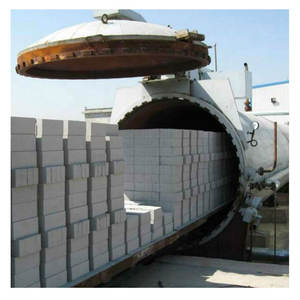
Density is the variable that separates the two materials. Normal weight concrete typically has an oven-dry density in the range of about 2,200 to 2,500 kg/m³, while lightweight concrete generally falls below about 1,850 kg/m³, with some structural lightweight mixes in the range of roughly 1,400 to 1,850 kg/m³. These ranges are general and depend on the specific aggregates and mix design used.
The condition that makes density matter most is when the self-weight of the structure is a governing load case. In high-rise buildings, long-span floors, and bridge decks, reducing density lowers the dead load that the foundation and supporting elements must carry. The conclusion is that lightweight concrete can allow smaller foundations or longer spans for the same load, whereas normal weight concrete remains the straightforward choice when density is not a constraint.
Compressive Strength and Structural Capacity
Compressive strength is the property most often used to classify concrete for structural design. Normal weight concrete can be produced across a wide strength range, from ordinary structural grades to high-strength mixes. Lightweight concrete can also achieve structural grades, but the relationship between density and strength means that very low-density mixes tend to have lower strength than dense normal weight mixes of comparable binder content.
The condition under which this difference becomes decisive is when the design requires high compressive strength or high modulus of elasticity. Normal weight concrete generally provides higher stiffness, which helps control deflection in beams and slabs. Lightweight concrete can meet structural strength requirements when properly designed, but the designer must verify the specific mix rather than assume equivalence. The practical conclusion is that normal weight concrete is the safer default for strength-critical elements, while lightweight concrete is selected when weight reduction justifies the trade-off.
Dead Load, Foundations, and Span Potential
Dead load is the weight of the structure itself, and it is directly tied to concrete density. Because lightweight concrete has lower unit weight, it reduces the dead load transferred to columns, walls, and foundations. This can matter in retrofits where existing foundations cannot be enlarged, and in new buildings where reducing self-weight allows more efficient structural framing.
The condition for benefiting from this reduction is that the design is governed by self-weight rather than by live load or lateral forces. When dead load dominates, lightweight concrete can permit longer spans or thinner sections than normal weight concrete for the same supporting capacity. The conclusion is not that lightweight concrete is always stronger, but that it changes the load balance in a way that can be structurally advantageous in specific configurations.
Thermal Insulation and Fire Behavior
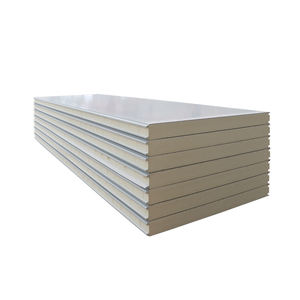
Lightweight concrete generally has lower thermal conductivity than normal weight concrete because of its porous or low-density aggregate structure. This means it can provide better insulation value in walls and roof decks, which may reduce the demand on separate insulation layers in some assemblies. Normal weight concrete has higher thermal conductivity and therefore transfers heat more readily.
The condition under which thermal performance becomes a primary selection factor is in building envelopes where energy performance is a design goal. In fire exposure, both materials are non-combustible, but the lower density of lightweight concrete can affect heat transfer and fire resistance ratings, which are determined by testing and code evaluation rather than by density alone. The practical conclusion is that lightweight concrete offers a thermal advantage, while normal weight concrete relies on its mass and is often paired with additional insulation.
Durability, Permeability, and Exposure Conditions
Durability depends on the mix, the exposure environment, and the quality of construction, not on density alone. Normal weight concrete with a low water-to-cement ratio and adequate cover is widely used in exposed and marine environments. Lightweight concrete can also be durable, but its higher porosity may require attention to permeability and protection of embedded reinforcement in aggressive conditions.
The condition that matters is the specific exposure class: freeze-thaw cycles, chlorides, sulfates, or abrasion. In these cases, the designer should specify the concrete based on tested performance and code requirements rather than assuming that one type is universally more durable. The conclusion is that both materials can perform well when the mix and detailing suit the environment, and that density is only one input among several.
Workability, Placement, and Finishing
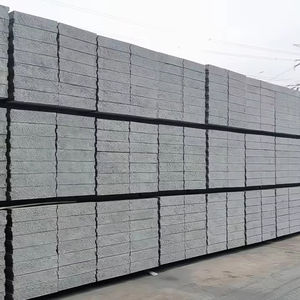
Workability describes how easily concrete can be mixed, transported, placed, and finished. Normal weight concrete has well-established handling practices and predictable behavior in pumps, forms, and finishing tools. Lightweight concrete can be more sensitive to water demand because lightweight aggregates may absorb water, and its lower density can affect pumping pressure and finishing timing.
The condition under which workability differences become a project issue is when placement methods or finishing schedules are tight. Contractors may need to adjust mix design, pre-soak aggregates, or modify pumping equipment. The practical conclusion is that normal weight concrete is generally more forgiving in routine placement, while lightweight concrete requires closer coordination between the supplier, the engineer, and the placement crew.
Typical Applications and Selection Guidance
Normal weight concrete is the standard choice for foundations, columns, beams, slabs, pavements, and most structural elements where strength and stiffness are primary. Lightweight concrete is often selected for high-rise floor systems, long-span decks, precast elements, and situations where reducing dead load or improving insulation is valuable. It is also used in some non-structural applications such as insulating roof fills.
The condition that should guide selection is the governing design requirement: strength, stiffness, dead load, thermal performance, or constructability. If strength and stiffness govern, normal weight concrete is usually the direct answer. If dead load or thermal performance governs, lightweight concrete may offer advantages that justify its different handling and design considerations. The conclusion is that the two materials serve different structural roles, and the right choice follows from the project's dominant constraint.
How to Compare Lightweight and Normal Weight Concrete for a Project
A practical comparison starts by identifying the governing load case and performance requirement. If self-weight is the problem, lightweight concrete is worth evaluating. If maximum strength or stiffness is the problem, normal weight concrete is the baseline. The next step is to check local availability, because not every region supplies the same lightweight aggregates or mix designs.
The condition that determines the final decision is the balance of cost, schedule, and performance. Lightweight concrete may carry a cost premium and require different placement practices, while normal weight concrete is widely available and well understood. The conclusion is that the comparison should be made on the specific project's constraints rather than on a general preference for either material.

Frequently asked questions
Is lightweight concrete as strong as normal weight concrete?
Lightweight concrete can achieve structural grades when properly designed, but very low-density mixes tend to have lower compressive strength than dense normal weight mixes. The specific mix should be verified for the required strength rather than assumed equivalent.
When should lightweight concrete be chosen over normal weight concrete?
Lightweight concrete is often considered when reducing dead load or improving thermal insulation is a primary design goal, such as in high-rise floor systems or long-span decks. Normal weight concrete remains the default when strength and stiffness govern.
Does lightweight concrete require different placement methods?
Lightweight concrete can be more sensitive to water demand and pumping because of its porous aggregates. Placement may require adjusted mix design, pre-soaked aggregates, or modified equipment, so closer coordination between supplier, engineer, and crew is useful.
Is normal weight concrete more durable than lightweight concrete?
Durability depends on the mix, exposure environment, and construction quality. Normal weight concrete is widely used in exposed and marine conditions, while lightweight concrete can also be durable but may need attention to permeability and reinforcement protection in aggressive exposures.
Concrete 4U is a supplier of Concrete Admixture with over 12 years of experience in nano-building energy conservation and nanotechnology development. It accepts payment via Credit Card, T/T, West Union and Paypal. TRUNNANO will ship the goods to customers overseas through FedEx, DHL, by air, or by sea. If you are looking for lightweight concrete relative materials, please feel free to contact us and send an inquiry.