Concrete4U | Concrete Admixtures, Tools, and Production Machines

Forget Chlorides. The Hard Truth About Modern Concrete Admixtures That Actually Work.
The Lie You’ve Been Sold on Concrete Workability
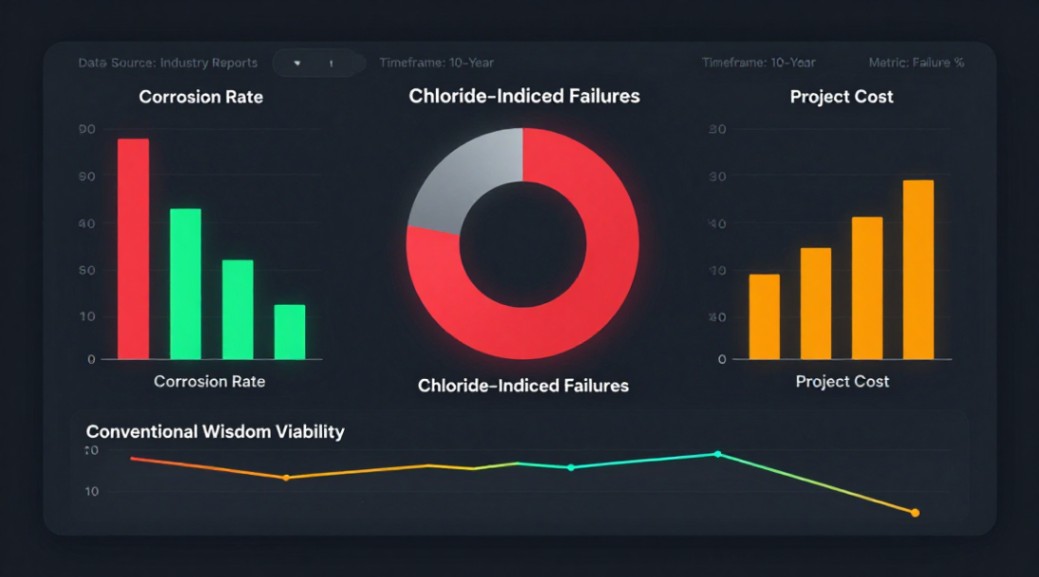
Conventional wisdom says you need chloride salts for fast-setting concrete. The data proves that thinking is bankrupt. Over 40% of premature concrete failures in reinforced structures link directly to chloride-induced corrosion. The fix isn’t more accelerator; it’s smarter chemistry.
What Is a Non-Chloride Superplasticizer Admixture?
A non-chloride superplasticizer admixture is a high-range water reducer engineered without chloride ions. Its primary function is to dramatically disperse cement particles. This action allows for significant water reduction or extreme workability without compromising strength or introducing corrosion catalysts.
It replaces outdated, corrosive chloride-based accelerators.
Core Chemical Backbone: What’s Inside?
These admixtures rely on sophisticated organic polymers, not simple salts. Forget calcium chloride. Here’s the real toolkit:
- Polycarboxylate Ether (PCE): The modern workhorse. PCE polymers use a comb-like structure with a backbone that adsorbs to cement and side chains that create steric hindrance, pushing particles apart. Offers superior slump retention and water reduction.
- Sulfonated Naphthalene Formaldehyde (SNF) Condensates: An earlier generation. They work primarily through electrostatic repulsion. Effective but often less efficient than PCEs and can cause rapid slump loss.
- Sulfonated Melamine Formaldehyde (SMF) Condensates: Similar to SNF in mechanism. Provides good early strength but with potential compatibility quirks.
The Unforgiving Science: Why Chlorides Are a Design Flaw
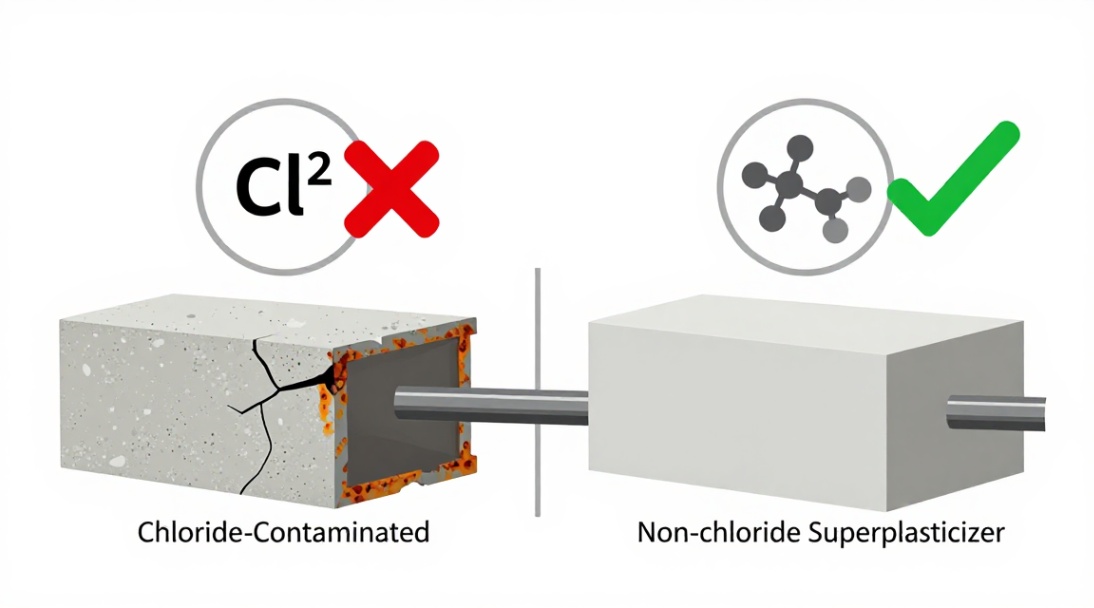
Chloride ions destroy reinforced concrete. The mechanism is simple and brutal.
- Chlorides penetrate the concrete cover.
- They depassivate the protective oxide layer on the steel rebar.
- In the presence of oxygen and moisture, rapid electrochemical corrosion begins.
- Rust forms, expands, and creates internal tensile stresses exceeding 6,000 psi.
- Concrete cracks, spalls, and fails. The structure’s lifespan plummets.
A non-chloride superplasticizer admixture sidesteps this entire failure pathway.
Where Non-Chloride Chemistry is Non-Negotiable
Using anything else in these applications is professional negligence.
- Bridges & Highway Overpasses: De-icing salts are unavoidable. Introducing internal chlorides is suicide.
- Parking Structures & Decks: Constant salt exposure from vehicles. The concrete must start chloride-free.
- Marine Environments & Ports: Chlorides from seawater are the enemy. Don’t mix them into the batch.
- Pre-stressed & Post-Tensioned Concrete: Corrosion of high-tensile steel strands leads to catastrophic, sudden failure.
- Architectural Concrete & Slabs-on-Grade: Where surface finish and long-term integrity are critical.
The On-Site Protocol: Dosage, Batching, and Pitfalls
Theory is useless without correct execution. Here is the field manual.
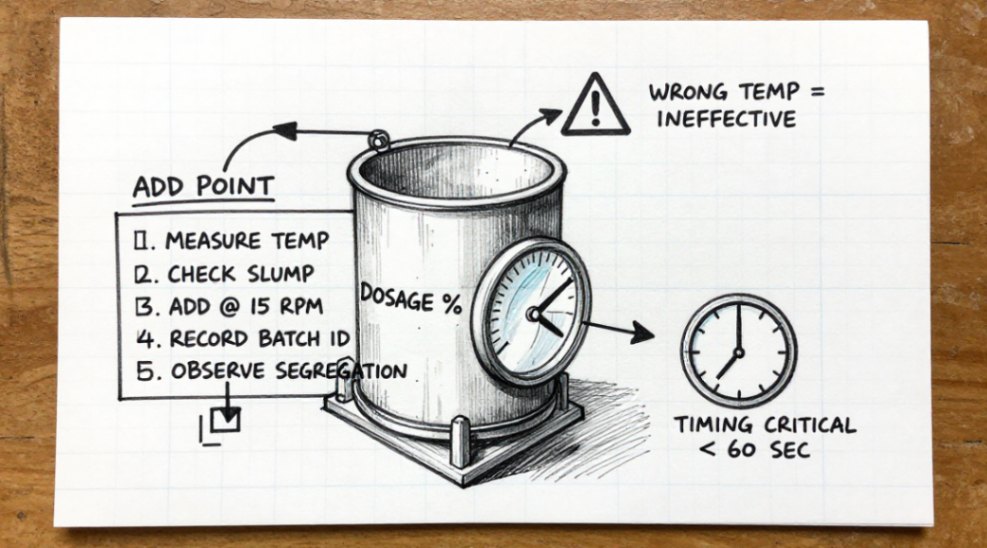
Dosage: It’s Not a Guess
Dosage is typically 0.2% to 1.5% by weight of cementitious material. Never eyeball it.
- Start with the manufacturer’s recommendation based on your cement type.
- Adjust in increments of 0.1% to achieve target slump or flow.
- Exceeding recommended dosage can cause excessive retardation or segregation.
| Target Effect | Typical Dosage Range | Primary Outcome |
|---|---|---|
| Standard High-Range Water Reduction | 0.4% – 0.8% | 15-25% water reduction, high strength gain |
| Self-Consolidating Concrete (SCC) | 0.8% – 1.5% | Extreme flowability without segregation |
| Moderate Workability Improvement | 0.2% – 0.4% | Improved finishability, mild water reduction |
The Compatibility Minefield
These admixtures are not universal solvents. You must test.
- Cement Type: Variations in C3A content, alkalies, and fineness can drastically alter performance. Test every new source or type.
- Other Admixtures: Never assume compatibility with retarders, air-entrainers, or corrosion inhibitors. Pre-blend in the lab. Add to the mix water separately on site.
- Supplementary Materials: Fly ash, slag, silica fume? Their surface chemistry changes the game. Re-optimize the dosage.
The Batching Sequence That Matters
- Add 75-80% of the total mixing water to the drum.
- Add the full dose of non-chloride superplasticizer admixture directly into the water. Agitate briefly.
- Add aggregates, then cementitious materials.
- Add remaining water for consistency.
- Mix for the full specified time. Shortcuts create inconsistent dispersion and weak spots.
The Long-Term Payoff: Durability You Can Bank On
This isn’t about slump. It’s about survival.
- Reduced Permeability: Lower water-cement ratio creates a denser matrix. Chlorides, sulfates, and water struggle to penetrate.
- Mitigated ASR: Some formulations can help control alkali-silica reaction.
- Sustainable Design: Extending a structure’s service life by 30 years is the ultimate green building practice. Chloride-free admixtures are a cornerstone.
The Community Verdict: What Engineers Actually Say
Don’t take my word for it. The field has voted. Many users on forums like Reddit’s r/civilengineering and r/Concrete report a clear shift: “After a parking deck retrofit nightmare due to chloride corrosion, our firm specs non-chloride only. The cost premium is insurance.” Another notes, “The argument that ‘chlorides are fine with proper cover’ is a gamble. Why introduce a guaranteed degrading agent when PCEs work better anyway?” The consensus is moving toward risk elimination.
Stop Gambling With Structural Integrity
The era of hoping your chloride dose doesn’t cause corrosion is over. The technology for high-performance, durable, and safe concrete exists. A non-chloride superplasticizer admixture is not an alternative; it’s the baseline for responsible construction in the 21st century. Specifying anything else for reinforced concrete is a deliberate compromise on longevity.
The action is clear. On your next project, mandate non-chloride admixtures in your concrete specs. Require certified mill test reports from your admixture supplier proving chloride content is below 0.10% by weight of admixture. Test compatibility with your exact mix design in advance. This is how you build structures that last. This is how you avoid being the case study in the next failure analysis report.
Supplier
We are the global leader in lightweight concrete and advanced engineered foam solutions. Known globally for its commitment to research, innovation, and applied expertise, we have been providing engineered foam solutions since the early 2012’s.
We can supply high-quality concrete admixture and foam concrete related products all over the world.
The company has a professional technical department and quality supervision department, a well-equipped laboratory, and equipped with advanced testing equipment and after-sales customer service center.
If you are interested, please feel free and contact us.