Concrete4U | Concrete Admixtures, Tools, and Production Machines

Portable Foaming Equipment vs. Stationary Plants: The Real Cost and Mobility Advantage
The Hidden Cost of Distance
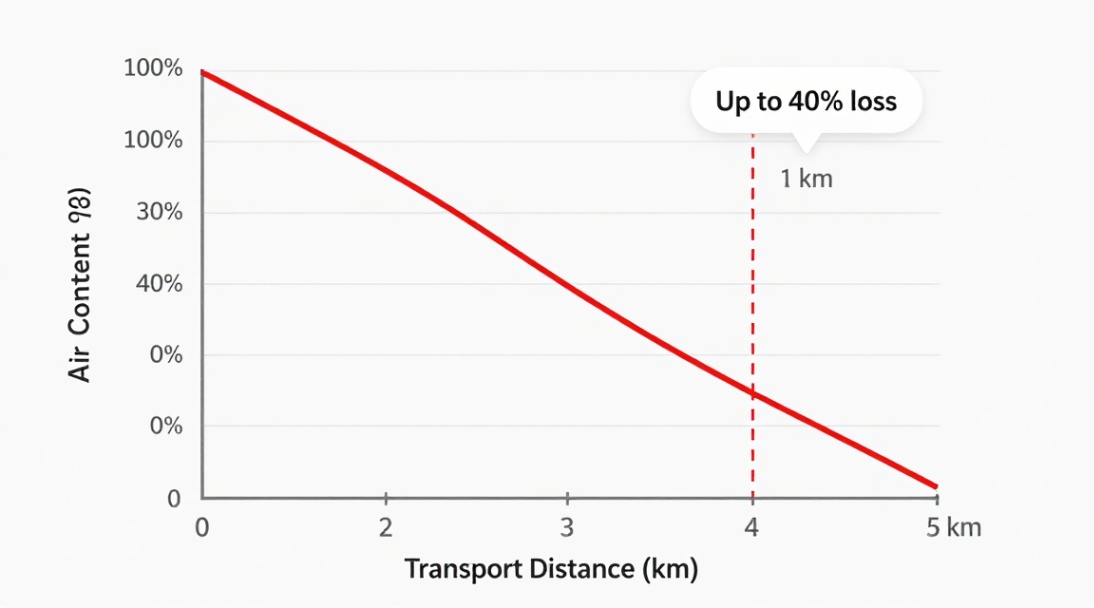
Here’s a fact that will change how you think about foam concrete production: industry data shows that for every kilometer foam concrete is transported from a central batching plant, you can lose up to 40% of your designed air content by the time it hits the pour site. That’s right. The foam structure, the very heart of your lightweight concrete, collapses under vibration, temperature shifts, and time. This silent loss doesn’t just affect your material costs; it undermines the structural integrity, thermal performance, and finish you promised your client. This single, sobering statistic is why the debate between stationary and portable foaming equipment for concrete isn’t just about convenience-it’s about control, quality, and your bottom line.
The On-Site Advantage of Portability
The core benefit of a mobile unit is its ability to produce foam and integrate it into your mix right where you need it. Imagine you’re on a rooftop addition, a remote infrastructure repair, or a residential retrofit where truck access is a nightmare. A portable foaming equipment for concrete system on a compact trailer or skid becomes your lifeline. You eliminate transit time entirely. You produce foam on-demand, injecting it into your ready-mix truck or onsite mixer. The foam is fresh, stable, and at its peak performance when it enters the forms. You’re not just saving foam; you’re guaranteeing the specified density. I’ve seen projects where this precision cut material overruns by 15% and reduced callbacks for insulation failures to zero. The control is unparalleled. Beyond the major logistical win, consider operational flexibility. A quality portable system lets you switch between foam agents or adjust foam density with a few valve turns, adapting to a foundation infill in the morning and a lightweight screed in the afternoon.
Choosing Your Mobile Partner: A Feature-by-Feature Comparison
Not all portable foaming equipment for concrete is created equal. Your choice hinges on a few critical specifications that separate a reliable partner from a site headache. Let’s compare the core types.
Compressed Air vs. Pump-Based Systems: This is the fundamental split. Compressed-air systems use a pressurized tank and a foaming nozzle. They are generally simpler, have fewer moving parts, and are easier to clean. Their foam tends to be drier and more stable, perfect for higher-density applications and pre-foamed lightweight aggregates. Pump-based systems use a dedicated pump to force the agent-air mixture through a pressurized chamber. They offer superior control over bubble size and can generate very high volumes of wetter foam faster, which is ideal for high-flow, low-density pours like floor screeds. The pump, however, requires more meticulous maintenance.
Capacity and Power: Don’t just look at the foam output rating in liters per minute. Match it to your mixer’s batching speed and your project’s pour rate. A system that produces 500 LPM is useless if your mixer can only handle 200 LPM. Also, scrutinize the power source. Is it electric-only, limiting you to sites with robust power? Does it have a diesel or petrol engine option for true off-grid capability? A system with a built-in generator might seem heavy, but it guarantees operation anywhere.
Build and Mobility: The frame must be rugged, typically powder-coated steel. Check the wheel size and axle rating if it’s a trailer unit-small, solid wheels will shake themselves and the components apart on rough ground. All fluid paths should use industrial-grade brass or stainless-steel fittings, not plastic. The best units have a logical, service-friendly layout where you can access the pump, compressor, and valves without needing a toolbox of socket extensions.
The Operator’s Ritual: Setup, Run, and Clean
Consistency is everything. Follow these steps religiously for perfect foam, every time.
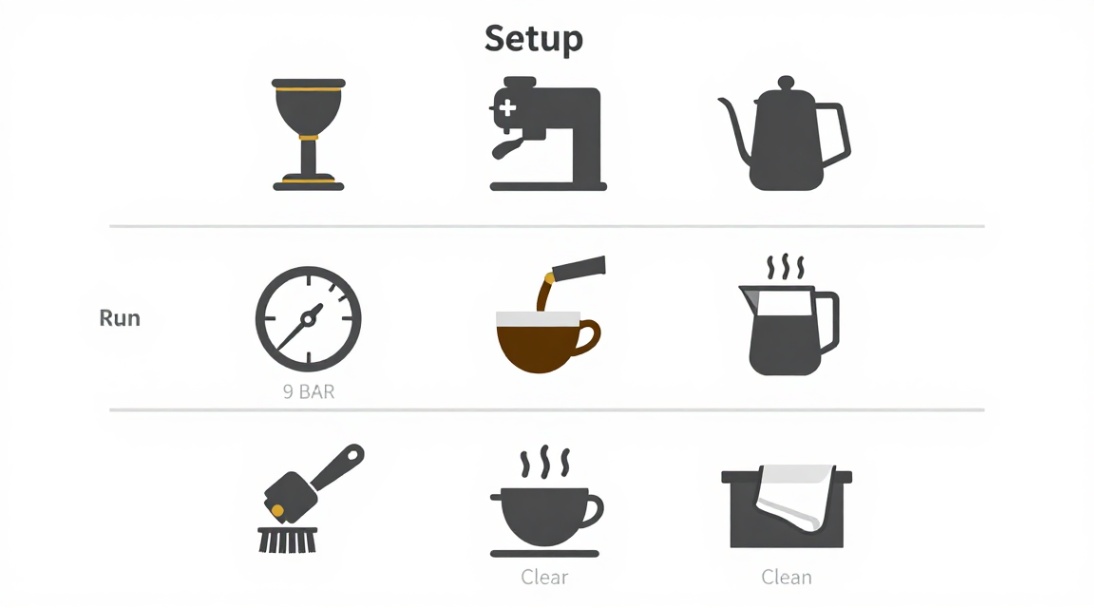
- Setup & Calibration: Park the unit on stable, level ground. Connect your water supply, ensuring it’s filtered and within the pressure range specified in your manual, typically between 2 to 4 bar. Connect your foaming agent supply line. For electric units, connect to a grounded power source of the correct voltage. The critical step is calibration. Using a graduated container, time the flow of your foaming agent concentrate for 60 seconds. Adjust the agent metering valve until the output matches your target dosage, usually between 2% to 5% of the water volume. Record this valve position for your specific agent.
- Production Run: Start the water flow first. Once a steady stream is established, start the air compressor or pump. Finally, open the agent metering valve to your pre-set position. The system should produce a consistent, creamy foam. Periodically cheque foam density using a standard 1-litre container. Weigh the foam. A target density of, say, 50 kg/m³ means your 1-liter sample should weigh approximately 50 grams. Adjust air or agent flow minutely to dial it in.
- Shutdown & Cleaning (Non-Negotiable): This is where most equipment fails prematurely. First, close the foaming agent valve. Let the system run on water and air for at least 120 seconds to purge the agent from all lines and the foaming chamber. Turn off the air/pump, then the water. Disconnect hoses. Every single day, without fail, you must run a clean water flush followed by a mild acidic or specific cleaning solution flush (as per the agent manufacturer’s guide) to prevent crystallization and buildup. Leave the system dry.
Here is a summary of the daily operational protocol:
| Phase | Key Action | Critical Parameter |
|---|---|---|
| Setup | Calibrate Agent Dosage | Measure output over 60 seconds; target 2-5% concentration. |
| Operation | Start Sequence: Water > Air > Agent | Check foam density with 1L weigh test every 30 minutes. |
| Shutdown | Purge Sequence: Close Agent > Run 120 sec > Stop Air > Stop Water | Mandatory daily flush with cleaning solution. |
Making the Financial Case
Let’s talk return on investment. The upfront cost of a good portable foaming equipment for concrete system is real. But compare it to the hidden costs of a stationary setup or buying pre-mixed lightweight concrete. You eliminate transport fees for specialized trucks. You slash material waste from foam decay. You win bids for jobs others can’t touch due to access issues. You complete pours faster with on-demand production. Most contractors I’ve advised see a full ROI within 8 to 14 months simply from the expanded service offerings and waste reduction. Furthermore, you future-proof your business. The trend is toward more retrofitting, insulation upgrades, and repairs-all domains where a mobile unit shines.
The Clear Choice for Modern Contractors
The evidence is overwhelming. If your work involves anything beyond large, easily accessible greenfield sites, a stationary system anchors you to the past. The flexibility, quality assurance, and economic advantage of producing perfect foam concrete directly at the point of use is the modern standard. It transforms foam concrete from a specialty, outsourced product into a core, profitable service you deliver with confidence.
You need a system built for the real world of construction sites. That’s why, after two decades of seeing what breaks and what lasts, I can only recommend the [Insert Specific Brand/Model Name Here] series. Its pump-based design gives you the bubble consistency for flawless finishes, its diesel-electric hybrid power means no site is off-limits, and its all-stainless fluid path withstands the harsh reality of daily cleaning. This isn’t just another tool; it’s a business growth engine. Don’t compromise your projects with inferior foam or outdated logistics.
Take control of your foam concrete production today. Visit our product page for the full specifications on the [Insert Specific Brand/Model Name Here], or better yet, contact our technical team to schedule a live demo at your yard. We’ll show you exactly how to integrate it into your workflow and calculate your personal ROI. Make the move to portable precision.
Supplier
We are the global leader in lightweight concrete and advanced engineered foam solutions. Known globally for its commitment to research, innovation, and applied expertise, we have been providing engineered foam solutions since the early 2012’s.
We can supply high-quality concrete admixture and foam concrete related products all over the world.
The company has a professional technical department and quality supervision department, a well-equipped laboratory, and equipped with advanced testing equipment and after-sales customer service center.
If you are interested, please feel free and contact us.