Concrete-mesa | Concrete Admixtures, Tools, and Production Machines

Choosing the Right Foam Generator for Concrete: A No-Nonsense Guide for Production
The Short Answer on Foam Generator Machines
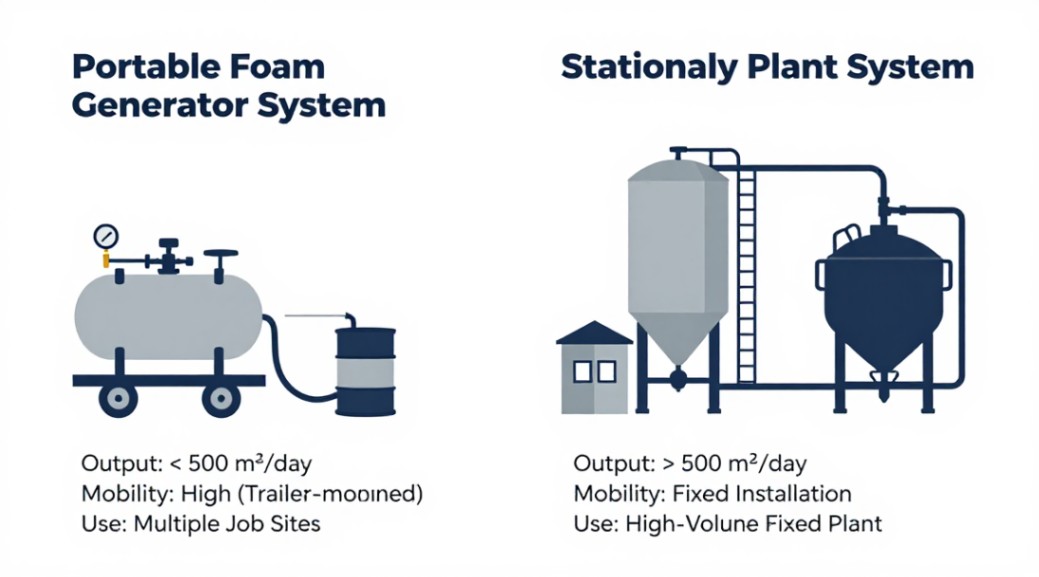
The right foam generator for concrete production depends on your daily volume and site mobility. For daily outputs under 500 cubic meters and multiple job sites, choose a portable generator. For fixed-plant production exceeding 500 cubic meters daily, invest in a stationary, high-capacity system.
Foam Generator FAQ: Your Questions, Answered
What exactly does a foam generator do in concrete production?
It creates stable, microscopic air bubbles called “foam.” We mix this foam into a cement slurry to form lightweight cellular concrete. The machine’s core job is consistency. Every bubble must be uniform in size and stable enough to survive mixing and pouring. Good foam equals predictable concrete strength and insulation properties.
Portable vs. Stationary: Which foam generator is best?
This is the most common fork in the road. Let’s compare the two main paths.
- Portable Foam Generators: These are compact, trailer-mounted units. Their main advantage is mobility. You can move them between different ready-mix trucks or job sites in a single day. Their output typically ranges from 10 to 30 cubic meters of foam per hour. The trade-off is a slightly lower foam density stability compared to industrial systems. Many contractors on Reddit forums praise them for small-to-medium projects like floor screeds or lightweight fill.
- Stationary Foam Generators: These are industrial fixtures installed at a batching plant. They connect directly to plant air and water lines. Stationary systems prioritize relentless, high-volume output-often 50 to 100+ cubic meters of foam per hour. Their foam stability is superior, which is critical for producing consistent precast panels. The downside is zero mobility and a higher upfront cost.
What are the key specs I should compare?
Look beyond the brochure’s horsepower. Focus on these three operational metrics.
- Foam Density Range: A quality generator must produce foam between 30 and 120 grams per liter (g/l). You need the low end for ultra-lightweight fill (50 kg/m³ concrete) and the high end for stronger structural elements.
- Output Capacity: Match the machine’s cubic-meter-per-hour rating to your plant’s or truck’s batch cycle time. A slow generator bottlenecks your entire production line.
- Foam Stability (Drainage Time): This is the most critical quality test. Good foam should show less than 15% liquid drainage after 30 minutes in a measuring cylinder. Ask for a demo and measure this yourself.
How do I troubleshoot bad foam?
Foam problems usually trace back to three culprits: the concentrate, the mix ratio, or the generator itself.
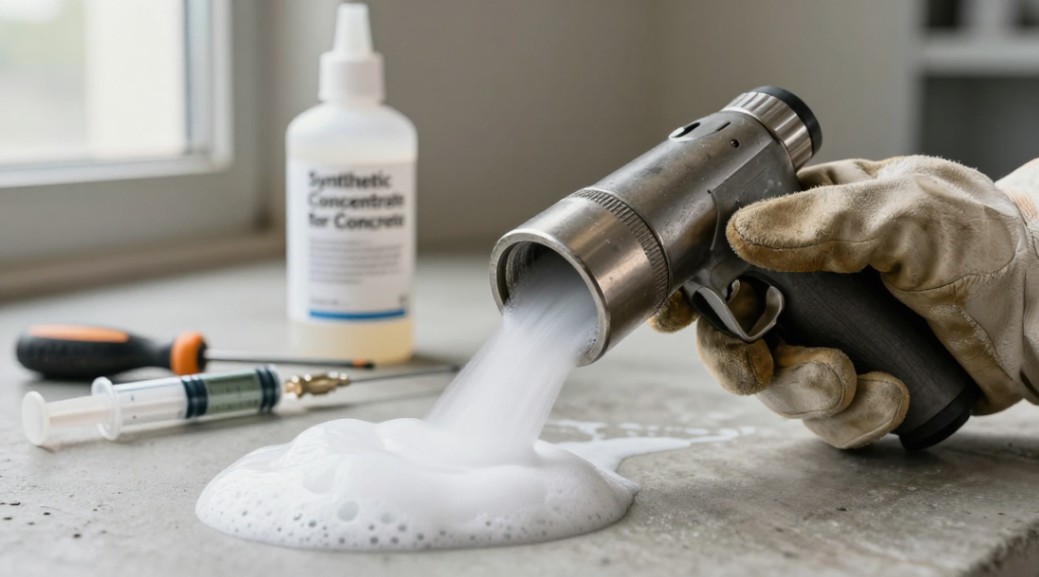
Foam collapses or has large bubbles? First, cheque your foam concentrate. Is it the synthetic or protein-based type specifically designed for concrete? Using a generic dish soap will fail. Second, verify the dosing pump’s calibration. An incorrect water-to-concentrate ratio ruins stability. Third, inspect the foam generating nozzle for wear or blockages. A worn nozzle creates inconsistent bubble size.
Inconsistent foam density between batches? This points to pressure fluctuations. Ensure your air compressor delivers a steady, dry air supply at the pressure specified by the generator manufacturer (typically 4-6 bar). Install a pressure regulator and a quality air dryer in your line.
What’s the real cost and ROI?
The machine’s price tag is just the start. A proper cost analysis includes the foam concentrate (a recurring material cost), maintenance parts (like pump seals and nozzles), and labor for operation. The return on investment comes from the value of the concrete you produce. Lightweight foam concrete commands a higher price per cubic meter than standard concrete due to its insulating and weight-saving properties. For a busy plant, the payback period on a stationary system can be under 18 months. For a contractor, a portable unit pays for itself by enabling you to bid on specialized lightweight concrete jobs.
The Core Principle: How It All Works
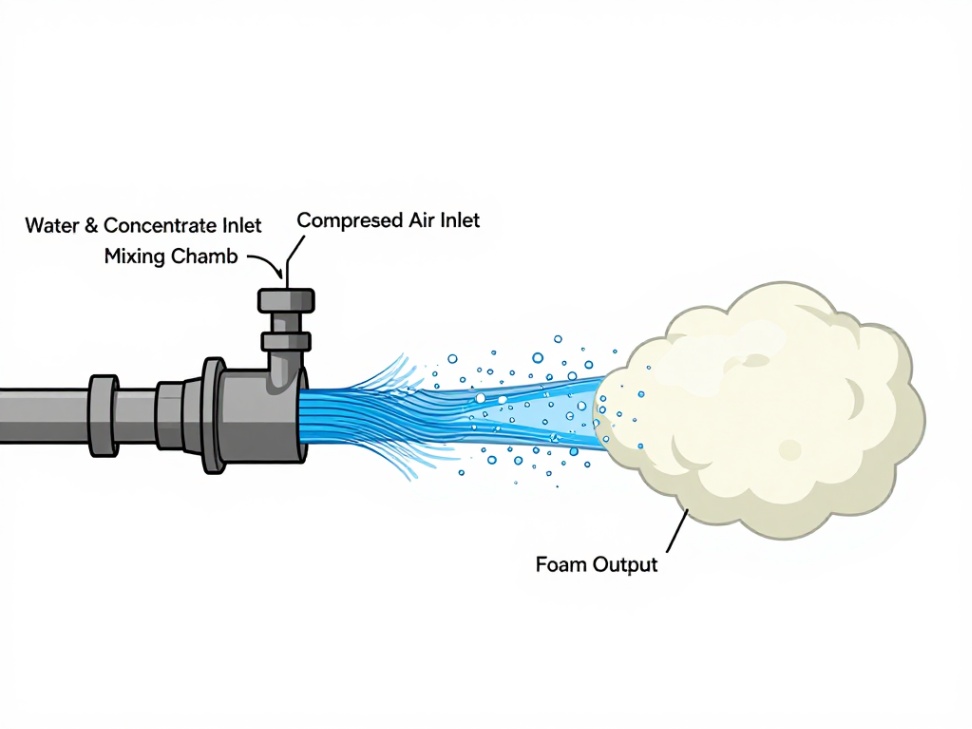
Understanding the process helps you spot a good machine. A foam generator works on a forced aspiration principle. It mixes three components: water, foam concentrate, and compressed air. A precision dosing pump injects the concentrate into the water stream at a ratio of about 2-5%. This solution then forces through a specialized nozzle. Compressed air, introduced at the nozzle, gets sheared into billions of tiny, uniform bubbles by the turbulent liquid flow. The foam concentrate surrounds each bubble with a stabilizing film, preventing them from coalescing. The result is a wet, stiff foam that looks like shaving cream and holds its shape.
Making Your Choice
We’ve stripped away the marketing. Your decision matrix is now clear. Assess your daily production volume and site requirements first. Then, demand demos that measure foam density and stability. Finally, calculate your total cost of ownership, not just the purchase price. The right foam generator isn’t a magic box-it’s a reliable tool that unlocks the profitable niche of lightweight, insulating concrete. Your next step is to request performance data sheets from manufacturers and insist on a live material test with your own mix design.
Supplier
We are the global leader in lightweight concrete and advanced engineered foam solutions. Known globally for its commitment to research, innovation, and applied expertise, we have been providing engineered foam solutions since the early 2012’s.
We can supply high-quality concrete admixture and foam concrete related products all over the world.
The company has a professional technical department and quality supervision department, a well-equipped laboratory, and equipped with advanced testing equipment and after-sales customer service center.
If you are interested, please feel free and contact us.