Concrete-mesa | Concrete Admixtures, Tools, and Production Machines

The Right Foam for the Job: A Practical Guide to Choosing Concrete Foaming Agents
A Sobering Statistic to Start
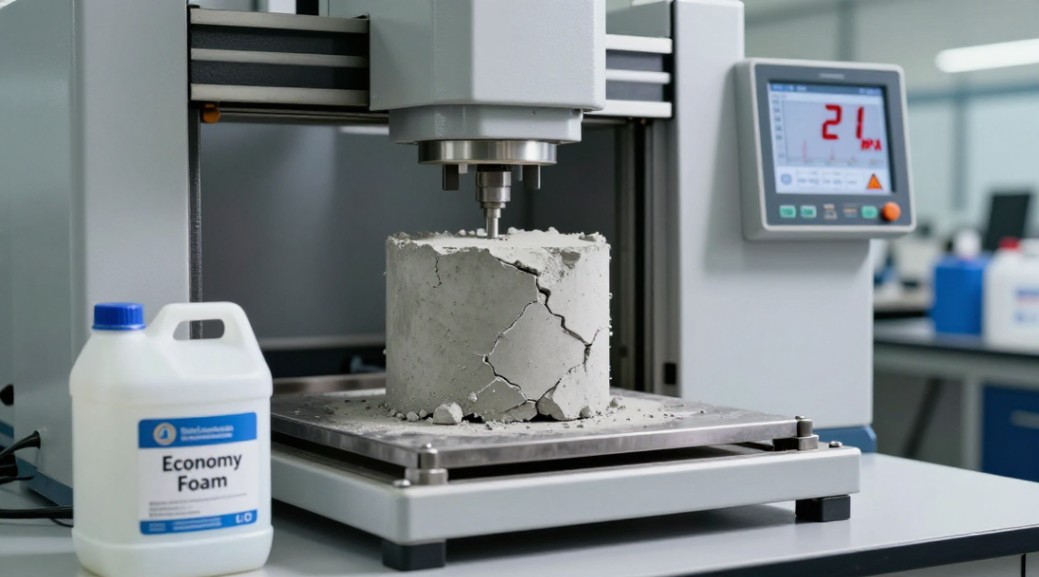
Industry data shows that using an incompatible or low-quality foaming agent can reduce the final compressive strength of your lightweight concrete by up to 30%. That’s not a minor flaw. It’s a structural liability waiting to happen. This isn’t about saving pennies. It’s about building integrity from the ground up. Let’s fix that.
The Concrete Foaming Agent Selection Checklist
Follow this list. Check each box. Your finished slab, wall, or block will thank you.
Step 1: Define Your Project’s Core Identity
You must know what you’re building before you choose your tools. This is non-negotiable.
- Lightweight Fill (CLSM): Your primary goal is density reduction for utility backfill or geotechnical applications. Strength is secondary to flowability and minimal settlement.
- Insulating Concrete (CIP): You need stable, closed-cell foam for thermal performance in walls or roofs. Consistency and long-term R-value are king.
- Precast Elements: You demand high early strength for fast demolding and handling. The foam must not interfere with set times or finishing.
Reddit forums are filled with contractors who skipped this step. One user lamented, “Used a generic agent for a roof pour, ended up with inconsistent foam collapse and cold spots.” Know your ‘why’.
Step 2: Understand the Chemistry in Your Bucket
You’re not just buying soap. You’re buying engineered chemistry. There are two main families.
- Protein-Based Agents: Derived from animal byproducts (e.g., hydrolyzed keratin). They produce a stiff, stable foam with smaller, more uniform bubbles. The concrete mix is more cohesive and less prone to segregation. Experts like Dr. Michael Berry of the National Ready Mixed Concrete Association note their superior performance in high-density, structural lightweight concrete.
- Synthetic Agents (SLES, AOS): Chemically engineered surfactants. They generate high volumes of foam quickly and are often more cost-effective. The foam tends to be more fluid, which can benefit self-levelling applications. However, bubble structure can be less stable over time if not precisely dosed.
The choice? For structural stability and durability, lean towards protein-based. For high-volume, non-critical fill where cost drives the project, synthetics may suffice. Never compromise on foam stability.
Step 3: Decode the Technical Specifications
Move past the sales brochure. Demand concrete data. Here’s what to ask for and test.
| Specification | What It Means | Your Action |
|---|---|---|
| Target Dry Density | The final weight per cubic foot (pcf) or kg/m³ of the cured concrete. | Your design specifies this (e.g., 100 pcf). The agent must reliably achieve it. |
| Compatibility | How the agent interacts with your specific cement, SCMs (like fly ash), and admixtures. | Conduct a mortar mix test. Look for set time delays, excessive air loss, or fluidity changes. |
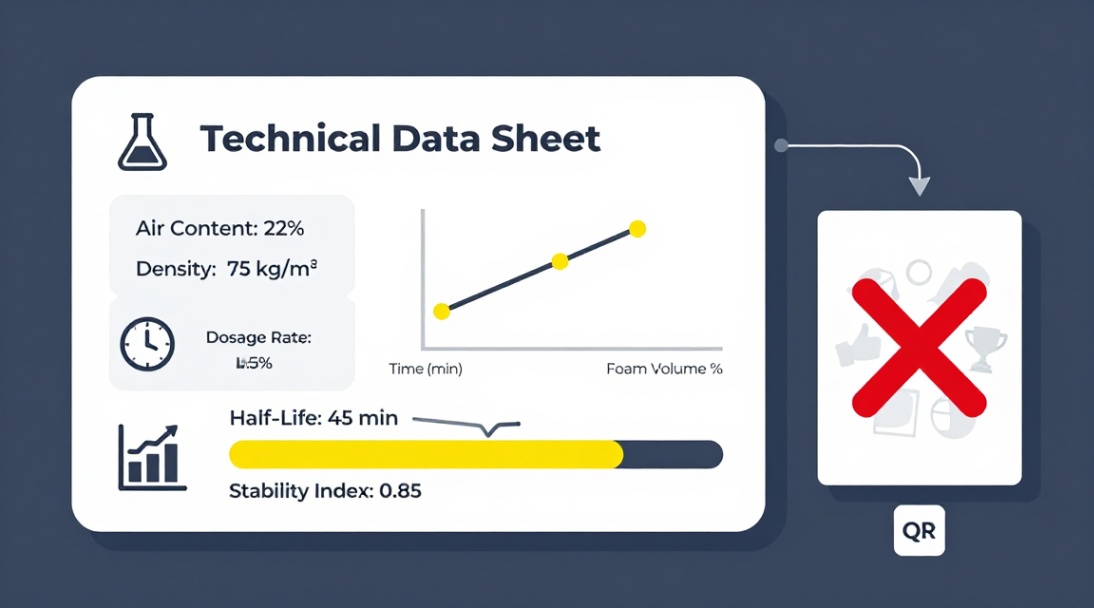
| Foam Half-Life | The time it takes for a column of pure foam to drain 50% of its liquid. | Perform a simple graduated cylinder test. A good agent maintains >60% of its volume for 30 minutes. |
| Dosage Rate (% by weight of cement) | How much agent is needed to hit your target density. | Lower dosage with higher efficiency is better. It directly impacts cost and mix consistency. |
Step 4: Perform the On-Site Reality Check
Lab specs are a promise. Field performance is the truth. Do not skip trial batches.
- Test with Your Water: Local water pH and mineral content can destabilize foam. Mix a sample batch with your site water.
- Test at Ambient Temperature: Foam behaves differently in 45°F (7°C) vs. 85°F (29°C) conditions. Mimic the pour day.
- Measure Everything: Weigh the agent. Track the foam density entering the mixer. Cast test cylinders. Measure the plastic density (fresh concrete) and later test the hardened density and compressive strength.
This process reveals the true character of the agent. As noted in a case study by Concrete Construction Magazine, a precast plant eliminated surface pitting by switching agents after trial batches showed one formula was sensitive to their recycled water source.
Step 5: Make the Final Decision – It’s Not Just Price
Now, weigh all factors. Create your own scorecard.
- Foam Stability & Performance: Does it pass the field tests? (Weight: 40%)
- Supplier Reliability & Support: Can you call them at 6 AM with a problem? Do they provide technical data sheets (TDS) and safety data sheets (SDS)? (Weight: 25%)
- Long-Term Volume Stability: Will the concrete maintain its shape and insulation value, or will it shrink and crack over decades? Ask for independent test reports.
- Total In-Place Cost: Calculate cost per cubic yard of finished concrete, considering dosage rate, not just drum price.
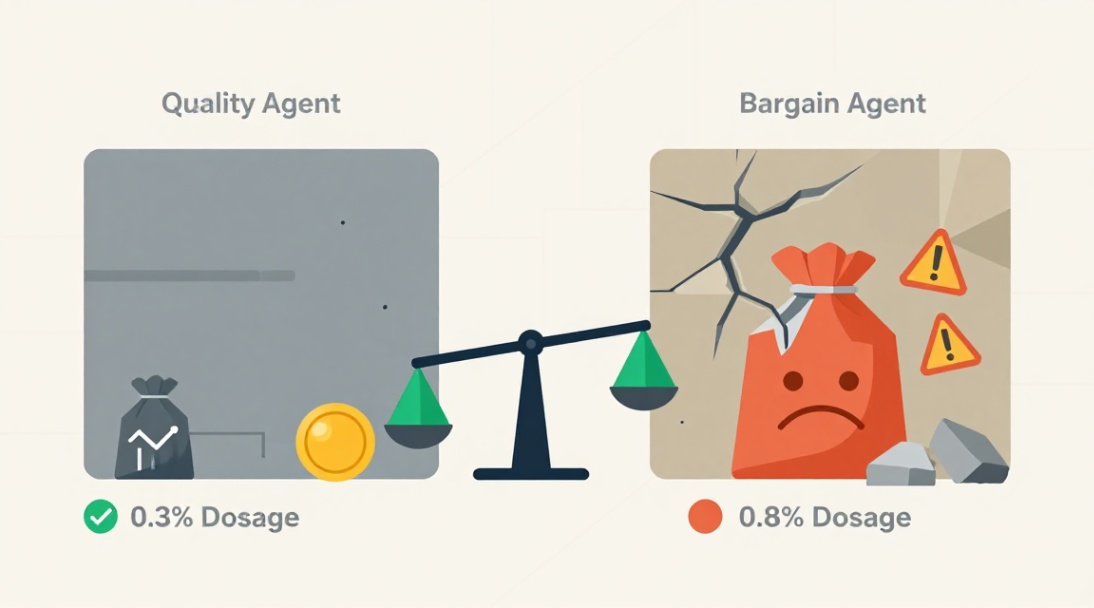
Often, the slightly more expensive agent that uses 0.3% dosage and delivers rock-solid stability is cheaper in the long run than the “bargain” agent at 0.8% dosage that causes callbacks and waste.
Your Path Forward
Choosing a foaming agent is a systematic, technical process. It demands attention to detail. Start by clearly defining your project’s needs. Understand the core chemistry. Demand and verify the technical data. Then, and only then, validate everything with a rigorous on-site trial. This disciplined approach separates successful projects from problematic ones. Your next step is to shortlist two agents that fit your project profile and schedule those critical trial mixes. The right choice is in the mix.
Supplier
We are the global leader in lightweight concrete and advanced engineered foam solutions. Known globally for its commitment to research, innovation, and applied expertise, we have been providing engineered foam solutions since the early 2012’s.
We can supply high-quality concrete admixture and foam concrete related products all over the world.
The company has a professional technical department and quality supervision department, a well-equipped laboratory, and equipped with advanced testing equipment and after-sales customer service center.
If you are interested, please feel free and contact us.