Concrete4U | Concrete Admixtures, Tools, and Production Machines

Mid-Range Water Reducer for Concrete: The Practical Choice for Balanced Performance
When “Just Enough” is Exactly What You Need
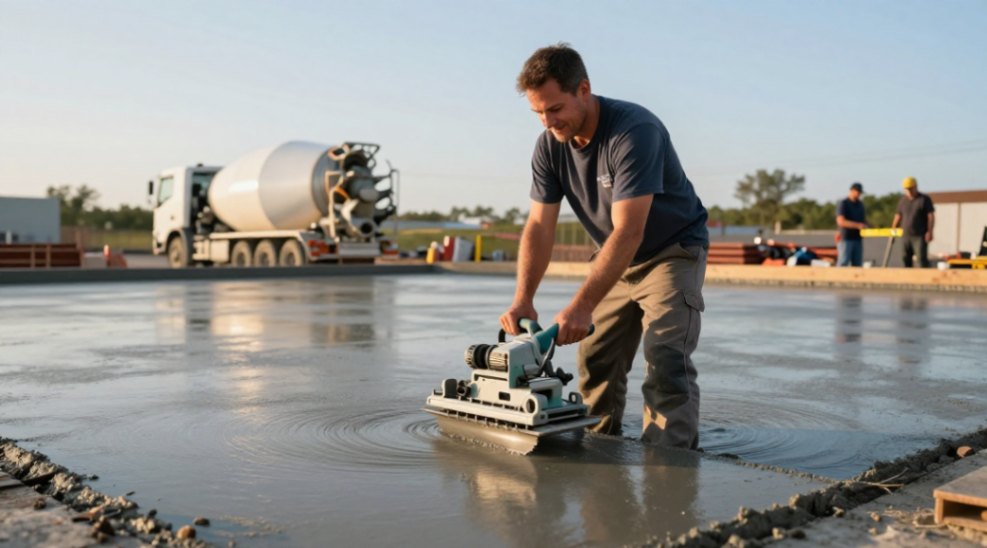
I remember my first big pour on a commercial slab job years ago. The foreman wanted more slump for the crew to place it easily, but we couldn’t afford the hit to strength from adding water. Someone suggested a “mid-range” water reducer. I was skeptical. It wasn’t the super-high-tech stuff we saved for skyscrapers. But after using it, we hit the slump target without the extra water. The finish was cleaner, the strength came in above spec, and the crew wasn’t fighting the concrete. That day taught me a lesson about balance. Sometimes, the most effective tool isn’t the most extreme one. It’s the one that fits the job perfectly. Let’s talk about what that tool is.
What is a Mid-Range Water Reducer for Concrete?
A mid-range water reducer for concrete is a chemical admixture that delivers a significant, but not extreme, increase in workability or slump without adding water. We call it the “workhorse” admixture. Its primary function is to disperse cement particles more efficiently, reducing the internal friction in the mix. This lets us achieve a more fluid, easier-to-place concrete while actually lowering the water-cement ratio. That last part is crucial. Lower water content directly translates to higher strength and better long-term durability.
Why Choose a Mid-Range Water Reducer? Key Advantages
In the toolbox of concrete chemicals, you have three main options: standard, mid-range, and high-range water reducers. The mid-range option sits firmly in the sweet spot for most everyday applications. Here’s how it stacks up.
The Core Benefit is Control. You gain 3 to 6 inches of slump increase reliably. This is enough to solve most placement headaches on slabs, walls, and beams without the potential for over-segregation or excessive set time delays that can come with high-range products. Many users in online construction forums note this reliability. As one project manager put it on a Reddit discussion, “For our precast yard, switching to a consistent mid-range product cut down on callbacks for surface blemishes. We get the workability we need without the mix getting too ‘soupy’ on the edges.”
Standard vs. Mid-Range vs. High-Range: A Clear Comparison
The table below breaks down the practical differences you’ll see on site. This is the information we use every day to make the right call.
| Feature | Standard Water Reducer | Mid-Range Water Reducer | High-Range Water Reducer (Superplasticizer) |
|---|---|---|---|
| Primary Role | Basic water reduction (5-10%) | Moderate water reduction & significant slump increase | Extreme water reduction or high-slump, self-consolidating concrete |
| Typical Slump Increase | 1-2 inches | 3-6 inches | 7-10+ inches |
| Water Reduction | Modest (~5%) | Good (6-12%) | Very High (12-30%+) |
| Set Time Impact | Can retard significantly | Minimal to slight retardation | Varies (some retard, some don’t) |
| Best For | General purpose, low-strength mixes | Slabs, walls, beams, footings, precast, improved finishability | High-strength concrete, complex forms, congested rebar, SCC |
| Cost Profile | Lowest | Mid-range, high value | Highest |
How to Use Mid-Range Water Reducers Effectively
Getting the best results isn’t complicated, but it does require attention to detail.
Dosage and Application
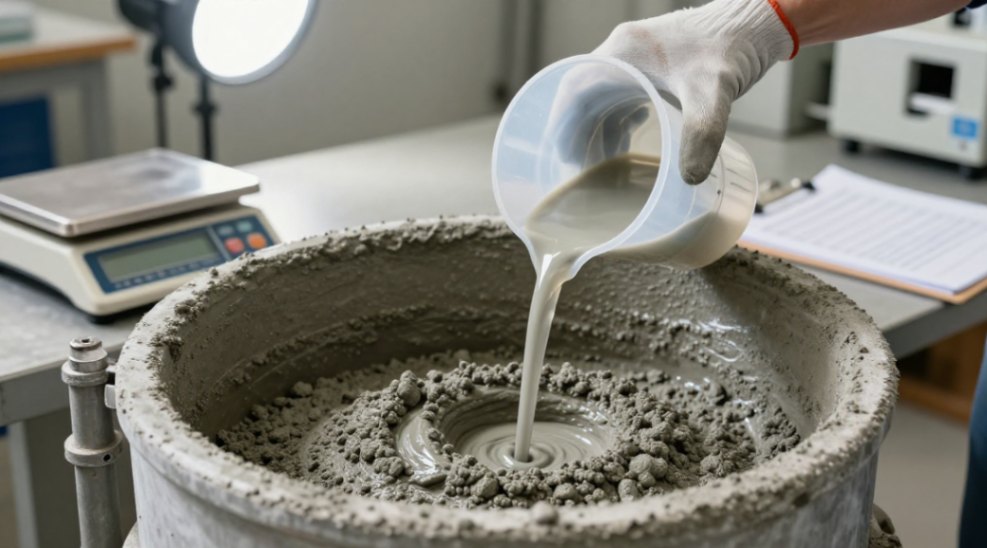
Always follow the manufacturer’s data sheet. The typical dosage for a mid-range water reducer for concrete falls between 3 to 10 fluid ounces per 100 pounds of cementitious material. We always add it to the mixing water or with the initial batch water. Adding it late to a stiff mix is far less effective.
Compatibility and Mixing
These admixtures generally play well with others. They are highly compatible with air-entraining agents, which is vital for freeze-thaw durability. A best practise is to introduce the air-entrainer first, let it mix, then add the mid-range water reducer. For consistent results, ensure adequate mixing time-usually a minimum of 3 minutes in a central mixer or 30-50 revolutions in a truck drum after all materials are in.
Selecting the Right Admixture for Your Project
So, when do you pull the mid-range option off the shelf? Use this simple decision tree.
- Choose a Mid-Range Water Reducer when: Your project needs better workability for finishing but doesn’t require extreme flow. Think parking garages, residential foundations, tilt-up walls, and most structural slabs. The climate matters too. In hot weather, its minimal set retardation is a major advantage over standard water reducers.
- Consider a High-Range Water Reducer when: You’re dealing with very low water-cement ratios for high strength, highly congested reinforcement, or need self-consolidating properties.
- A Standard Water Reducer might suffice when: Workability is less critical, cost is the primary driver, and you can manage longer set times.
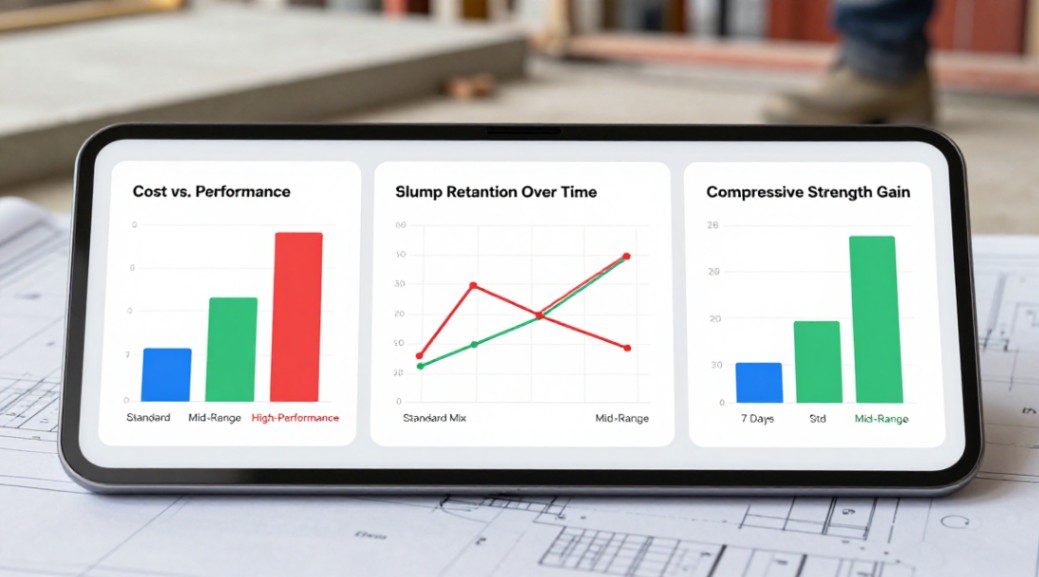
The value proposition is clear. For a moderate increase in cost over standard admixtures, a mid-range water reducer for concrete gives you vastly better control over slump, strength, and finish. It solves the most common onsite concrete problem: making it easier to place without compromising quality.
Getting Started with Mid-Range Technology
If the story at the beginning sounds familiar, it might be time for a change. The first step is simple. Review your last few projects where workability was a challenge. Could a 4-inch slump boost have made a difference? Then, talk to your ready-mix supplier or admixture representative. Ask for a trial batch with a mid-range water reducer using your standard mix design. Feel the difference in the chute, watch how it finishes, and check the 7-day breaks. Concrete technology is about solving practical problems. This is one tool that does exactly that, without overcomplicating the pour.
Supplier
We are the global leader in lightweight concrete and advanced engineered foam solutions. Known globally for its commitment to research, innovation, and applied expertise, we have been providing engineered foam solutions since the early 2012’s.
We can supply high-quality concrete admixture and foam concrete related products all over the world.
The company has a professional technical department and quality supervision department, a well-equipped laboratory, and equipped with advanced testing equipment and after-sales customer service center.
If you are interested, please feel free and contact us.