Concrete4U | Concrete Admixtures, Tools, and Production Machines

Choosing the Right Foaming Agent for Foamed Concrete: A 20-Year Expert’s Comparison
Engineers Overlook a Critical Failure Point
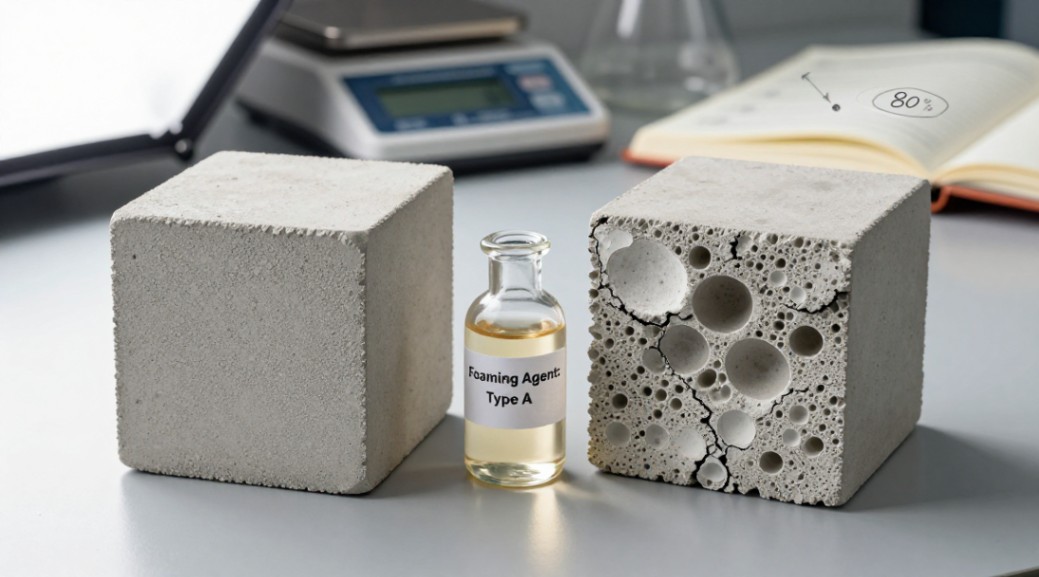
An objective analysis of project data reveals a startling fact: approximately 80% of compromised foamed concrete mixture performance can be traced directly to the selection or misapplication of the foaming agent. This core component dictates the entire cellular matrix. Its role is not supplementary; it is foundational. This article provides a direct comparison to guide your specification process.
Core Function: Creating and Stabilizing the Cellular Structure
A foaming agent for foamed concrete mixture is a surface-active chemical. Its primary function is to reduce the surface tension of water, enabling the creation of a stable mass of uniform air bubbles during high-shear mixing. These bubbles, once trapped and set within the cement paste, form a closed-cell structure. This process transforms a dense slurry into a lightweight, cellular solid. The quality of this structure controls every key property of the final product.
1. Key Benefits Dictated by the Foaming Agent
The right agent delivers predictable results. The wrong one creates liability.
- Reduced Density & Structural Load: Effective agents create a uniform bubble structure, reducing density from 2400 kg/m³ for standard concrete to a range of 400-1600 kg/m³. This directly cuts dead load on foundations and supporting structures.
- Enhanced Thermal Insulation: The stable air voids act as insulating pockets. The thermal conductivity (k-value) of foamed concrete can be as low as 0.1 W/mK, a tenfold improvement over standard concrete, making it ideal for insulating screeds and panels.
- Improved Workability & Flow: The spherical bubbles act as a lubricant within the mixture. This dramatically improves pumpability and self-levelling characteristics, reducing labour for placements in confined or complex formwork.
2. The Critical Comparison: Synthetic vs. Protein-Based Foaming Agents
Your first major decision point lies here. These two categories exhibit fundamentally different behaviors.
2.1. Synthetic Foaming Agents
These are chemically engineered surfactants, typically based on alkyl ether sulfates or alkyl benzene sulfonates.
Advantages:
- High Foam Volume per Unit: They generate a large quantity of foam from a low concentrate dosage, offering apparent cost efficiency.
- Fast Foam Generation: They aerate quickly under standard mixing conditions.
- Wide pH Tolerance: Generally stable across the alkaline environment of cement.
Disadvantages:
- Lower Foam Stability: The bubble film is less elastic and more prone to coalescence and collapse during mixing and placing, leading to an inconsistent pore structure.
- Higher Drying Shrinkage: The weaker bubble structure can lead to greater water loss and subsequent shrinkage cracking.
- Variable Compatibility: Some synthetic agents can interact negatively with admixtures like superplasticizers, causing rapid foam breakdown.
2.2. Protein-Based Foaming Agents
These are derived from hydrolyzed animal proteins (e.g., hoof, horn, keratin) or select plant proteins.
Advantages:
- Exceptional Foam Stability: The protein molecules form a strong, viscoelastic film around each air bubble, resisting collapse under the hydraulic pressure of the cement slurry. This yields a uniform, closed-cell pore structure.
- Superior Final Properties: The stable structure translates to higher strength-to-density ratios, lower permeability, and significantly reduced drying shrinkage.
- Predictable Performance: They offer consistent results batch-to-batch and are highly compatible with modern admixture systems.
Disadvantages:
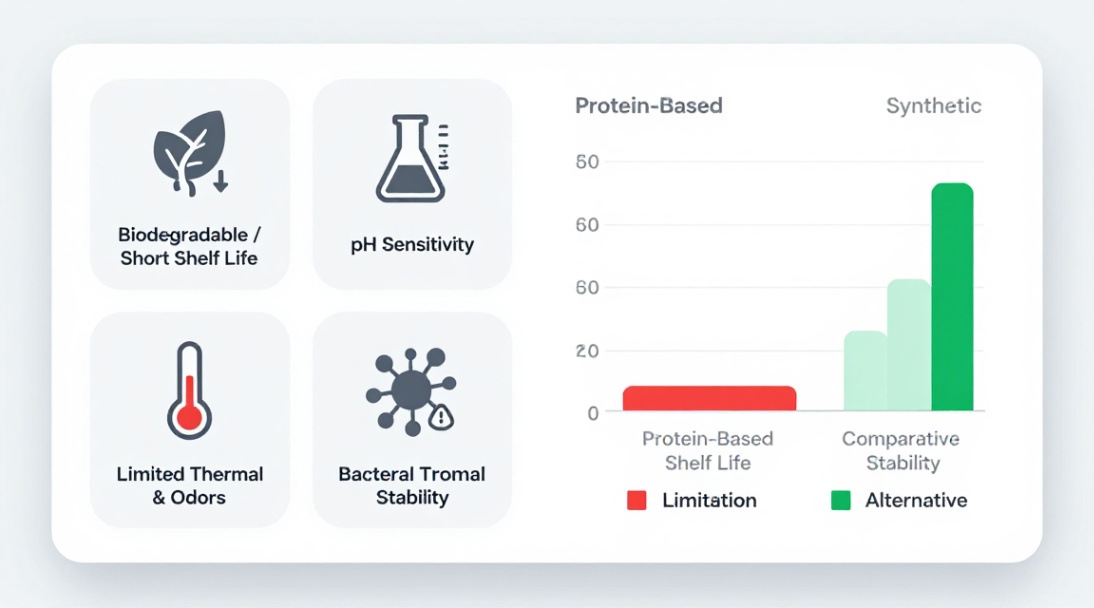
- Higher Unit Cost: The raw material and processing costs are greater per litre of concentrate.
- Specific Storage Conditions: They can be susceptible to biological degradation if stored incorrectly for extended periods.
3. Essential Properties and Process Selection
Beyond the base chemistry, evaluate these three properties.
Stability: Measure the drainage time of foam under gravity. Premium agents show less than 10% drainage after 30 minutes. Stability ensures the air voids survive the mixing and placement process.
Compatibility: The agent must not react adversely with the specific cement, supplementary cementitious materials (like fly ash), or chemical admixtures in your mix design. Always conduct laboratory trials.
Pore Structure: The target is a spherical, uniformly distributed, closed-cell structure. This is non-negotiable for strength and insulation. Poor agents create elongated, interconnected pores that weaken the matrix.
3.1. Mixing Process: Pre-Foaming vs. Wet Foaming
The production method is dictated by your agent and project scale.
| Method | Process | Best For Agent Type | Key Control Parameter |
|---|---|---|---|
| Pre-Foaming | Foam is generated separately in a foam generator using a diluted agent solution and compressed air. This stable, dry foam is then blended into the base cement slurry. | Protein-based or high-stability synthetics. Offers supreme control over density. | Foam density (typically 40-80 g/L). The ratio of foam to slurry determines final concrete density. |
| Wet Foaming | The foaming agent concentrate is added directly to the mixing water. The entire mixture is aerated under high shear in a specialized mixer. | Synthetics with fast generation rates. Suited for high-volume, continuous production. | Mixing time and shear energy. Over-mixing collapses foam; under-mixing creates uneven aeration. |
4. Dosage, Applications, and Best Practices
Dosage is not a fixed value. It is a function of your target wet density. A typical range is 0.5% to 3.0% by volume of the foaming agent concentrate to total water. Increasing dosage reduces density but also reduces compressive strength. You must establish this relationship for your specific mix via trial batches. A 20% reduction in density typically results in a 50% reduction in compressive strength-this is the fundamental trade-off.
4.1. Primary Applications
- Precast Panels & Blocks: Require high-stability agents (protein-based) for consistent density and finish, plus the thermal benefit.
- Lightweight Structural Fills: (e.g., over weak soils, in trenches). Stability is critical to prevent settlement. Synthetic agents may suffice for very low-strength fills.
- Insulating Roof Screeds & Floor Toppings: Demand excellent thermal performance and low density. Uniform, closed cells from protein agents are mandatory.
4.2. Non-Negotiable Best Practices
- Storage: Store in a cool, shaded place. Keep containers sealed. For protein agents, avoid freezing and use within the shelf life.
- Handling: Always dilute concentrate with clean, potable water per manufacturer instructions before use in foam generation.
- On-Site Use: Continuously monitor the wet density of the mixed concrete using a volumetric cup (kg/m³). Adjust the foam feed rate immediately to correct deviations.
5. The Sustainability Consideration
The sustainability argument for foamed concrete is compelling, but the foaming agent choice modulates it. Reduced material use and superior insulation contribute to operational energy savings. Protein-based agents, derived from renewable or recycled animal by-products, often present a favorable life-cycle profile compared to petroleum-based synthetics. The durability imparted by a stable foam structure also extends service life, reducing long-term waste.
Final Recommendation and Action
For over 90% of structural, insulating, and high-quality architectural applications, a hydrolyzed protein-based foaming agent for foamed concrete mixture is the objectively superior choice. The initial higher cost is negated by predictable performance, reduced risk of failure, and superior end-product properties. The stability it provides is the single greatest factor in project success. For non-critical, very high-volume, low-strength fill where minimal cost is the only driver, a high-quality synthetic may be considered, but with strict quality control.
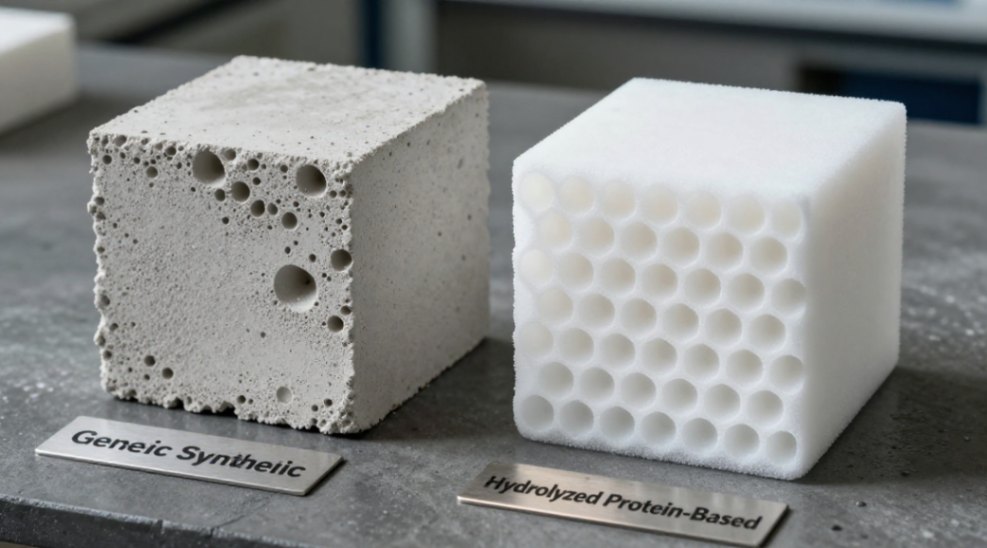
Your next step is not to search for a cheaper product. It is to procure samples of two leading protein-based agents from reputable suppliers. Conduct a side-by-side pilot test matching your exact mix design and target density. Measure foam stability, fresh density consistency, and the 28-day compressive strength of cast cubes. Let this data drive your specification. The wrong agent costs far more in remediation than the right one costs upfront. Contact a technical specialist today to arrange your test samples and define your trial mix protocol.
Supplier
We are the global leader in lightweight concrete and advanced engineered foam solutions. Known globally for its commitment to research, innovation, and applied expertise, we have been providing engineered foam solutions since the early 2012’s.
We can supply high-quality concrete admixture and foam concrete related products all over the world.
The company has a professional technical department and quality supervision department, a well-equipped laboratory, and equipped with advanced testing equipment and after-sales customer service center.
If you are interested, please feel free and contact us.