Concrete4U | Concrete Admixtures, Tools, and Production Machines

Choosing the Right Special Cement for Waterproofing: Your Guide to a Dry, Lasting Foundation
The Moment of Truth in a Wet Basement
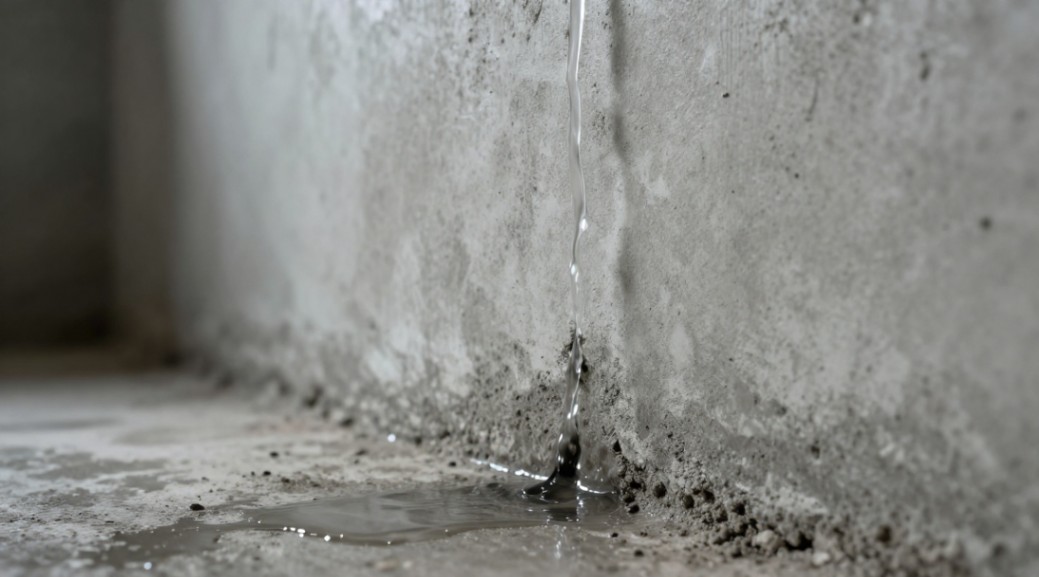
I remember standing with a client in a newly finished basement, watching a thin trickle of water weave its way down the concrete wall. The frustration was palpable. They had used standard concrete. That day cemented a truth for both of us: when water is the enemy, you need the right tool for the job. That tool is often special cement for waterproofing applications. It’s not just concrete with a fancy label. It’s a fundamentally different material engineered to block water from within. Let’s break down how it works and how to choose the best type for your project.
What Makes Waterproofing Cement ‘Special’?
Standard Portland cement is porous. Water molecules can slowly migrate through its microscopic capillary channels. Special cement for waterproofing applications modifies this structure. It introduces active chemistry that reacts with water to create a permanent, impermeable barrier. We see two primary approaches in the market.
1. Crystalline Technology Cement
This is integral waterproofing. You mix a powdered admixture into the concrete or apply it as a coating. The active chemicals lie dormant until water is present. Then, they react to form millions of insoluble needle-shaped crystals. These crystals grow deep into the concrete, filling and sealing capillaries, micro-cracks, and pores from the inside out.
- Core Advantage: Self-healing. If new hairline cracks form later, incoming water reactivates the process, sealing the flaw.
- Key Component: Proprietary blends of silica, active chemicals, and Portland cement.
- Ideal For: New concrete construction (foundations, retaining walls, swimming pools) and remediating existing, damp structures.
2. Polymer-Modified Cementitious Coatings
These are typically surface-applied, brush-on products. They combine cement with flexible polymer resins (like acrylic or SBR latex). The result is a thick, paste-like coating that bonds tenaciously to masonry and bends slightly without cracking.
- Core Advantage: Bridges existing, non-moving cracks and provides a seamless, elastomeric skin.
- Key Component: Cement powder + liquid polymer additive.
- Ideal For: Wet rooms (showers, bathrooms), interior basement walls, and above-grade water containment.
Special Cement vs. Traditional Membranes: A Clear Choice?
Why choose a cement-based system over a sheet or liquid membrane? Each has its place, but cement offers unique benefits.
Advantages of Special Waterproofing Cement
- Seamless & Monolithic: No seams, welds, or laps that can fail. It becomes part of the structure or its coating.
- Positive-Side Simplicity: You apply it to the same side as the water pressure (the inside of a basement wall). No need for exterior excavation in many cases.
- High Hydrostatic Pressure Resistance: Properly applied, crystalline systems can resist substantial head pressure from groundwater.
- Durability: It won’t degrade under UV exposure and is highly resistant to physical abrasion and puncture.
When a Membrane Might Be Better
- For structures with significant settling or dynamic cracking where high flexibility is paramount.
- As a primary, external barrier on new construction (best practise is often a combination of membrane and special cement).
Critical Steps for Success: It’s All in the Execution
The best special cement for waterproofing applications will fail if applied incorrectly. From 20+ years on site, these are the non-negotiable steps.
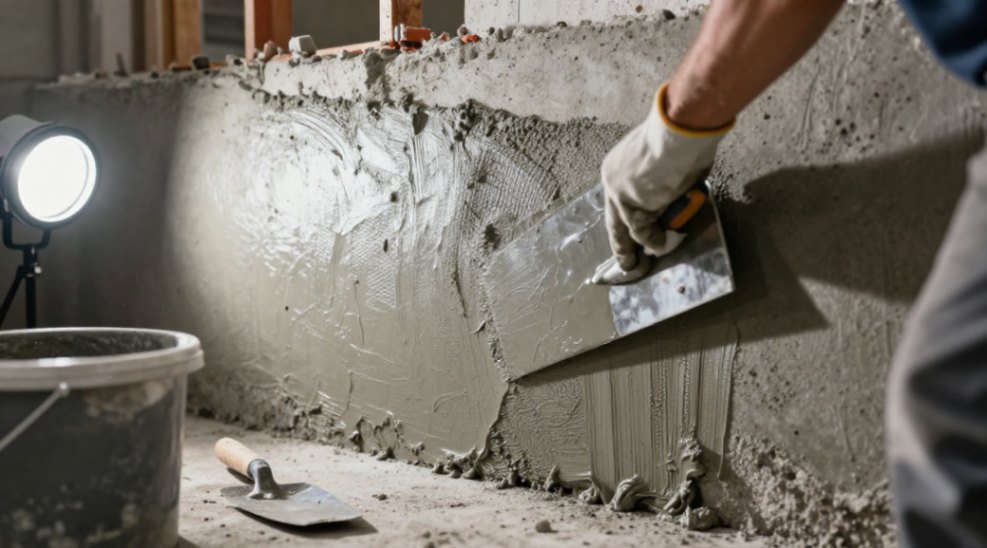
1. Surface Preparation is 90% of the Job
The surface must be structurally sound, clean, and receptive.
- Concrete Substrate: Remove laitance, curing compounds, and form oils. Mechanical abrasion (sandblasting, scarifying) is best. The surface must have an open, rough texture.
- Masonry Substrate: Remove loose mortar, efflorescence, and dirt. Fill large voids with a repair mortar first.
- Universal Rule: Saturate the surface with clean water before application. A damp, matte-dark surface is perfect. No standing water, no dry, thirsty concrete.
2. The Precision of Mixing
Follow the manufacturer’s ratios exactly. This is chemistry, not art.
- For Powders: Use a low-speed, high-torque drill and mixing paddle. Mix for the full recommended time, usually 3-5 minutes, to a lump-free consistency. Let it slake (rest) for 1 minute, then remix briefly.
- For Two-Part Systems: Measure the liquid polymer and powder components precisely by volume. Never add extra water to a polymer-modified mix; it destroys the waterproofing properties.
3. Application & Curing: Creating the Shield
Apply the material according to its designed thickness, often measured in millimeters.
- Brush/Spray Coatings: Apply in two consistent cross-coats. The first coat should be worked into the substrate. The second builds thickness.
- Integral Admixtures: Ensure even dispersion throughout the concrete mix during batching.
- Curing is Critical: Keep the applied material moist for at least 72 hours. This allows full hydration and crystal growth. Use a fine mist spray and plastic sheeting. Do not let it dry out.
| Phase | Key Action | Why It Matters |
|---|---|---|
| Preparation | Mechanically abrade; pre-soak substrate | Ensures physical & chemical bond |
| Mixing | Follow exact ratios; mix thoroughly | Activates the waterproofing chemistry |
| Application | Apply to specified thickness in coats | Creates a continuous, defect-free barrier |
| Curing | Keep surface moist for 72+ hours | Drives crystal growth or polymer film formation |
Making Your Choice: A Practical Comparison
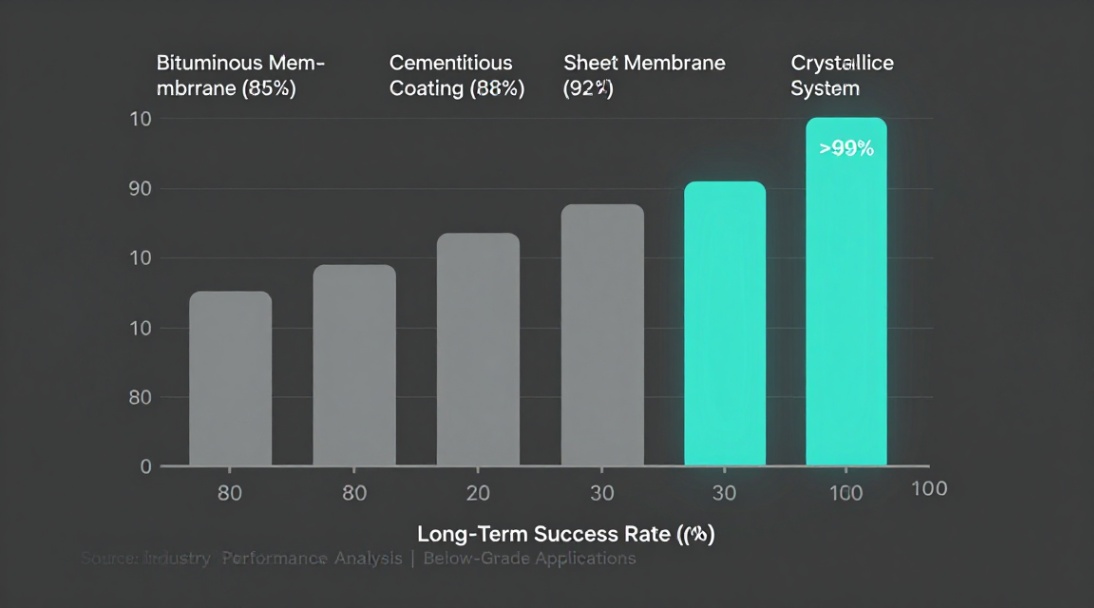
Here’s how to decide which path to take. A recent industry analysis of long-term performance data shows crystalline systems have a 99%+ success rate on properly prepared substrates for below-grade applications.
Scenario-Based Recommendations
- New Basement Foundation or Swimming Pool: Use a crystalline admixture in the concrete pour. It provides permanent, integral protection and self-healing. For extreme conditions, pair it with an external membrane.
- Leaking Existing Basement Wall (from inside): Choose a crystalline coating slurry. It will penetrate and react with the damp concrete, sealing from within. Surface prep is absolutely critical here.
- Shower Pan or Wet Room Walls: A polymer-modified cement coating is the standard. Its flexibility accommodates minor movement and provides a perfect tile base.
- DIY vs. Pro: Polymer-modified brush-on products are more DIY-friendly. Crystalline systems are less forgiving; improper prep or curing leads to guaranteed failure. For structural below-grade work, hire a specialist.
The Path to a Permanent Solution
The goal is a dry structure for its entire lifespan. Special cement for waterproofing applications makes that possible by turning the structure itself into a water barrier. The choice isn’t about a brand name; it’s about matching the technology to your specific water challenge. For below-grade hydrostatic pressure, think crystalline. For above-grade crack-bridging, think polymer-modified. Invest your time in surface preparation. Respect the curing process. Get these fundamentals right, and you won’t be watching helplessly as water finds its way in. You’ll have built a defense that lasts.
Supplier
We are the global leader in lightweight concrete and advanced engineered foam solutions. Known globally for its commitment to research, innovation, and applied expertise, we have been providing engineered foam solutions since the early 2012’s.
We can supply high-quality concrete admixture and foam concrete related products all over the world.
The company has a professional technical department and quality supervision department, a well-equipped laboratory, and equipped with advanced testing equipment and after-sales customer service center.
If you are interested, please feel free and contact us.