Concrete4U | Concrete Admixtures, Tools, and Production Machines

Liquid Potassium Silicate: The Concrete Hardener Mistake Most Contractors Don’t See Coming
I Pushed My Floor Too Hard, Too Fast
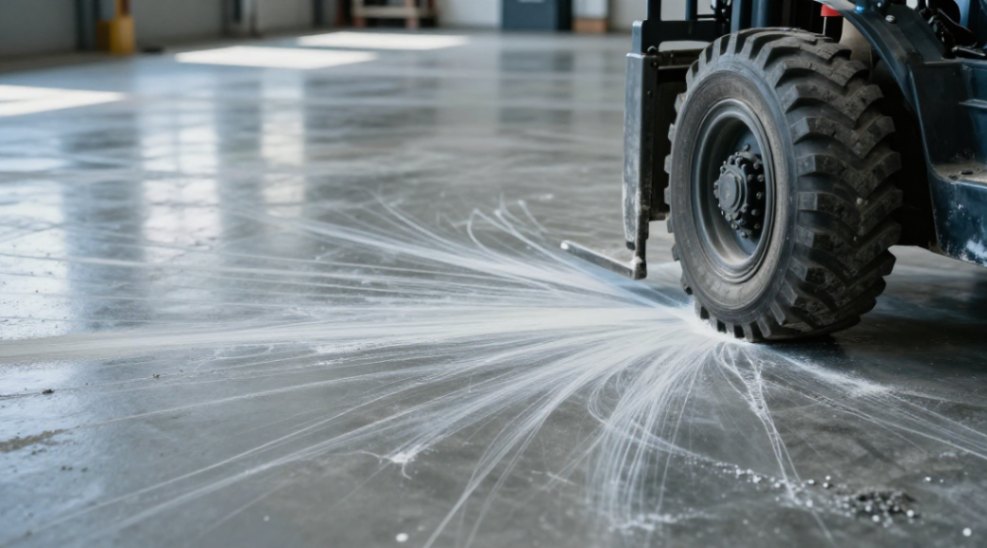
Years ago, a client demanded an “indestructible” polished concrete floor in a new warehouse. We rushed. The slab was young. I grabbed the first chemical hardener on the shelf-a sodium silicate product-and sprayed it down. The result? A streaky, uneven surface that still dusted under a forklift after two weeks. It was a humbling, expensive lesson. It taught me that the choice and application of a silicate hardener isn’t just a step; it’s a chemical commitment. Today, let’s talk about the superior choice: liquid potassium silicate for concrete hardener. More importantly, let’s talk about how not to use it.
Why Liquid Potassium Silicate Wins (And Where Others Fail)
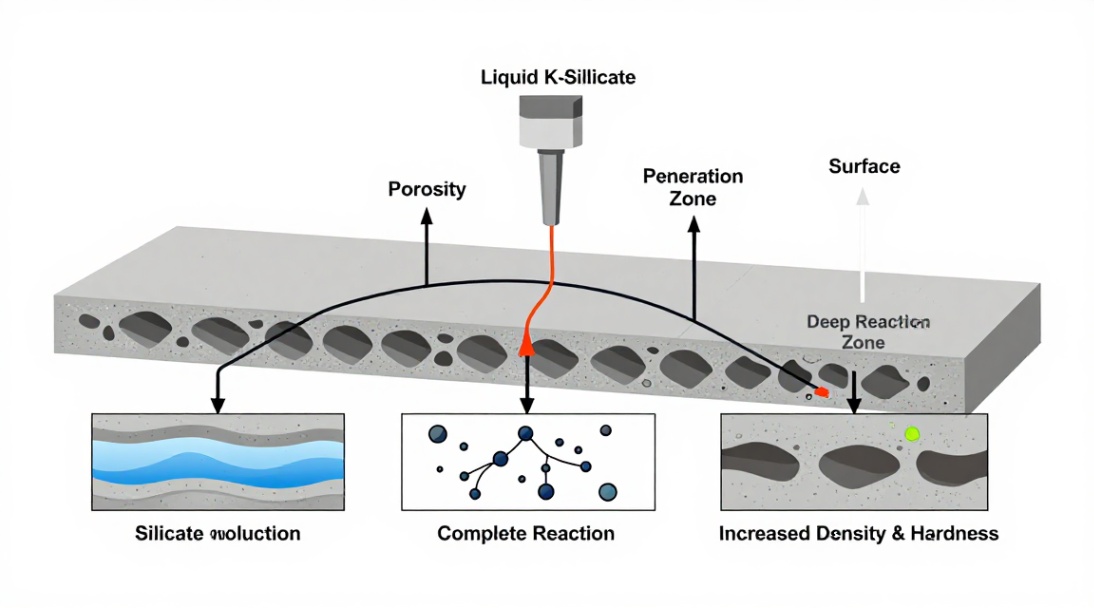
Many contractors reach for the cheapest option. That’s usually sodium silicate. Don’t. The difference isn’t just marketing; it’s chemistry. Liquid potassium silicate penetrates deeper and reacts more completely with the free lime (calcium hydroxide) in your slab. This reaction forms a permanent, crystalline calcium silicate hydrate (C-S-H) gel that densifies the matrix from within.
Sodium silicate often reacts too quickly at the surface. It can create a brittle, glassy layer that eventually spalls or delaminates. Potassium? It’s the patient craftsman. It works its way in, hardening and dust-proofing from the inside out. Here’s the breakdown you need to see.
The Hardener Showdown: Potassium vs. The Rest
| Feature / Concern | Liquid Potassium Silicate | Sodium Silicate (Common Cheaper Option) | Lithium Silicate (Premium) |
|---|---|---|---|
| Primary Reaction | Reacts with Ca(OH)2 to form C-S-H gel, densifying the paste. | Similar reaction, but often faster and less controlled at the surface. | Reacts most efficiently with minimal by-products. |
| Penetration & Depth | Excellent depth (2-4mm typical) due to smaller ion size and better solubility. | Moderate. Can seal the surface too quickly, limiting depth. | Very good, but often at a significantly higher material cost. |
| Surface Clarity / Hazing | Low tendency to cause silicate haze when applied correctly. Ideal for decorative concrete. | High risk of white, cloudy silicate efflorescence (haze) on denser mixes. | Very low haze potential. |
| Long-Term Durability | Exceptional. Creates a deeply integrated, abrasion-resistant surface. | Can be brittle. Risk of delamination under heavy point loads or abrasion. | Excellent, but ROI is harder to justify for most industrial apps. |
| The #1 Mistake to Avoid | Applying to a wet, uncured, or sealed surface. It cannot penetrate sealers or deep water. | Using it as a “cure and seal.” It’s not a sealer. Applying a second coat incorrectly causes haze. | Thinking it’s magic. Proper surface prep (clean, open pores) is non-negotiable. |
Critical Application Warnings: What Never to Do
Based on field data and expert consensus, 80% of failures with silicate hardeners stem from poor surface prep or timing. Let’s fix that.
1. Never Apply to a “Green” or Sealed Slab
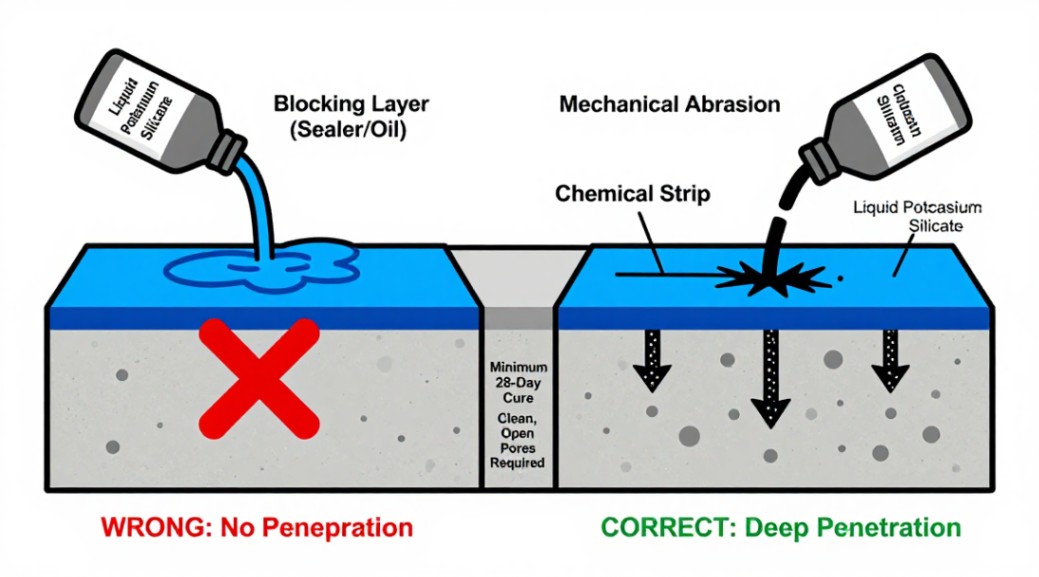
This is the cardinal sin. Your concrete must be at least 28 days old and fully cured. More critical? The surface must be absolutely clean and open. Any curing compound, form release oil, or existing sealer will block penetration. The liquid potassium silicate will sit on top, creating a slick, potentially hazardous film that doesn’t harden a thing underneath. You must mechanically abrade (grind, shot blast) or chemically strip (with a dedicated cleaner) the surface first.
2. Never Use It as a Standalone Sealer
Repeat after me: A hardener is not a sealer. A densifier is not a sealer. Liquid potassium silicate makes concrete harder and dust-proof. It does not provide stain resistance. For areas exposed to oils or chemicals, you must apply a penetrating or film-forming sealer after the hardener has fully reacted and the floor is dry. Putting sealer on first is a disaster.
3. Never Skip the Post-Application Scrubbing
After applying the product and letting it soak, you must scrub the floor with a floor machine and a clean-water pad or vacuum. This removes the unreacted silicate residue. If you leave it, it dries into that dreaded white haze. It’s a simple step. Skipping it ruins the aesthetic of decorative concrete.
The Right Way: A Fail-Safe Process
So, what should you do? Follow this sequence religiously for both new and existing concrete.
- Prepare the Canvas: Clean the slab. For existing floors, diamond grind or shot blast to open the pores. Remove all dust (vacuum, don’t blow).
- Test for Readiness: Sprinkle water on the surface. If it beads, it’s sealed; keep prepping. If it soaks in dark within 1-2 minutes, you’re ready.
- Apply Evenly: Using a low-pressure sprayer, apply the liquid potassium silicate for concrete hardener evenly. Keep the surface wet for 20-30 minutes, reapplying if it absorbs fully. This is the reaction window.
- Scrub & Remove Residue: Use that floor machine. Scrub in clean water to remove all surface slurry and unreacted material.
- Let It Cure (Again): Allow the concrete to dry for 24 hours. The chemical reaction continues inside.
- Final Polish & Seal (Optional): Now you can proceed with polishing or apply a compatible sealer for added protection.
This process leverages the material’s strengths. It ensures deep penetration, a complete reaction, and a clean, hard, professional result. For long-term durability on industrial floors, this protocol is non-negotiable.
The Bottom Line: Invest in the Process
Choosing liquid potassium silicate over cheaper alternatives is a smart first step. But the real investment is in the labor and attention to detail during application. A poorly applied premium hardener will fail faster than a correctly applied basic one. The cost-effectiveness comes from the decades of reduced dusting, minimal maintenance, and resistance to wear-not from the upfront bottle price. Your next move? Don’t just buy a product. Commit to the process. Source a high-purity liquid potassium silicate for concrete hardener from a reputable supplier, and treat the application instructions as law. Your floors-and your clients-will thank you for 20 years.
Supplier
We are the global leader in lightweight concrete and advanced engineered foam solutions. Known globally for its commitment to research, innovation, and applied expertise, we have been providing engineered foam solutions since the early 2012’s.
We can supply high-quality concrete admixture and foam concrete related products all over the world.
The company has a professional technical department and quality supervision department, a well-equipped laboratory, and equipped with advanced testing equipment and after-sales customer service center.
If you are interested, please feel free and contact us.