Concrete-mesa | Concrete Admixtures, Tools, and Production Machines

What is a Nano-Silica Modifier? The Expert’s Guide to Tougher, More Durable Concrete
What is a Nano-Silica Modifier for Concrete?
A nano-silica modifier is an ultra-fine, amorphous powder of silicon dioxide (SiO₂) engineered with particles measuring between 1 and 100 nanometers. You add this powder as a functional additive to the mix design of ultra high performance concrete (UHPC). Its primary role is not just as a filler, but as an active, transformative agent that fundamentally improves the concrete’s microstructure from the inside out.
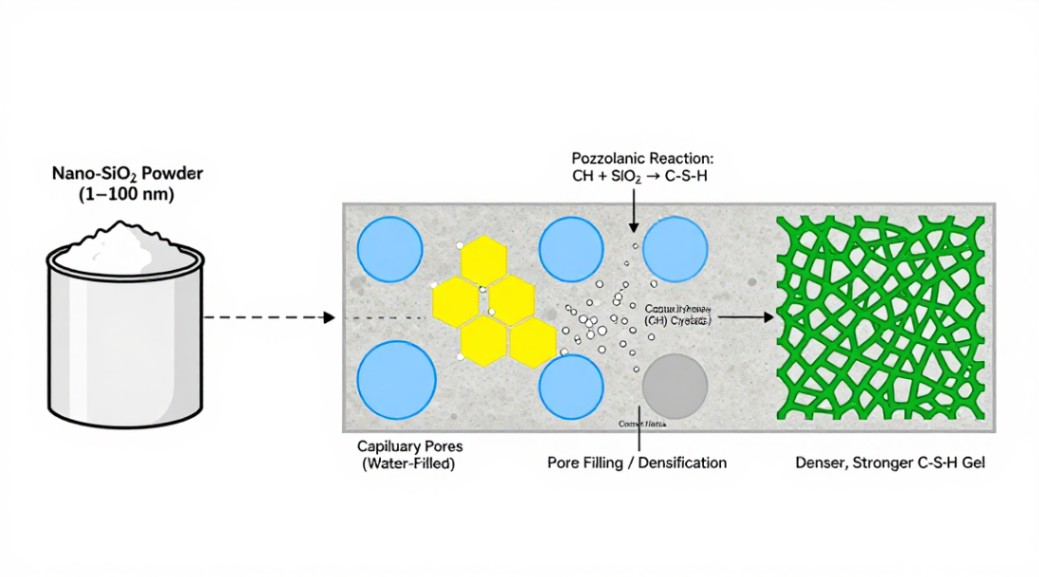
How Nano-Silica Transforms UHPC from the Inside
The modifier works through three powerful, synergistic mechanisms. These mechanisms start working the moment water is introduced to the mix.
1. The Physical Filler Effect
The nanoscale particles occupy the tiniest spaces between cement grains and other fines like silica fume. They physically densify the matrix. This eliminates weak, porous zones before the concrete even hardens.
2. The Pozzolanic Reaction
Nano-silica reacts with calcium hydroxide, a weak byproduct of cement hydration. It converts this byproduct into additional calcium-silicate-hydrate (C-S-H) gel. This C-S-H gel is the glue that gives concrete its strength. You get more strong binder and less weak filler.
3. Nucleation Site Activation
These nanoparticles act as seeds, or nucleation points, for C-S-H gel to form. This accelerates the formation process and refines the gel’s structure. The result is a denser, more homogeneous, and stronger paste that binds the aggregate together.
The Tangible Benefits You Gain in UHPC
The mechanistic action delivers clear, measurable advantages in the final UHPC product. These benefits solve real-world engineering challenges.
First, you see a significant boost in mechanical strength. Compressive and flexural strength increases of 20-30% are common with optimal dosage. The concrete becomes tougher, able to withstand higher loads and more complex stress states.
Second, durability sees a quantum leap. The ultra-dense microstructure drastically lowers permeability. Water, chloride ions, and aggressive sulfates struggle to penetrate. This directly translates to longer service life for structures in harsh environments like marine zones or de-iced bridges. Corrosion of embedded steel slows dramatically.
Practical Application Insights from the Field
Working with nano-silica is straightforward but requires precision. Ignore best practices at your project’s peril.
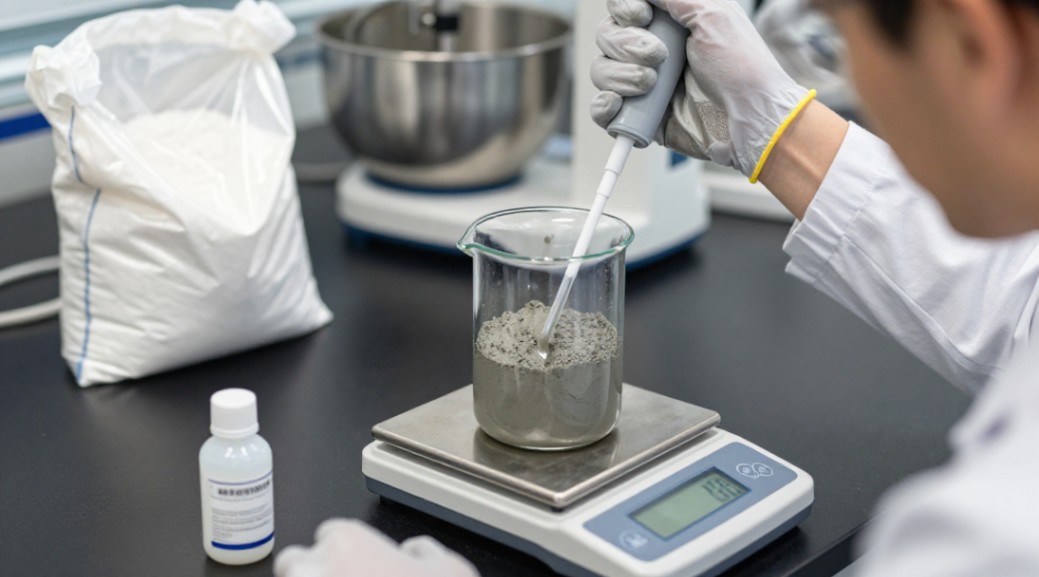
Dispersion is the single biggest challenge. The particles have a massive surface area and tend to agglomerate. If not properly dispersed, they create weak spots instead of strengthening the mix. You must use a high-shear mixer and combine the nano-silica with water and superplasticizer first, creating a stable slurry before adding other components.
Workability is affected. Nano-silica increases water demand. To compensate without sacrificing strength, you need to optimize the superplasticizer dosage and type. A polycarboxylate-based superplasticizer is typically non-negotiable for maintaining flow in a UHPC mix modified with nano-silica.
Getting the Dosage Right: The Goldilocks Principle
More is not always better. The typical effective dosage range for a nano-sila modifier for ultra high performance concrete is between 1% and 3% by weight of cementitious material.
- Under-dosing (<1%): You won’t realize the full strength and durability benefits. The effect is marginal, not transformative.
- Optimal Dosing (1-3%): Achieves the perfect balance of property enhancement and manageable rheology. This is the target zone for most UHPC applications.
- Over-dosing (>3%): Can lead to severe workability loss, rapid setting, and increased risk of cracking due to excessive heat and shrinkage. It also becomes economically inefficient.
In forums like Reddit’s r/Concrete, seasoned mix designers often stress this point: “Start at 1.5%, test your rheology and strength, then adjust. Blindly pushing 5% is a recipe for a batch that sets in the mixer truck.”
Synergy with Other UHPC Components
Nano-silica doesn’t work in isolation. It’s part of a system. Its interaction with silica fume is particularly powerful. While silica fume (a micro-silica) densifies the matrix at the micron scale, nano-silica acts at the nano-scale. Together, they create a near-impermeable, graded particle packing system. When combined with high-strength steel fibers, the resulting composite achieves exceptional tensile ductility and fracture toughness.
Where This Technology Excels: Real-World Use Cases
This isn’t just lab science. Engineers specify nano-silica modified UHPC for projects where failure is not an option.
- Bridge Link Slabs and Deck Overlays: The supreme durability resists salt penetration, extending the bridge’s life cycle with minimal maintenance.
- High-Rise Building Facades and Thin Structural Elements: The high early and ultimate strength allows for slender, architecturally daring designs without compromising safety.
- Precast Elements for Aggressive Environments: Sewer pipes, marine pylons, and blast-resistant panels benefit from the rapid strength gain and extreme chemical resistance.
One project manager for a coastal infrastructure job shared online: “Switching to a UHPC mix with 2% nano-silica for our precast seawall units was a cost-upfront, save-long-term decision. The performance data on chloride resistance convinced the whole team.”
The Cost versus Performance Equation
Yes, nano-silica adds to the initial material cost of UHPC. This is a fact. However, you must evaluate this against the total lifecycle cost. The enhanced durability means structures require less frequent repairs, have longer intervals between major refurbishments, and possess a significantly extended service life. For an asset meant to last 100 years, the initial premium is often a wise investment. It shifts costs from future, unpredictable maintenance to present, controlled construction.
The Future of Nano-Modifiers in Concrete
Research is moving beyond basic nano-silica. Scientists are exploring functionalized nanoparticles-silica particles coated with specific chemical groups to enhance dispersion or provide additional functions like self-healing or electrical conductivity. Hybrid modifiers that combine nano-silica with other nanomaterials like nano-clay or carbon nanotubes are also under investigation to tailor properties for even more specialized applications.
Ready to Elevate Your UHPC Mix Design?
If your project demands the highest levels of strength, durability, and long-term performance, a nano-silica modifier for ultra high performance concrete is not just an option; it’s a strategic engineering decision. The technology is proven, the mechanisms are well-understood, and the benefits are substantial.
Don’t leave your mix design to chance. For professionals ready to specify with confidence, I strongly recommend sourcing high-quality, consistently dispersed nano-silica products from established suppliers. Request lab-grade samples, run trial batches to dial in your superplasticizer synergy, and test the results. Take action now: Consult with your material supplier about integrating a nano-silica modifier into your next UHPC specification. Your future self-and the structure’s future owners-will thank you.
Supplier
We are the global leader in lightweight concrete and advanced engineered foam solutions. Known globally for its commitment to research, innovation, and applied expertise, we have been providing engineered foam solutions since the early 2012’s.
We can supply high-quality concrete admixture and foam concrete related products all over the world.
The company has a professional technical department and quality supervision department, a well-equipped laboratory, and equipped with advanced testing equipment and after-sales customer service center.
If you are interested, please feel free and contact us.