Concrete-mesa | Concrete Admixtures, Tools, and Production Machines

What Is a Polycarboxylate Based Concrete Water Reducer? A Practical Guide for Better Mixes
Frustrated with Stiff Concrete? You’re Not Alone
Have you ever faced a concrete pour that set up too fast? Did your pump lines clog because the mix lost slump? Maybe you struggled to achieve a high-strength specification without making the concrete impossible to place. These common headaches often stem from the limitations of older water-reducing admixtures. The solution lies in a modern chemical marvel: the polycarboxylate based concrete water reducer, or PCE superplasticizer. This guide will clarify what it is and why it has revolutionized concrete construction.
The Core Definition: What Exactly Is a PCE?
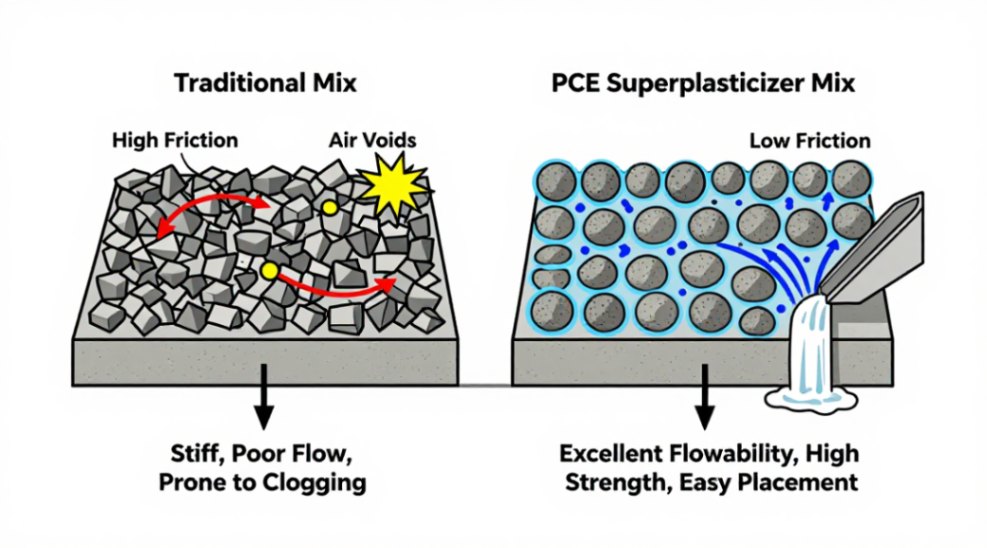
At its heart, a polycarboxylate based concrete water reducer is a high-performance chemical admixture. Engineers add it to concrete mixes to achieve significant water reduction without sacrificing workability. Its unique molecular structure delivers far greater efficiency than older admixture types.
How It Works: A Simple Breakdown
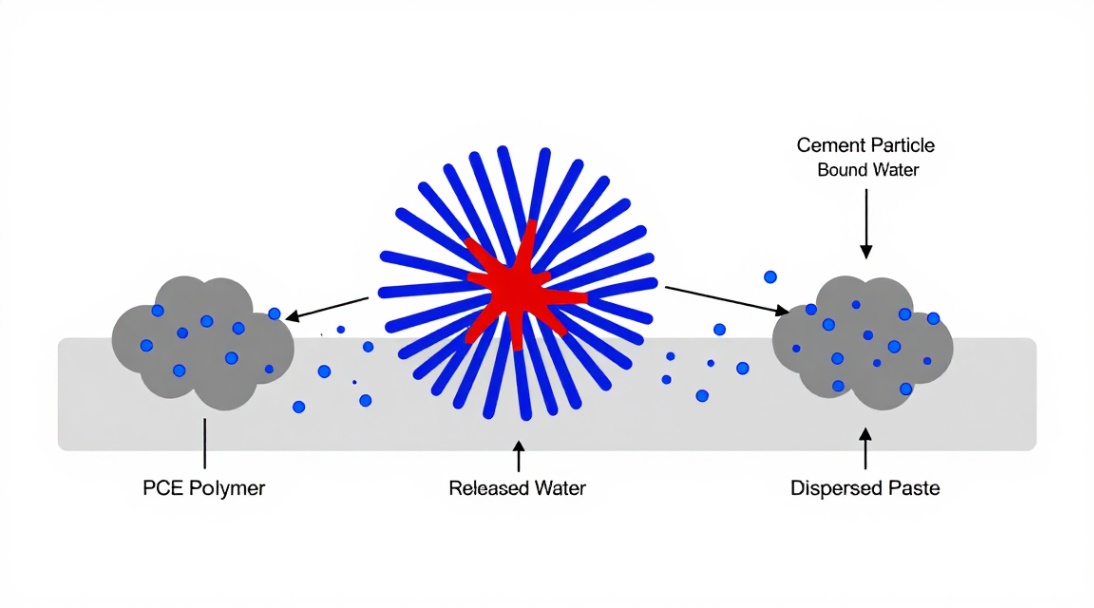
Traditional water reducers rely on electrostatic repulsion to disperse cement particles. PCEs use a smarter mechanism called steric hindrance. Imagine their molecules as tiny combs. The “backbone” adsorbs onto cement grains, while the long “teeth” (polyether side chains) extend into the water. These chains physically prevent the cement particles from clumping together.
- Steric Hindrance: Creates a physical barrier between particles.
- Superior Dispersion: Breaks up cement flocs more completely.
- Water Reduction: Achieves high fluidity with much less water.
Why You Should Care: The Unbeatable Benefits
Switching to a polycarboxylate based concrete water reducer offers tangible advantages for every project.
Transformative Performance Gains
- High Water Reduction: Reduce mix water by 25-40%. This directly lowers the water-cement ratio, the single most important factor for strength and durability.
- Exceptional Slump Retention: Maintain workability for 90 minutes or more. This is crucial for large pours, pumping, and hot weather concreting.
- Enhanced Workability: Achieve buttery, self-consolidating concrete (SCC) that flows effortlessly around dense reinforcement.
Material and Structural Advantages
- Higher Ultimate Strength: The lower water-cement ratio translates directly into 50% or greater compressive strength gains.
- Improved Durability: Denser concrete means lower permeability. This dramatically increases resistance to chloride ingress, sulfate attack, and freeze-thaw cycles.
- Sustainability Edge: Use less cement for the same strength. This reduces the carbon footprint of your mix and can lower material costs.
Putting PCEs to Work: Key Considerations
To harness the full power of a polycarboxylate based concrete water reducer, you must understand its behavior.
Critical Application Points
- Dosage Sensitivity: PCEs are potent. Slight variations in dosage can have large effects on slump and set time. Always follow manufacturer guidelines and conduct trial batches.
- Compatibility is Key: Not all PCEs work perfectly with all cements or supplementary materials like fly ash or slag. Verify compatibility before full-scale use.
- Batching Sequence Matters: Adding the PCE with the initial mix water typically yields the best dispersion. Delayed addition can sometimes enhance performance further.
Clear Comparisons: PCEs vs. The Old Guard
How does this technology stack up against traditional options?
- vs. Lignosulfonates (First Generation): PCEs offer much higher water reduction without excessive air entrainment or set retardation.
- vs. Naphthalene-based (Second Generation): PCEs provide vastly superior slump retention and are more effective at lower dosages. They also cause less severe “slump loss.”
The Future and Your Next Step
Innovation continues. Next-generation PCEs feature tailored molecular structures for specific cement types, extreme climates, or special applications like 3D concrete printing. This technology enables the architectural marvels and resilient infrastructure we see today. But theory only gets you so far. The real value comes from correct application.
Your Concrete Can Be Better
If you’re dealing with tight schedules, complex forms, or demanding specs, a generic admixture won’t suffice. You need the precision and performance of a modern polycarboxylate based concrete water reducer.
Don’t gamble on your mix design. Consult with a specialist supplier today. Provide them with your cement source, mix proportions, and performance goals. Request a sample for a trial batch. Experience the difference that precise chemical technology makes in flow, finish, and final strength. Your next pour will be your best one yet.
Supplier
We are the global leader in lightweight concrete and advanced engineered foam solutions. Known globally for its commitment to research, innovation, and applied expertise, we have been providing engineered foam solutions since the early 2012’s.
We can supply high-quality concrete admixture and foam concrete related products all over the world.
The company has a professional technical department and quality supervision department, a well-equipped laboratory, and equipped with advanced testing equipment and after-sales customer service center.
If you are interested, please feel free and contact us.