Concrete-mesa | Concrete Admixtures, Tools, and Production Machines

Vinyl Acetate Veova RDP: Why It’s the Go-To Powder for Tough Jobs
A Story of Two Walls
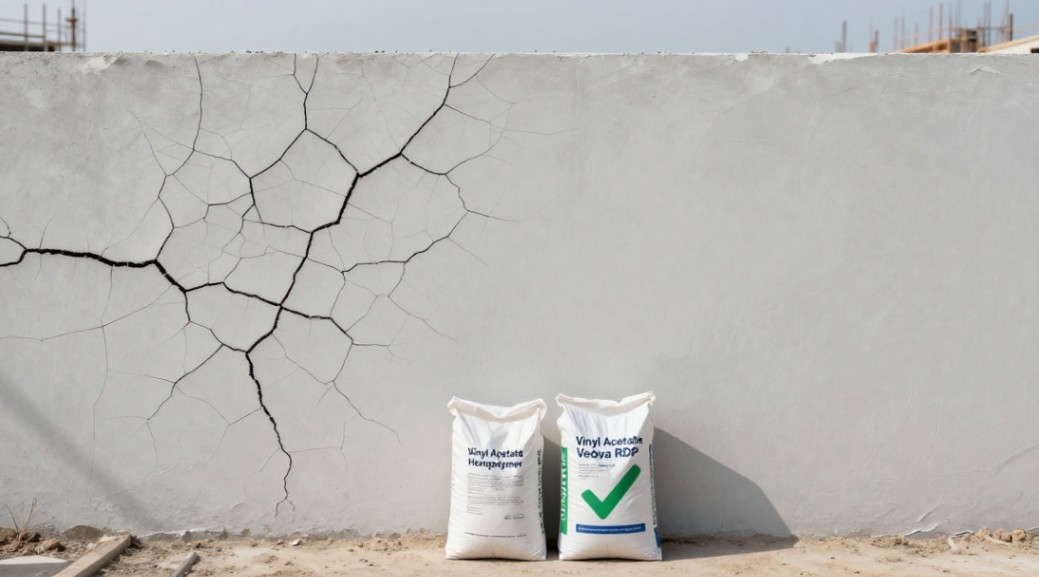
I remember standing on a jobsite years ago, looking at two nearly identical exterior walls. One was perfect. The other had a network of hairline cracks spider-webbing through the render. The specifications seemed the same, the crews were equally skilled. The only difference? The polymer powder in the mix. The failed wall used a standard vinyl acetate homopolymer. The successful one used a vinyl acetate veova redispersible polymer powder. That day cemented a hard-won truth for us: not all redispersible powders are created equal. When the substrate is tricky or the weather turns harsh, the chemical backbone of your polymer isn’t just a detail-it’s the deciding factor between a durable finish and a callback.
The Chemistry Behind the Performance
At its core, vinyl acetate veova redispersible polymer powder is a copolymer. We’re not just working with plain vinyl acetate. We’ve introduced a Veova monomer (vinyl ester of versatile acid) into the polymer chain. This is the game-changing move. The long, branched chain of the Veova monomer acts like a built-in plasticizer. It doesn’t migrate or evaporate. This fundamental change in composition directly dictates two critical technical parameters: a lower minimum film forming temperature (MFFT) and a reduced glass transition temperature (Tg). In plain English, this means the polymer film forms easily at cooler temperatures and remains flexible long after curing. A standard VAc homopolymer is more rigid, more brittle by nature. That’s the chemical reason one wall cracked and the other didn’t.
Where This Powder Truly Shines
This inherent flexibility and hydrophobic nature from the Veova monomer make it a superstar in specific, demanding applications. In Exterior Insulation and Finish Systems (EIFS), the polymer needs to handle thermal movement of the insulation boards (like expanded polystyrene) and daily weather stress. A rigid polymer can’t keep up. We see the same advantage in tile adhesives, especially for large-format tiles where stress is high. The polymer’s flexibility absorbs these stresses, preventing bond failure. But the real party trick is adhesion to difficult substrates. On smooth, dense surfaces like old painted concrete or polystyrene foam-where many polymers struggle-the Veova copolymer digs in. Many users on professional forums report that switching to a vinyl acetate veova grade was the fix for persistent adhesion issues on ‘problem’ walls. Beyond adhesion, it transforms the mortar itself. It improves workability dramatically, like adding a lubricant. It boosts flexural strength and crack resistance, making the cured mortar more deformable and tough, not just hard.
The Practical Comparison: Making the Choice
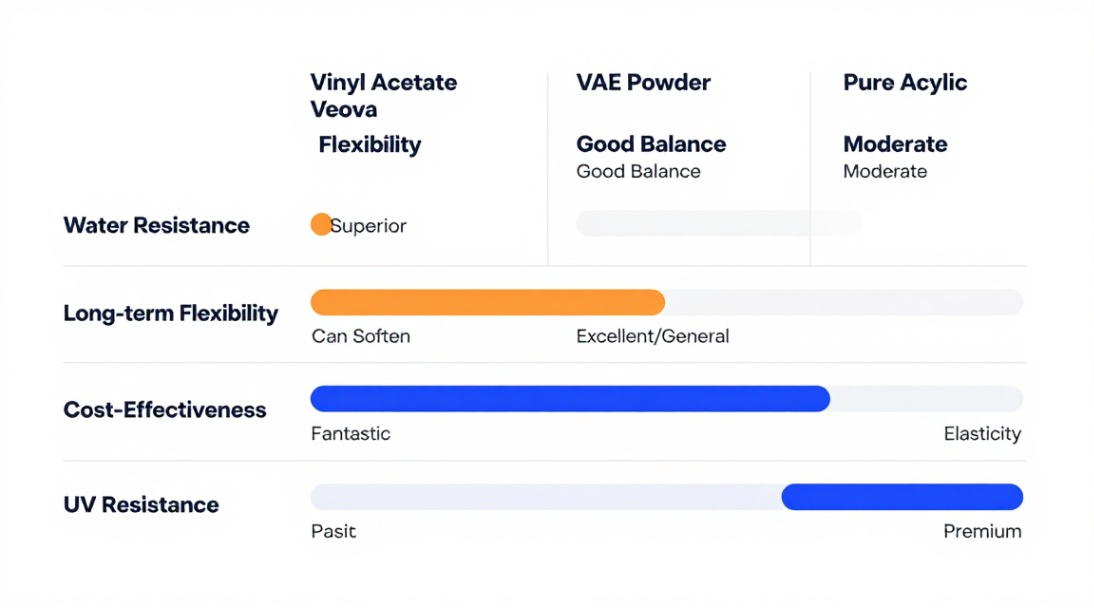
So when do you choose this over other common powders? Let’s break it down. Compared to standard Vinyl Acetate Ethylene (VAE) powders, the Veova copolymer typically offers better water resistance and long-term flexibility retention. VAE is excellent, often more cost-effective for general purpose use, but it can soften slightly under prolonged water exposure. Against pure acrylic powders, the Veova type often wins on cost-performance balance for mineral-based systems. Acrylics are fantastic for pure elasticity and UV resistance, but they command a premium. The vinyl acetate veova powder sits in a sweet spot: superior to basic homopolymers, more hydrophobic than many VAE, and more affordable than acrylics for many construction chemistry applications. Its performance under freeze-thaw cycles and weathering is robust because the flexible, hydrophobic film resists water ingress-the primary driver of frost damage. For compliance, leading manufacturers formulate these powders to meet stringent international standards for cementitious adhesives and renders, so you’re covered there.
Handling It Right for Consistent Results
Performance on paper means nothing if it’s messed up on site. Two rules are non-negotiable. First, mixing. You must add this redispersible polymer powder to the dry mix components and blend them thoroughly before adding water. If you dump the powder into already wet mortar, you’ll get clumps-ineffective, expensive lumps. Second, storage. Keep the bags in a cool, dry place. The powder is sensitive to heat and moisture. If it’s stored improperly, the particles can start to sinter together, ruining its ability to redisperse smoothly. Do it right, and the shelf life is typically 12 months plus. The dosing is usually between 1-4% by weight of cement, but always follow your specific product data sheet. That sheet is your bible.
The Final Recommendation
After two decades, my advice is straightforward. For interior, non-critical bedding mortars, a standard VAE or even a good homopolymer might be perfectly adequate. But when your project involves exterior renders, EIFS, tile adhesives over challenging surfaces, or any application where flexibility and water resistance are paramount, specifying a vinyl acetate veova redispersible polymer powder is the smartest technical decision you can make. It’s the difference between hoping for the best and engineering a durable finish. Don’t experiment with your reputation on the line. For your next demanding project, source a high-quality vinyl acetate veova copolymer powder from a reputable supplier. Test it in your formulation. Feel the improved workability, and witness the tenacious adhesion. That’s how you build walls that last.
Supplier
We are the global leader in lightweight concrete and advanced engineered foam solutions. Known globally for its commitment to research, innovation, and applied expertise, we have been providing engineered foam solutions since the early 2012’s.
We can supply high-quality concrete admixture and foam concrete related products all over the world.
The company has a professional technical department and quality supervision department, a well-equipped laboratory, and equipped with advanced testing equipment and after-sales customer service center.
If you are interested, please feel free and contact us.