Concrete4U | Concrete Admixtures, Tools, and Production Machines

Foam Generating Machine with Pump: A Data-Driven Guide to System Selection & Performance
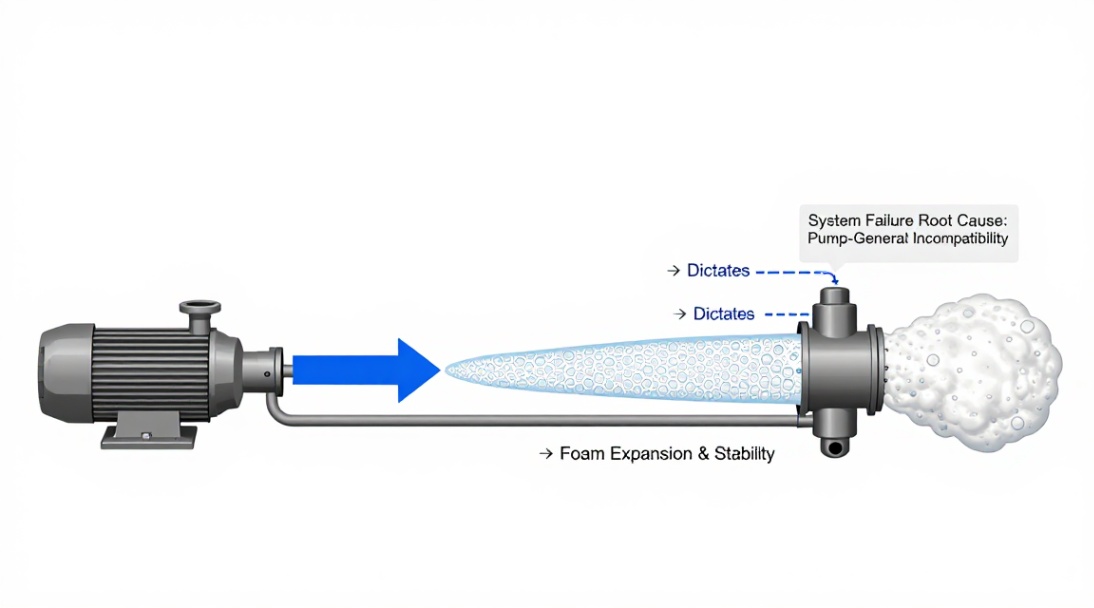
Over 30% of industrial foam system failures originate from pump-generator incompatibility, not component failure. This statistic highlights a critical oversight in equipment selection. A foam generating machine with a foam pump is an integrated hydraulic system, not just two pieces of hardware placed together. The pump’s pressure and flow directly dictate the generator’s foam expansion ratio and stability. This guide provides a comparative analysis to help you make an informed decision.
Core System Breakdown: Machine and Pump Synergy
A true foam generating machine with foam pump is a closed-loop proportioning system. The foam pump draws concentrate from a tank, then meters and pressurizes it. The generating machine injects this concentrate into a water stream, creating a foam solution. An integral aerator or agitation chamber then introduces air to produce finished foam. System performance hinges on the precise match between the pump’s output (measured in LPM of concentrate at a specific bar) and the generator’s designed inlet pressure and water-to-foam ratio. Engineers often specify a balanced pressure proportioner for consistent 3% or 6% foam solution mixes.
Foam Generating Machine with Foam Pump: Comparative Analysis
Selecting equipment requires matching specifications to your operational intent. The table below compares common configurations based on core parameters. Feedback from industrial forums like Reddit often centers on the reliability of diaphragm pumps versus piston pumps in cold weather applications, with many users noting diaphragm units require less maintenance for AFFF concentrates.
| System Type | Best For | Key Advantage | Potential Limitation | Typical Foam Output |
|---|---|---|---|---|
| Electric Diaphragm Pump + Venturi Generator | Mobile cleaning, small-scale remediation | Portability, simple operation, lower cost | Lower pressure (≤8 bar), foam expansion ratio limited (~1:5) | 50-200 LPM |
| PTO-Driven Centrifugal Pump + Inline Educator | Agricultural spraying, large-area dust control | High flow rate, good for low-expansion wet foams | Poor with high-viscosity concentrates, proportioning less precise | 500-2000 LPM |
| Diesel Engine-Powered Piston Pump + Balanced Pressure Proportioner | Industrial firefighting, Class B hydrocarbon risks | High pressure (10-20 bar), precise proportioning for AR-AFFF | Higher capital cost, requires more skilled maintenance | 1000-5000 LPM |
| Skid-Mounted System with PLC Control | Fixed foam deluge systems, process industry | Fully automatic, integrates with fire alarm, monitors density & flow | Highest complexity and cost, requires professional installation | Custom, 2000 LPM+ |
Critical Factors for Your Decision Matrix
Foam Concentrate Compatibility
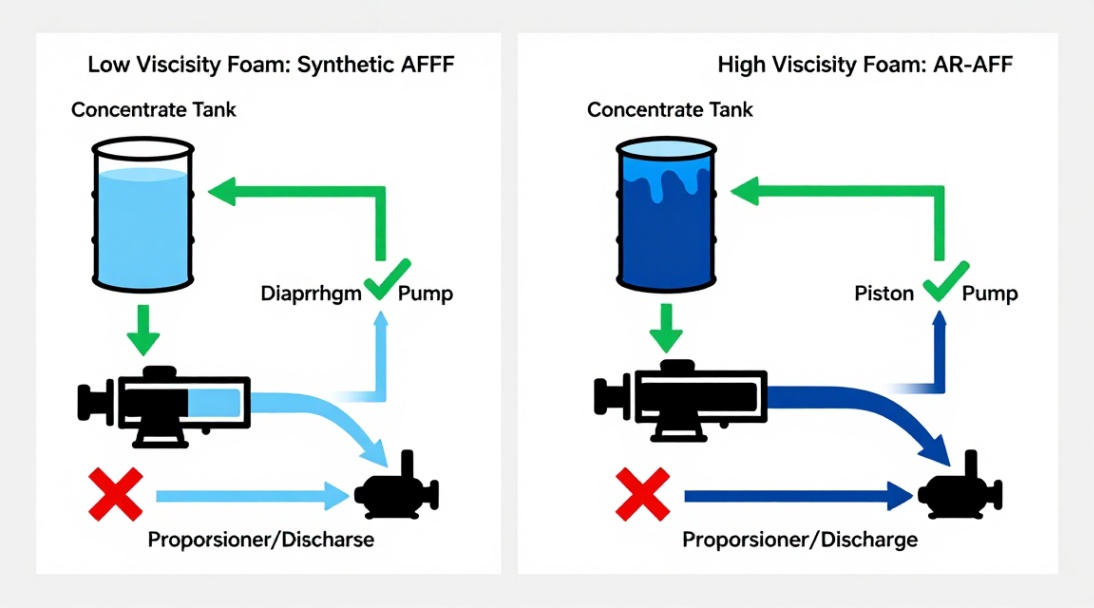
The foam type dictates pump selection. Synthetic AFFF concentrates are less viscous and work with most diaphragm and centrifugal pumps. Alcohol-Resistant AR-AFFF concentrates are thicker and demand the higher pressure and positive displacement action of a piston pump. Using the wrong pump causes poor proportioning, foam collapse, and pump seal damage.
Total Cost of Ownership Analysis
Evaluate beyond the purchase price. Calculate TCO over a 5-year period. Include: initial machine cost, annual concentrate consumption (based on system efficiency), preventive maintenance costs (diaphragm/piston seal kits), expected downtime, and energy/fuel consumption. A more expensive, correctly specified foam generating machine with foam pump often has a lower TCO than a cheaper, mismatched system requiring constant repair and wasting concentrate.
Operational Integrity: Maintenance and Troubleshooting
Daily operation requires specific checks. Follow this procedure: 1) Inspect pump seals and lubrication points before startup. 2) Verify foam concentrate tank level and specific gravity. 3) Flush the system with clean water for 5 minutes after each use to prevent crystallization in the proportioner. Common issues have clear causes. Poor foam quality (watery or bubbly) typically indicates incorrect proportioner setting, low pump pressure, or degraded concentrate. Low system pressure points to a worn pump seal, clogged intake strainer, or a leaking diaphragm.
Making the Final Selection
Your application dictates the optimal foam generating machine with foam pump. For hydrocarbon fire protection, prioritize a high-pressure piston pump system certified for AR-AFFF. For industrial cleaning or soil stabilization, a portable electric diaphragm unit offers the best balance of performance and maneuverability. Always request a performance test using your specific concentrate before finalizing a purchase. Verify the machine delivers the stated expansion ratio (e.g., 5:1 for low-expansion firefighting foam) and drain time (a key measure of foam stability). The right integrated system ensures reliable performance when it matters most.
Supplier
We are the global leader in lightweight concrete and advanced engineered foam solutions. Known globally for its commitment to research, innovation, and applied expertise, we have been providing engineered foam solutions since the early 2012’s.
We can supply high-quality concrete admixture and foam concrete related products all over the world.
The company has a professional technical department and quality supervision department, a well-equipped laboratory, and equipped with advanced testing equipment and after-sales customer service center.
If you are interested, please feel free and contact us.