Concrete4U | Concrete Admixtures, Tools, and Production Machines

Potassium Silicate Mortars: The Ultimate Binder for Industrial Acid Resistance
A Lesson Learned on a Chemical Plant Floor
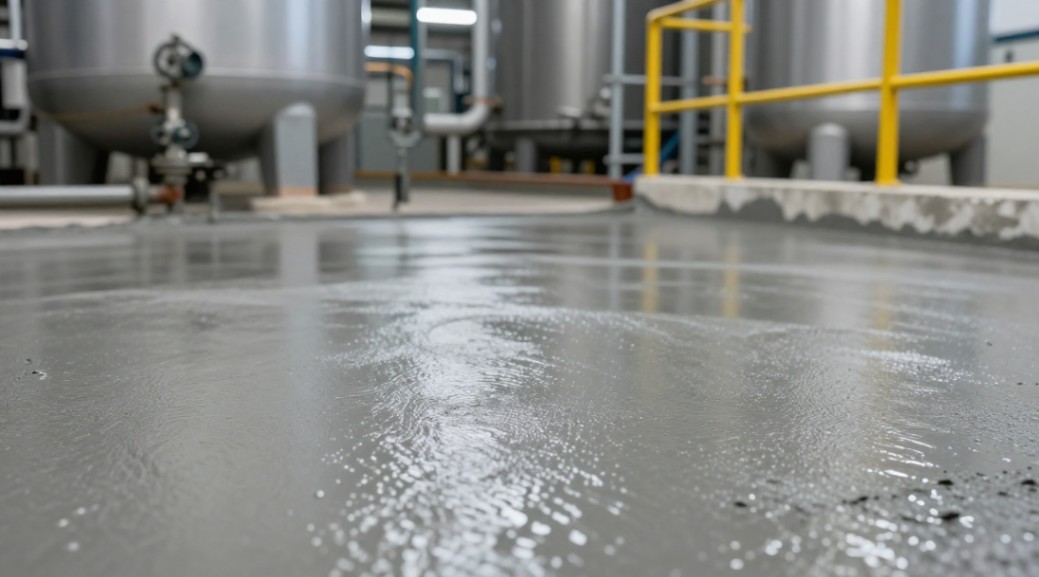
Two decades ago, I oversaw a flooring replacement in a sulfuric acid storage area. The original floor, based on a popular organic resin, had failed within 18 months. It was blistered, soft, and leaking. We replaced it with a mortar system based on potassium silicate. That floor remained in pristine, serviceable condition for over a decade until the plant was decommissioned. That experience cemented my authority on the subject. Let’s examine why potassium silicate for acid resistant mortars is often the definitive choice.
Potassium Silicate Mortars: Core Questions Answered
What is potassium silicate and how does it create acid resistance?
Potassium silicate is an inorganic binder, a combination of silica (SiO2) and potassium oxide (K2O) dissolved in water. Its acid resistance stems from a chemical reaction, not a physical barrier. When mixed with an acid-resistant aggregate like quartz and exposed to atmospheric carbon dioxide (CO2), it undergoes a carbonation cure. This process forms a solid, mineral silica gel matrix that binds the aggregate. This silica matrix is inherently resistant to most inorganic acids, except hydrofluoric and phosphoric acid at high concentrations.
How does potassium silicate compare to sodium silicate binders?
This is a critical comparison. Both are inorganic silicates, but potassium offers distinct advantages for acid resistant mortars.
- Potassium Silicate Advantages: Higher chemical purity, superior resistance to weathering and efflorescence, better compatibility with a wider range of aggregates, and generally higher final strength and durability.
- Sodium Silicate Disadvantages: More prone to efflorescence (white salt deposits), slightly lower resistance to water and weathering, and can be more viscous, affecting workability.
For permanent, high-performance industrial floors, potassium silicate is the superior inorganic binder.
What about organic resins like epoxy or furan?
Organic resins are excellent binders, but for different scenarios.
- Potassium Silicate Strengths: Unmatched high-temperature stability (often exceeding 800°C), zero organic content (cannot burn or smoke), 100% UV resistance, and superior dimensional stability under thermal cycling.
- Organic Resin Strengths: Better adhesion to damp substrates, higher tensile strength, and resistance to alkalis and solvents.
Choose potassium silicate for hot acid spill areas, high-temperature processes, or where fire resistance is critical. Choose epoxies or furans for complex chemical exposure involving alkalis or solvents.
What are the primary applications for these mortars?
Their use is specialized for harsh industrial environments.
- Secondary containment bunds and floors in chemical processing plants.
- Trenches, sumps, and floors in wastewater treatment facilities.
- Pickling tanks, plating shop floors, and acid storage areas.
- Furnace foundations and flue linings subject to acid condensates.
What is the correct surface preparation and mixing procedure?
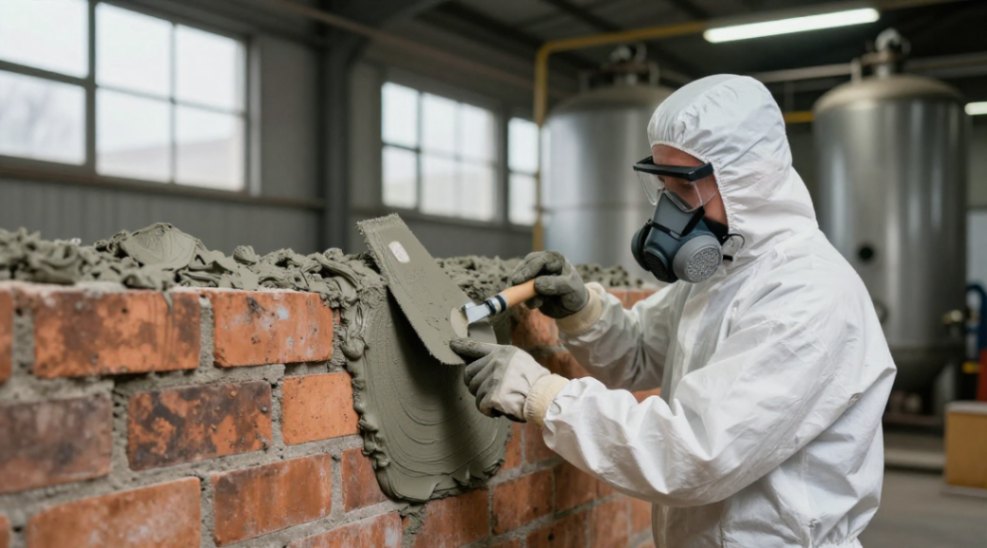
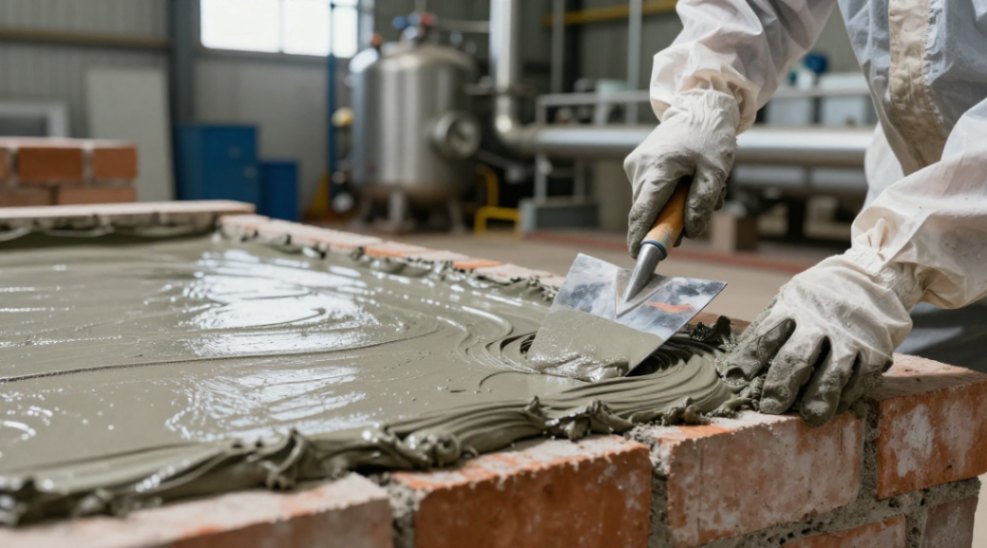
Failure here guarantees project failure. The substrate must be sound, clean, and absolutely free of contaminants like oil, grease, or laitance. A mechanically abraded, acid-etched, or shot-blasted concrete surface is mandatory. Mixing must follow the manufacturer’s ratio precisely. Use a low-speed, high-torque drill. The pot life is short, typically 30-45 minutes. Mix only what you can place within that window.
Why is the curing process so critical?
Potassium silicate mortars cure by carbonation, not dehydration. Atmospheric carbon dioxide (CO2) reacts with the binder to form the solid gel. This requires adequate ventilation. Forcing cure with heat lamps or direct flame is catastrophic. It causes rapid drying, shrinkage cracking, and a weak, powdery surface. Proper curing takes 24-72 hours depending on ambient conditions. Patience is non-negotiable.
What are the key limitations?
No material is perfect. Understand these constraints.
- Poor adhesion to damp or poorly prepared substrates.
- Not suitable for constant immersion in water or strong alkaline exposure.
- Requires dry, carbon dioxide-rich air for proper curing.
- Installation is highly skill-dependent and sensitive to ambient conditions.
How do you maintain and repair a potassium silicate mortar floor?
Properly installed, it requires minimal maintenance. Clean with water or dilute acid solutions. For repair, the existing surface must be chiseled back to sound material, cleaned aggressively, and primed with fresh potassium silicate solution before applying new mortar. The repair mix must be identical to the original. Incompatible patches will fail.
The Expert Verdict and Your Next Step
The data and field performance are clear. For enduring protection against inorganic acids and high temperatures in industrial settings, potassium silicate for acid resistant mortars is frequently the optimal technical solution. Its inorganic nature provides permanent, fireproof stability that organic materials cannot match.
Do not leave this to chance. Specification errors are costly. You need a system engineered for your specific chemical, thermal, and mechanical loads. I recommend contacting [Your Company Name] immediately. Our technical team will analyse your project parameters and provide a tailored specification and material recommendation. Request a consultation and product data sheets today. Protect your capital investment with the correct chemistry from the start.
Supplier
We are the global leader in lightweight concrete and advanced engineered foam solutions. Known globally for its commitment to research, innovation, and applied expertise, we have been providing engineered foam solutions since the early 2012’s.
We can supply high-quality concrete admixture and foam concrete related products all over the world.
The company has a professional technical department and quality supervision department, a well-equipped laboratory, and equipped with advanced testing equipment and after-sales customer service center.
If you are interested, please feel free and contact us.