Concrete-mesa | Concrete Admixtures, Tools, and Production Machines

The Repair Mortar Secret Nobody Talks About: How to Avoid Costly Cracks with Redispersible Polymer Powder
A Crack That Cost $50,000
I stared at the concrete patch. It looked perfect for six months. Smooth, uniform, strong. Then winter came. A web of fine cracks appeared, tracing the outline of the repair like a cruel joke. The client was furious. The rework bill was staggering. Our mistake? We used a standard mortar mix for a demanding structural repair. We ignored the single most impactful ingredient for modern repair success: redispersible polymer powder.
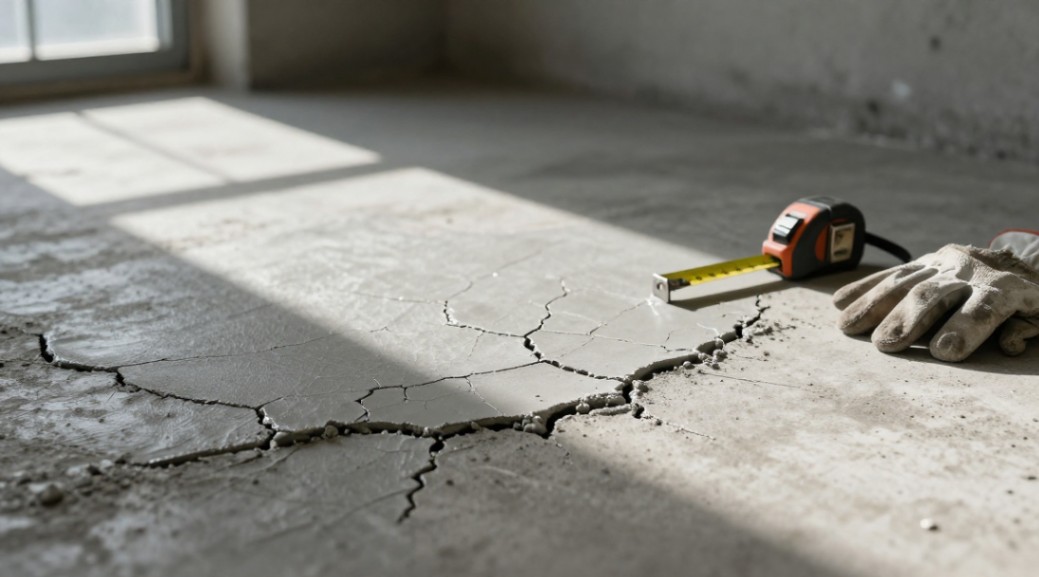
Let me be your guide. I have seen this story too many times. My goal is simple: to help you avoid the common, expensive traps when using redispersible polymer powder for repair mortars. This isn’t marketing. This is 25 years of hard-won, practical knowledge.
What is Redispersible Polymer Powder, and Why Should You Care?
Think of dry, white powder. Mixed with water, it “remembers” its original polymer form. It disperses into a million tiny glue particles throughout your mortar. When the mortar dries, these particles coalesce. They form a flexible, adhesive polymer film that binds everything together. This film bridges the cement matrix. It is the secret weapon.
For repair mortars, this changes everything. Old concrete is brittle. New mortar shrinks as it cures. Without a bridge, stress creates cracks. The polymer film absorbs that stress. It stretches. It bonds tenaciously to old, dusty substrates. This is not a minor improvement. It is the difference between a repair that lasts one year and one that lasts twenty.
Critical Warnings: What You Must Never Do
Success starts by avoiding failure. Here are the pitfalls that destroy projects.
1. Never Treat All Powders as Equal
This is the biggest error. You see “redispersible polymer powder” on a bag and assume it’s suitable. It is not. The polymer type dictates performance.
- Vinyl Acetate Ethylene (VAE): The workhorse. Excellent adhesion, good flexibility, cost-effective. Warning: It has limited water resistance. Never use it for exterior, below-grade, or continuously damp repairs. It will re-emulsify and fail.
- Acrylic-based Powders: The premium choice. Superior water resistance, UV stability, and flexibility. Use these for exterior facades, balconies, and wet areas. The cost is higher, but the longevity justifies it.
- VeoVa-based Powders: The chemical specialist. Fantastic hydrophobic properties and alkali resistance. Essential for repairing chemically aggressive environments or substrates with high moisture.
Choosing the wrong type guarantees premature failure. Match the polymer to the environment.
2. Never Guess the Dosage
More powder is not better. Exceeding the optimal dose creates a sticky, unworkable paste that traps air and weakens the cement structure. Too little powder provides no benefit. You wasted your money.
Follow the manufacturer’s guidelines, but understand the logic. Typical dosage for repair mortars ranges from 1.5% to 4.0% of the cement weight. A flexibility-focused repair for a moving crack needs a higher dose. A rigid, high-strength patching mortar uses a lower dose. Precision matters.
3. Never Dump it Into Dry Mix
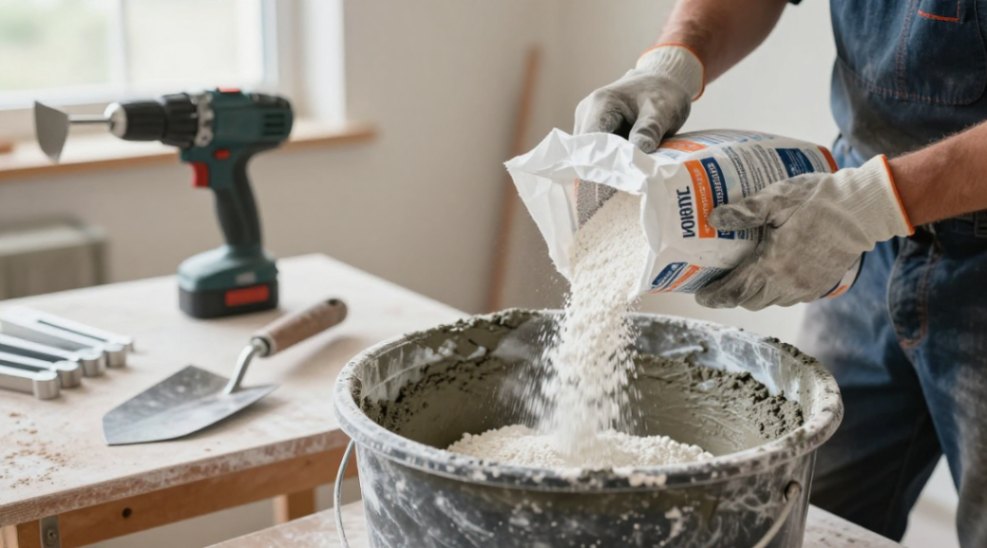
You will ruin the powder’s effectiveness. Redispersible polymer powder is coated with anti-caking agents. It must disperse freely in water. Always add the powder to your mixing water first. Let it slurry for 30-60 seconds. Then, add your sand and cement. This ensures every polymer particle gets activated and distributed evenly. Inconsistent dispersion creates weak spots.
The Right Way: Unlocking the Benefits for Repair
Now, let’s focus on positive action. When you use the correct redispersible polymer powder correctly, these are your rewards.
Adhesion That Defies Gravity
The polymer film penetrates the microscopic pores of the old concrete. It creates a mechanical and chemical bond far stronger than cement alone. This allows for thin-layer applications and reliable overhead repairs. The mortar sticks where plain cement would simply fall off.
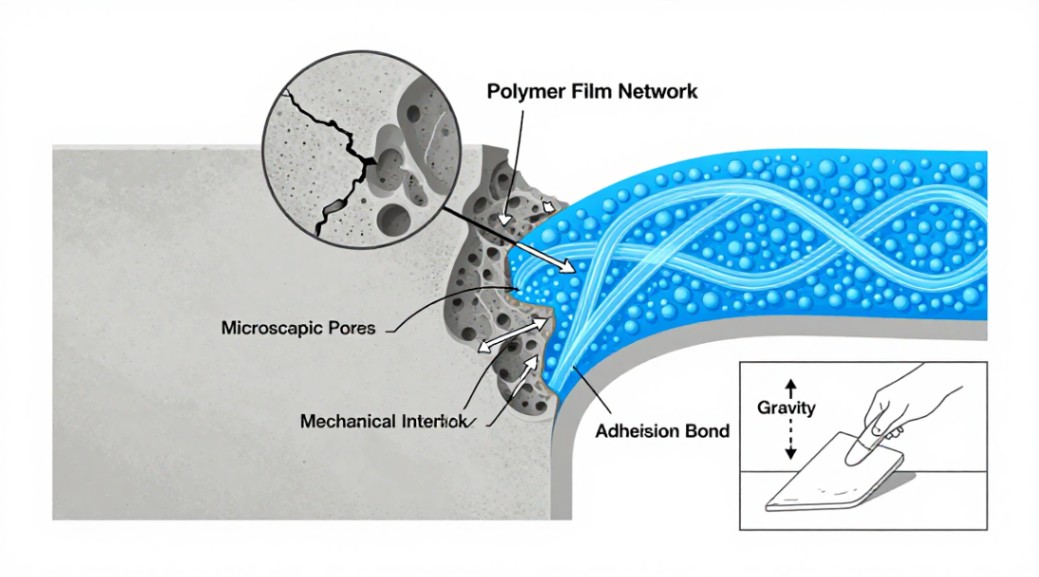
Crack Bridging and Flexibility
Cement is rigid. It cracks under tensile or bending stress. The polymer film acts as a network of micro-hinges. It allows the mortar to absorb movement, thermal expansion, and substrate shrinkage without fracturing. Your repair accommodates the real-world forces that destroyed the original surface.
Improved Durability and Water Resistance
The polymer film reduces the mortar’s capillary pores. It makes the pathway for water and aggressive salts more tortuous. This dramatically slows down freeze-thaw damage, sulfate attack, and corrosion of embedded steel. You are not just patching a hole; you are armoring the area.
Enhanced Workability
You feel the difference immediately. Mortars with redispersible polymer powder are creamier, more cohesive. They stick to your trowel without being sticky. They reduce sag on vertical surfaces. This makes application faster and produces a smoother, denser finish that is less prone to plastic shrinkage cracks.
Your Action Plan: A Practical Selection Guide
Let’s make this actionable. Use this logic tree for your next repair project.
Step 1: Assess the Environment. Is it interior or exterior? Dry, damp, or submerged? Is there chemical exposure? This dictates the polymer type (Acrylic or VeoVa for harsh conditions).
Step 2: Define the Repair’s Purpose. Is it filling a static void or bridging an active crack? High flexibility requires a higher dosage of a flexible polymer like VAE or Acrylic.
Step 3: Check Substrate Compatibility. Always test adhesion. The polymer improves it, but you must confirm. A simple pull-off test on a mock-up area saves countless headaches.
Step 4: Mix with Precision. Weigh your components. Slurry the polymer powder in water first. Mix thoroughly but avoid introducing excess air.
The Trustworthy Path Forward
Ignoring redispersible polymer powder is a professional risk. Misusing it is a financial liability. But understanding it transforms your repair work. You move from guessing to engineering. Your repairs stop being temporary patches and become permanent solutions.
Start with a small test. Compare a standard mortar to one modified with the correct redispersible polymer powder. Feel the workability. Test the adhesion. Observe the cured surface. The evidence will be clear. Your future self, standing before a flawless, durable repair years from now, will thank you for heeding this advice. That is the true goal: building trust, one successful repair at a time.
Supplier
We are the global leader in lightweight concrete and advanced engineered foam solutions. Known globally for its commitment to research, innovation, and applied expertise, we have been providing engineered foam solutions since the early 2012’s.
We can supply high-quality concrete admixture and foam concrete related products all over the world.
The company has a professional technical department and quality supervision department, a well-equipped laboratory, and equipped with advanced testing equipment and after-sales customer service center.
If you are interested, please feel free and contact us.