Concrete-mesa | Concrete Admixtures, Tools, and Production Machines

The Nano-Silica Mistake That’s Secretly Cracking Your Ultra High Performance Concrete
The Gap Between Promise and Reality
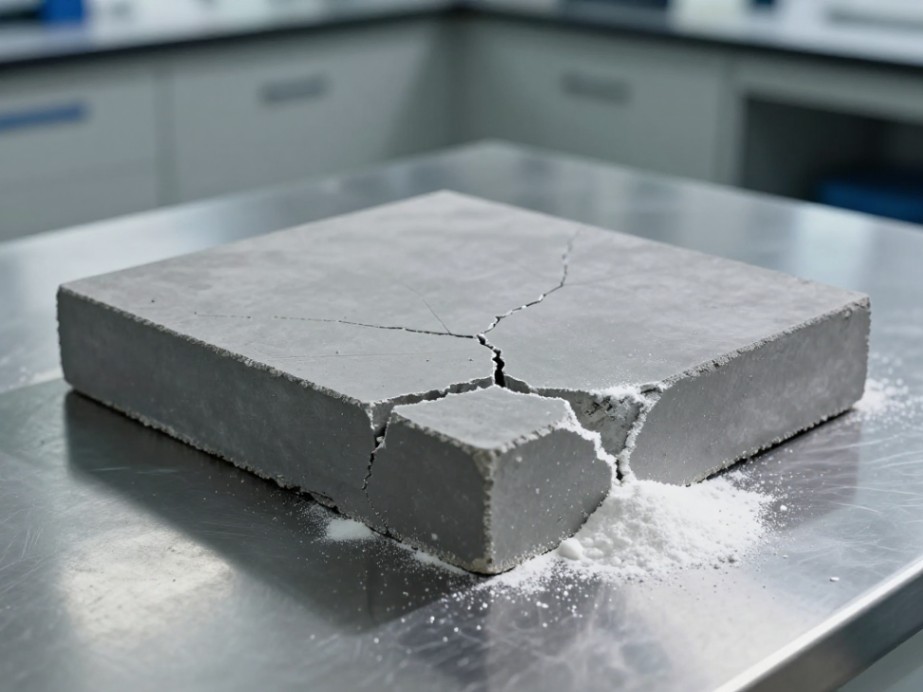
You heard the claims. Nano-silica is the magic dust for Ultra High Performance Concrete (UHPC). Unbeatable strength, impermeable density, eternal durability. You sourced the best nano-silica modifier for ultra high performance concrete, followed the spec sheet, and mixed it in. The early test results looked fantastic. Then, six months later, the microcracks appeared. The surface scaled. The promised monolithic durability fractured into a mosaic of problems. You’re left holding a bag of expensive powder and a failed project, wondering what went wrong. I’ve seen this story too many times. The failure is almost never in the material itself. It’s in the flawed, industry-standard approach to using it. This isn’t about buying a better product. This is about fixing a broken process.
The Two Fatal Flaws in Your Nano-Silica Logic
Everyone talks about the pozzolanic reaction and the filler effect. Fine. Nano-silica consumes calcium hydroxide and refines pore structure. Textbook. But this simplistic view is your first mistake. You’re treating it like super-fine fly ash. It’s not. It’s a hyper-reactive, insatiable surface area beast.
Think of your concrete mix as a crowded party. The cement particles are the guests. Water is the space they move in. Your superplasticizer is the social lubricant keeping things flowing. Now, you dump in nano-silica. It’s not another guest. It’s a swarm of billions of microscopic magnets, each screaming for water and clinging to everything. You just turned the party into a stampede. This is the ignored workability massacre. The standard advice? “Just add more superplasticizer.” Terrible advice. You’re not solving the problem; you’re masking it with chemistry, often leading to excessive retardation or later-stage bleeding. The real solution isn’t more admixture; it’s strategic, staged introduction and understanding that nano-silica’s primary job isn’t just to react-it’s to structure the entire particle network from the nanoscale up.
The second flaw is the dosage dogma. The spec sheets say 1-3% by weight of cement. So, you add 2%. This is arbitrary and dangerous. The optimal dosage of a nano-silica modifier for ultra high performance concrete isn’t a fixed percentage; it’s a function of your cement’s chemistry, your aggregate’s packing density, and your target rheology. Adding 2% to a poorly graded mix is like putting racing fuel in a lawnmower. It will detonate. Too little, and you’re just adding cost. Too much, and you create a dense but brittle, autogenously shrinking mass begging to crack. You must determine dosage through paste-level rheology tests, not by copying a table from a paper.
Dispersion: The Step Everyone Rushes and Everyone Gets Wrong
This is the cardinal sin. Throwing dry nano-silica powder directly into your concrete mixer. Or, only giving it a few minutes of pre-dispersion in water. You are guaranteed agglomerates. These agglomerates are not inert filler. They are weak points, concentrated zones of unreacted silica and stress concentrators. They become the initiation sites for microcracks. They are the antithesis of UHPC philosophy.
The non-negotiable rule: Nano-silica must be pre-dispersed into a stable, colloidal slurry using high-shear mixing. This isn’t a suggestion; it’s the price of entry. The slurry should then be introduced to the mix, not the other way around. Comparing this process to just tossing in silica fume or fly ash is a fundamental misunderstanding of scale. You are not blending powders; you are engineering a nanostructure.

The Cost Trap and the Long-Term Lie
Yes, nano-silica is more expensive per kilogram than other supplementary cementitious materials. The naive cost-benefit analysis stops there. It’s a short-term accountant’s view. Compare it on performance-per-volume basis, not per-kilogram. A 2% optimal dosage of well-dispersed nano-silica can achieve strength and durability benchmarks that require 10-15% of other materials, affecting your entire mix design and packing. More importantly, consider the lifecycle cost. A bridge deck that needs repair in 30 years instead of 15 pays for the nano-silica a hundred times over. The wrong analysis asks, “How much does this powder cost?” The right analysis asks, “What is the financial risk of this structure failing prematurely?” Your modifier is an insurance policy written in nanoparticles.
The future isn’t about dumping more nanotechnology into concrete. It’s about precision. It’s about functionalized nano-silica particles designed to perform specific tasks, like targeted crack healing or internal moisture regulation. The blunt instrument approach we use today will look primitive in a decade.
A Different Path Forward
So, what should you do? First, abandon the copy-paste mentality. Your project is unique. Treat your nano-silica modifier for ultra high performance concrete as a system component, not an additive.
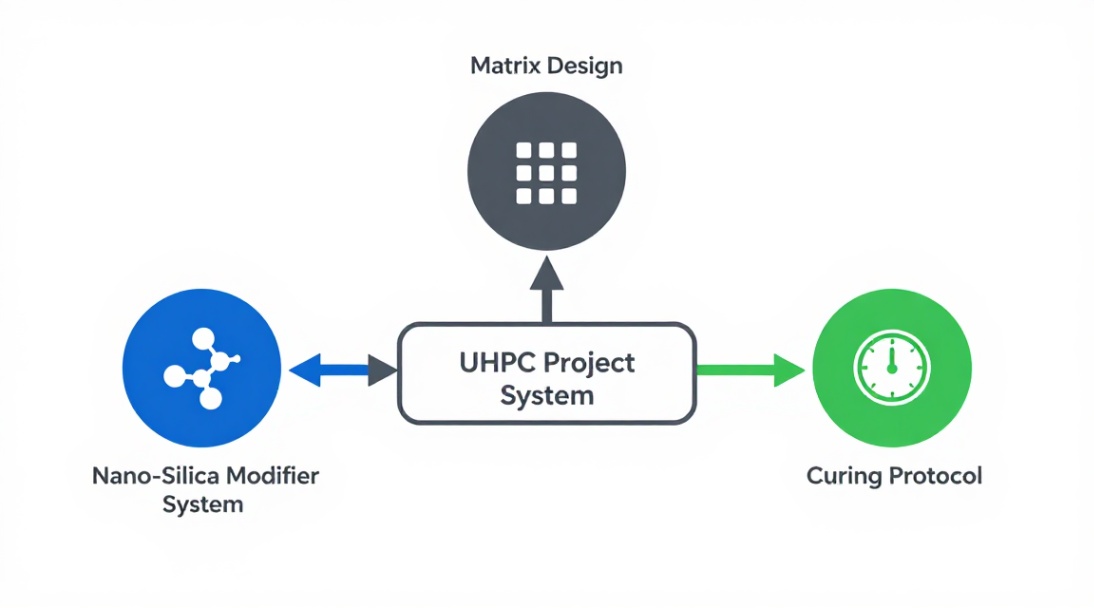
- Test the Paste, Not Just the Concrete. Before a single aggregate is involved, develop a rheological model of your cement-nano-silica-water-admixture paste. Find the dispersion method and dosage that gives you stable, workable flow.
- Respect the Water Demand. Model the nano-silica’s thirst into your water/binder ratio from the start. Do not let it steal water from cement hydration.
- Sequence Your Mixing. Establish a strict protocol: liquids and admixtures first, then cement, then the pre-dispersed nano-silica slurry, then aggregates. Order matters.
- Validate with Microstructure. Use simple tests like water absorption or rapid chloride permeability not just as pass/fail gates, but as indicators of whether your dispersion was successful. Poor dispersion will show up here long before compressive strength tests.
This approach demands more upfront thought. It requires you to understand the mechanism, not just the marketing. But this is the only way to unlock the true, reliable potential of nanotechnology in concrete. The tool is powerful. The common manual for its use is flawed. Rethink the process. The integrity of your structure depends on it.
Supplier
We are the global leader in lightweight concrete and advanced engineered foam solutions. Known globally for its commitment to research, innovation, and applied expertise, we have been providing engineered foam solutions since the early 2012’s.
We can supply high-quality concrete admixture and foam concrete related products all over the world.
The company has a professional technical department and quality supervision department, a well-equipped laboratory, and equipped with advanced testing equipment and after-sales customer service center.
If you are interested, please feel free and contact us.