Concrete4U | Concrete Admixtures, Tools, and Production Machines

The Definitive Guide to Polymer Powder for Thin-Set Tile Adhesive
The Quiet Revolution in Your Mortar Mix
Imagine walking onto a tile installation job from twenty years ago. The smell of wet cement and sand hangs in the air. The mason mixes his thin-set powder with water, creating a stiff, gritty paste. It works. It holds tiles. But it’s unforgiving. It demands perfect substrates, perfect timing. A slight shift in the subfloor, a hint of moisture, and you risk hollow sounds, cracked grout, or worse, loose tiles. Now step onto a modern site. That bag of thin-set powder looks similar. But open it, and you’ll often find a second, finer component mixed in with the cement and sand. This is polymer powder. It doesn’t just modify the mortar; it transforms its entire character, turning a brittle, rigid glue into a sophisticated, tenacious, and flexible bonding layer.
What Is Polymer Powder in Thin-Set?
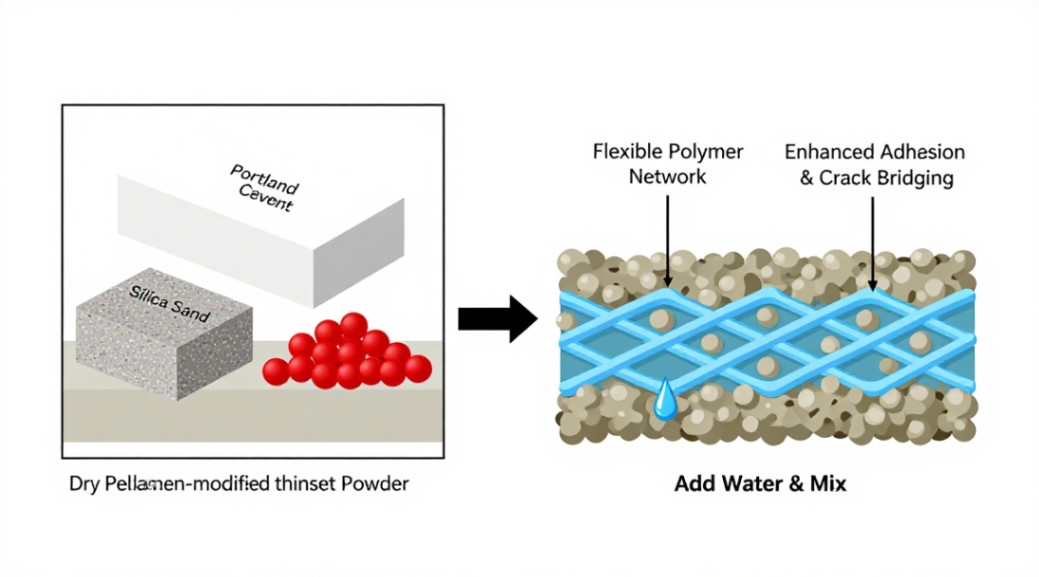
At its core, polymer powder for thin-set tile adhesive is a dry, free-flowing powder of engineered plastic resins. The most common types are Vinyl Acetate Ethylene (VAE) and acrylic-based polymers. These are not simple granules; they are redispersible polymer powders. This technical term is key. It means the polymer particles are designed to dissolve and re-form a cohesive polymer film when you add water during mixing. You start with a dry powder. You add water. The cement hydrates, and the polymer particles simultaneously redisperse, then coalesce as the mortar cures and dries. The result is a hybrid matrix-a dense forest of cement crystals intertwined with a flexible web of polymer film. This composite structure is where the magic happens.
How It Works: More Than Just Glue
Think of cement as strong but brittle, like ceramic. It has high compressive strength but cracks under tension or bending. Polymer films are inherently flexible and sticky. In thin-set adhesive, the polymer powder doesn’t just sit there. It performs multiple critical functions. First, it dramatically improves adhesion. The polymer film acts like billions of microscopic suction cups, bonding tenaciously to tricky surfaces like existing tiles, painted concrete, or waterproofing membranes where plain cement fails. Second, it imparts flexibility. The polymer web allows the mortar bed to absorb stresses-foot traffic, thermal expansion, subtle substrate movement-without transmitting those forces into a brittle crack. This directly translates to superior crack resistance.
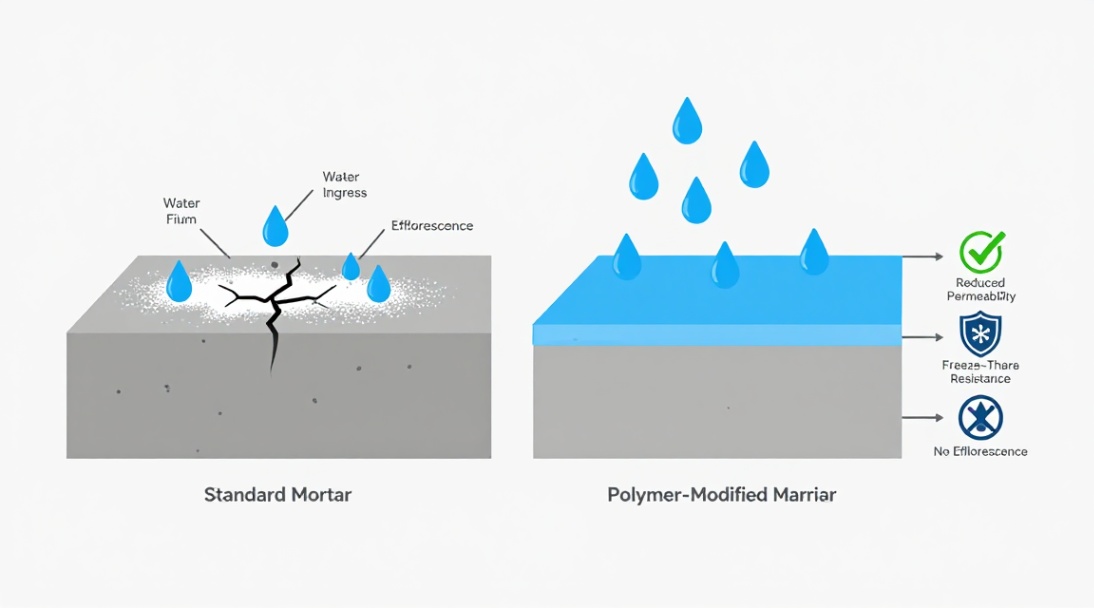
Third, it enhances durability. The polymer film reduces the mortar’s permeability, creating a barrier against water and moisture ingress. This means less risk of efflorescence (white, powdery stains), reduced freeze-thaw damage in exterior applications, and better long-term performance in wet areas like showers. Finally, it improves workability. Mortar modified with polymer powder is creamier, more cohesive, and has a longer open time-the window you have to adjust tiles before the mortar skins over. It’s easier to spread and gives you a confident, consistent bed.
Why This Beats Liquid Latex Additives
For decades, tilers used liquid latex additives, mixing them into the water before combining with dry mortar. Polymer powder integrates this technology directly into the factory-blended bag. The advantages are significant. Consistency is guaranteed. You eliminate the risk of a worker mis-measuring the liquid additive. The product is easier to transport and store-no risk of frozen or spoiled liquid bottles. Most importantly, the chemical formulation of a factory-blended polymer powder for thin-set tile adhesive is optimized. The particle size, chemical composition, and ratio to cement are precisely engineered for peak performance, something difficult to achieve consistently with field-mixed liquids.
Selecting and Using Polymer-Modified Thin-Set
Not all polymer-modified thin-sets are equal. Their performance is dictated by the type and amount of polymer powder used. A standard modified thin-set for ceramic tiles contains a lower percentage. A premium, flexible thin-set for large-format porcelain tiles will have a much higher polymer content, often with advanced acrylics, to provide greater deformation capability. Always choose a product that matches your specific tile type and substrate conditions. When mixing, follow the manufacturer’s instructions precisely. Use clean water and mix thoroughly to a lump-free consistency, ensuring the redispersible polymer powder fully activates. Allow the mixed mortar to slake (rest) for 5-10 minutes, then re-mix briefly. This rest period is crucial for the polymers to fully hydrate and develop optimum workability.
The Professional’s Invisible Advantage
Polymer powder is the unseen ingredient that separates a passable tile job from a permanent, trouble-free installation. It moves thin-set adhesive from being a simple bonding agent to a performance-engineered system. It addresses the real-world problems of substrate imperfection, movement, and moisture. For the installer, it means a more forgiving, easier-to-use material. For the building owner, it means long-term peace of mind. Understanding this component isn’t just technical knowledge; it’s the foundation for making informed choices that ensure durability and client satisfaction. Your next bag of thin-set likely contains it. Now you know the profound difference it makes.
Supplier
We are the global leader in lightweight concrete and advanced engineered foam solutions. Known globally for its commitment to research, innovation, and applied expertise, we have been providing engineered foam solutions since the early 2012’s.
We can supply high-quality concrete admixture and foam concrete related products all over the world.
The company has a professional technical department and quality supervision department, a well-equipped laboratory, and equipped with advanced testing equipment and after-sales customer service center.
If you are interested, please feel free and contact us.