Concrete4U | Concrete Admixtures, Tools, and Production Machines

Concrete Defoamer for Pumping Mixes: Solve Blockages, Improve Flow, and Boost Your Profits
Are You Constantly Fighting Foam and Pump Failures?
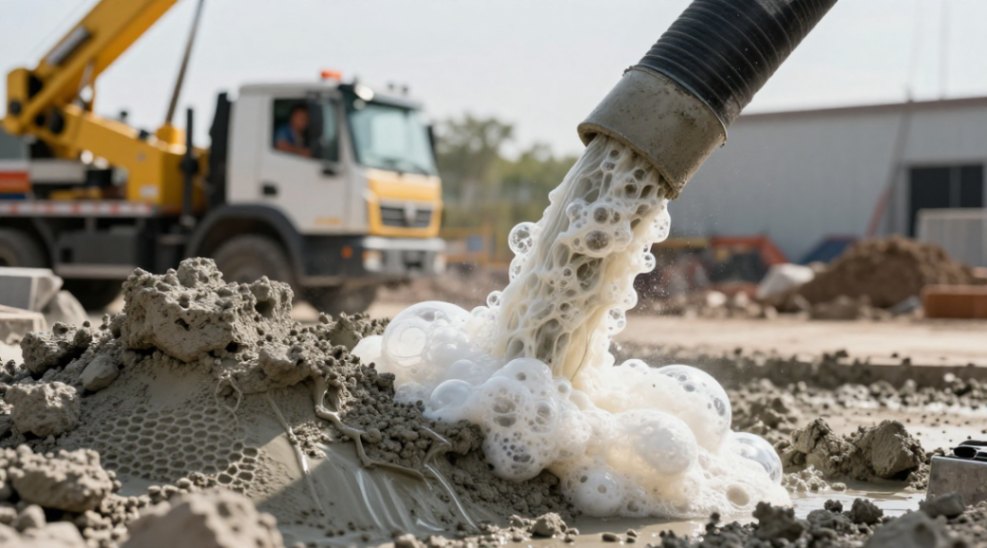
Foam in your pumping mix is a silent profit killer. It lurks within your concrete, causing erratic flow, sudden pressure spikes, and dreaded line blockages. You fight cavitation at the pump, only to find a pitted, honeycombed surface after stripping the forms. The cost isn’t just in wasted material and downtime-it’s in your reputation. We understand the frustration. We’ve been in the pump operator’s cab, felt the pressure gauge jump, and seen the results of compromised strength. This is why the precise use of a concrete defoamer for pumping mixes isn’t just another additive; it’s a critical operational necessity for modern, efficient concrete placement.
What Exactly Is a Concrete Defoamer for Pumping Mixes?
A concrete defoamer for pumping mixes is a specialized chemical admixture engineered to control and eliminate excess air and foam. It works by reducing the surface tension of the water in your mix, causing air bubbles to coalesce and rise to the surface where they burst. For pumping applications, this is non-negotiable. Pumpable concrete requires a specific, stable rheology. Uncontrolled air acts like millions of tiny, compressible ball bearings. Under the high shear and pressure of the pumping process, these bubbles collapse or merge unpredictably. This leads to a loss of lubrication within the pipeline, a phenomenon we call “cavitation.” The result is increased friction, higher pumping pressure, and a high risk of a complete blockage. A proper defoamer stabilizes the mix, giving you a predictable, smooth flow from the hopper to the discharge point.
The Tangible Benefits: Why Your Pump Crew Will Thank You
Integrating a defoamer transforms your pumping operation. The immediate benefit is a dramatic reduction in pumping pressure. With fewer compressible air pockets, the concrete behaves as a more homogeneous fluid. You achieve longer, smoother pump strokes. The risk of a sudden, job-stopping blockage plummets. On the job site, this translates to fewer emergency hose disconnections, less frantic rodding of the pipeline, and a calmer, more productive crew. The benefits extend to the finished product. By minimizing large, trapped air voids, you significantly improve surface quality. Your formed surfaces come out denser, with fewer bug holes and surface defects, reducing costly finishing labor and patching work. Internally, the concrete achieves higher compressive and flexural strength because the cement paste is more compact. Users on industry forums consistently report that a reliable defoamer is the single most effective tool for eliminating the “pump anxiety” that plagues complex pours.
Selecting and Using the Right Defoamer
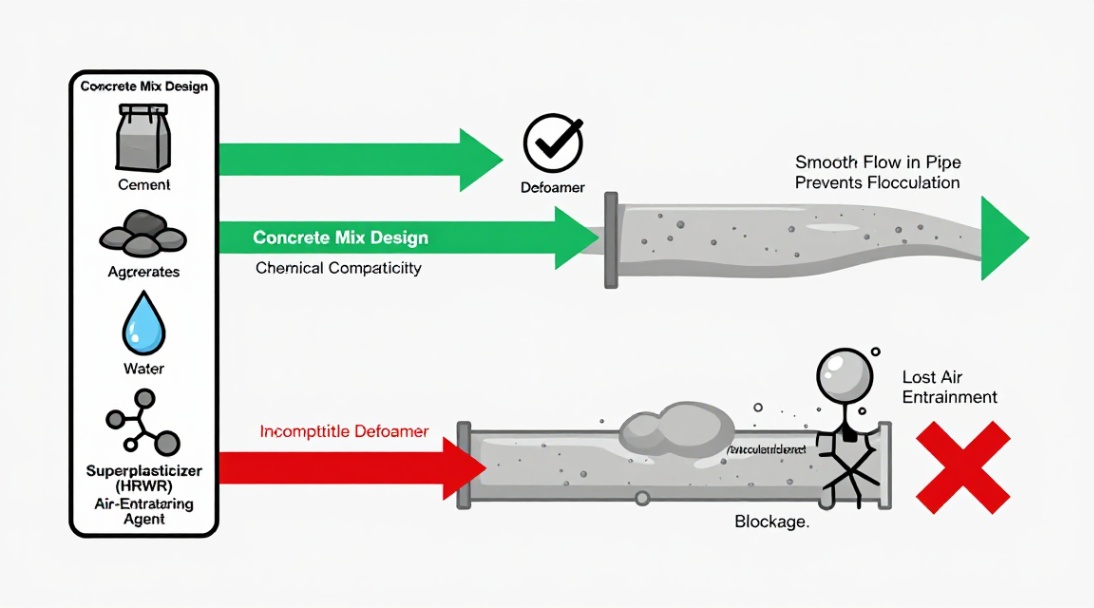
Not all defoamers are created equal. For pumping mixes, you need a product with proven chemical compatibility. It must work in harmony with your other admixtures-especially high-range water reducers (superplasticizers) and air-entraining agents. An incompatible defoamer can destroy designed air content or cause cement particles to flocculate, creating more problems than it solves. Always conduct a site trial with your specific mix design.
Dosage and Method: Precision is Key
Defoamers are powerful. The optimal dosage is typically very low, often between 0.1% and 0.5% by weight of cementitious material. More is not better; overdosing can lead to segregation and bleeding. The timing of addition is critical. For most pump mixes, adding the defoamer at the batching plant, with the mixing water, ensures the most uniform dispersion. This allows it to act during the initial mixing and throughout transit, preparing the concrete for the pump. Always follow the manufacturer’s guidelines, but be prepared to adjust based on your aggregate moisture content, mix temperature, and specific cement chemistry.
A Cost-Benefit Analysis You Can’t Ignore
Let’s talk numbers. The cost of a defoamer is minimal per cubic metre. Compare that to the cost of a single pump blockage: hours of skilled labor wasted, potential equipment damage, delayed schedules, and compromised structural integrity requiring remediation. The math is compelling. Using a defoamer for pumping mixes is a classic example of a small, proactive investment that protects a large, vulnerable asset-your project’s timeline, budget, and quality.
| Problem Without Defoamer | Solution With Defoamer | Direct Benefit |
|---|---|---|
| High, erratic pump pressure | Stable, reduced pressure | Faster pumping, less wear on equipment |
| Line blockages & cavitation | Smooth, continuous flow | Zero downtime from blockages |
| Surface pitting & bug holes | Dense, smooth formed finish | Reduced finishing costs, superior aesthetics |
| Reduced in-place strength | Optimal strength development | Improved durability, meets design specs |
Your Next Step: Stop Guessing, Start Pumping Efficiently
You don’t have to live with the frustration and cost of foam-related pumping issues. The technology exists, it’s proven, and it’s affordable. For contractors and project managers who value predictability, quality, and profit, a dedicated concrete defoamer for pumping mixes is not an option-it’s a standard operating procedure. Don’t let your next pump pour be a gamble. Take control. We strongly recommend consulting with your admixture supplier today to specify and trial a high-performance defoamer tailored for pumping. The difference on your next pour will be unmistakable: lower pressure, flawless flow, and a perfect finish. Make the call to your supplier now and transform your pumping operations for good.
Supplier
We are the global leader in lightweight concrete and advanced engineered foam solutions. Known globally for its commitment to research, innovation, and applied expertise, we have been providing engineered foam solutions since the early 2012’s.
We can supply high-quality concrete admixture and foam concrete related products all over the world.
The company has a professional technical department and quality supervision department, a well-equipped laboratory, and equipped with advanced testing equipment and after-sales customer service center.
If you are interested, please feel free and contact us.