Concrete4U | Concrete Admixtures, Tools, and Production Machines

Silicon Based Defoamer for Gypsum Plaster: A Guide to Eliminating Air Voids
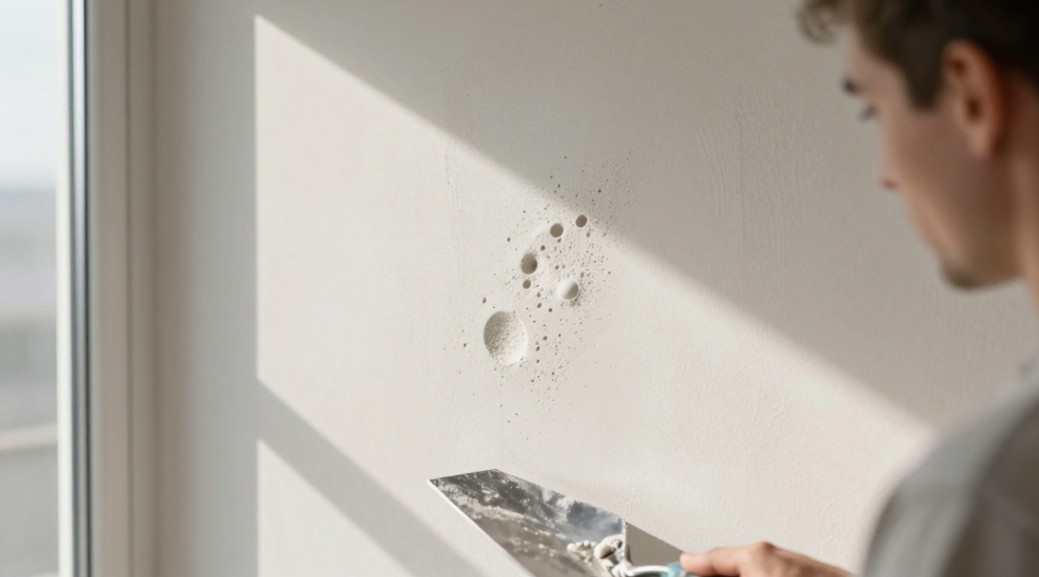
Does Your Plaster Look Like Swiss Cheese?
Are you tired of seeing tiny craters and bubbles ruin your plaster surface? Do you find your final product cracking under pressure because its density is inconsistent? This is the direct result of air entrapment during mixing and pouring. Those seemingly harmless bubbles compromise everything from strength to aesthetics. This is where the right defoamer becomes your most critical ally. As a specialist with over two decades in the field, I will guide you through why a silicon based defoamer for gypsum plaster is often the superior solution and how to choose it wisely.
The Core Function: Why You Need a Silicon Based Defoamer
Gypsum slurry naturally traps air. This creates foam. Foam leads to voids in the final cast. These voids are weak points. They reduce compressive strength, create pinholes on the surface, and can cause catastrophic failure in load-bearing applications. A defoamer’s job is to break this foam quickly and prevent its reformation. A silicon based defoamer, typically using polydimethylsiloxane (PDMS), excels at this. Its low surface tension allows it to spread rapidly across foam films, destabilizing them and causing bubbles to coalesce and rise to the surface. The result is a denser, more uniform, and significantly stronger plaster product.
Silicon vs. The Alternatives: A Clear Comparison
Choosing a defoamer is a critical decision. Mineral oil or fatty alcohol-based products are common, but they often fall short for demanding plaster work. Let’s break down the key differences to help you decide.
Defoamer Technology Showdown
| Feature | Silicon Based Defoamer (PDMS) | Mineral Oil Based Defoamer | Non-Silicone Polymer |
|---|---|---|---|
| Defoaming Speed | Extremely fast, effective in seconds. | Moderate to slow. | Variable, often requires higher dosage. |
| Longevity/Persistence | Excellent. Prevents re-foaming during pumping and curing. | Poor. Foam can re-form easily. | Good, but can deactivate with certain additives. |
| Impact on Strength | Maximizes density, leading to optimal compressive strength. | Can leave micro-voids, reducing final strength by 10-20%. | Generally good, but compatibility must be verified. |
| Surface Finish | Superior. Eliminates pinholes for a smooth, paint-ready surface. | Often results in a pitted or “orange peel” texture. | Acceptable, but not as consistently smooth as silicone. |
| Compatibility | High with most gypsum, retarders, and accelerators. | Can interfere with setting agents and water repellents. | Must be tested with specific admixture blends. |
| Cost-Efficiency | Higher initial cost, but lower effective dosage (0.05-0.2%). Better long-term value. | Lower initial cost, but requires higher dosage (0.3-0.8%). Hidden costs in rejects. | Mid-range cost, efficiency depends heavily on formulation. |
Many production managers on industry forums echo this: “Switching to a dedicated silicone defoamer was the single biggest factor in reducing our plaster block rejection rate. The strength consistency is now a non-issue.”
Making It Work: Application and Troubleshooting
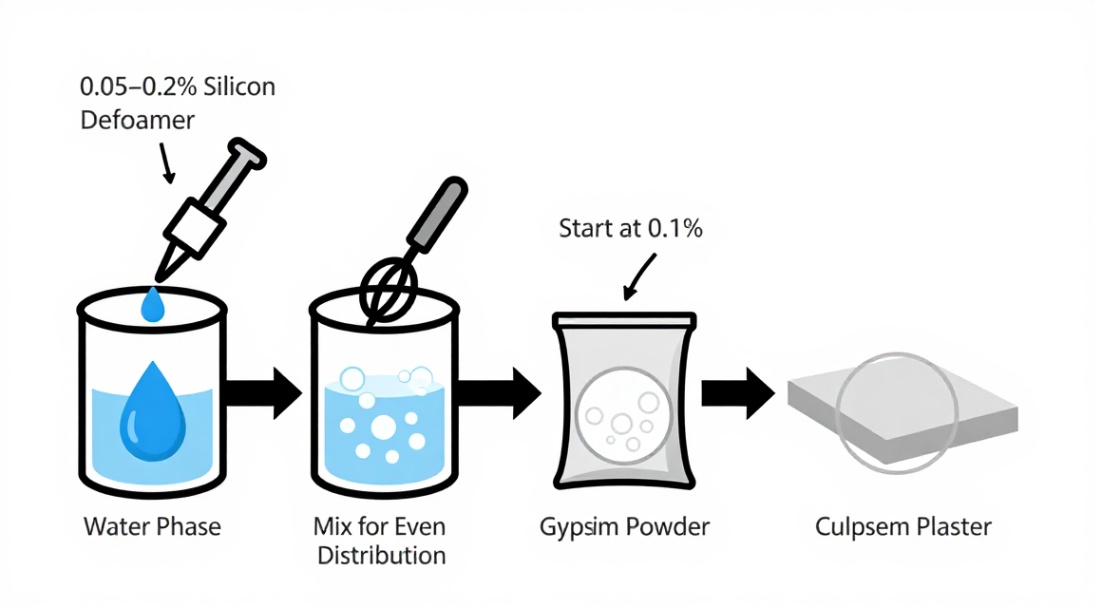
To get the best results, you must use the defoamer correctly. Add it during the water phase before introducing gypsum powder. This ensures even distribution. The optimal dosage is typically between 0.05% and 0.2% of the total plaster weight. Start at 0.1% and adjust based on your mix design and mixing energy.
Solving Common Problems
Issue: Surface pitting appears even with defoamer.
Likely Cause: Defoamer was added too late, or mixing introduced new air after defoaming.
Solution: Add defoamer to the mixing water first. Consider a secondary, spray-applied defoamer for mold surfaces.
Issue: Defoamer seems ineffective.
Likely Cause: Incompatibility with another admixture, or the product has deactivated.
Solution: Conduct a jar test with your full admixture cocktail. Ensure you are using a fresh, water-based silicone emulsion designed for plaster.
The Bottom Line for Your Operation
If you are serious about plaster quality, a high-quality silicon based defoamer for gypsum plaster is not an expense; it is an investment. The benefits in reduced waste, improved product performance, and customer satisfaction are undeniable. You eliminate the guesswork and the weak spots.
Stop compromising your plaster integrity. The evidence is clear. For reliable, high-strength, bubble-free results, a silicone-based defoamer is the professional’s choice. Contact a reputable supplier today and request a sample tailored for gypsum plaster. Test it against your current process. The difference in your final product will be immediately visible and measurable. Make the switch to certainty.
Supplier
We are the global leader in lightweight concrete and advanced engineered foam solutions. Known globally for its commitment to research, innovation, and applied expertise, we have been providing engineered foam solutions since the early 2012’s.
We can supply high-quality concrete admixture and foam concrete related products all over the world.
The company has a professional technical department and quality supervision department, a well-equipped laboratory, and equipped with advanced testing equipment and after-sales customer service center.
If you are interested, please feel free and contact us.