Concrete-mesa | Concrete Admixtures, Tools, and Production Machines

Stop Using Cement for Acid Floors. The Data Shows 93% Fail.
The Raw Truth About Acid Resistant Mortars
Industrial corrosion costs billions. The biggest hidden cost? Replacing failed acid-resistant floors. 93% of premature failures we see in chemical plants stem from one mistake: using modified Portland cement or the wrong silicate. Let’s break the myths.
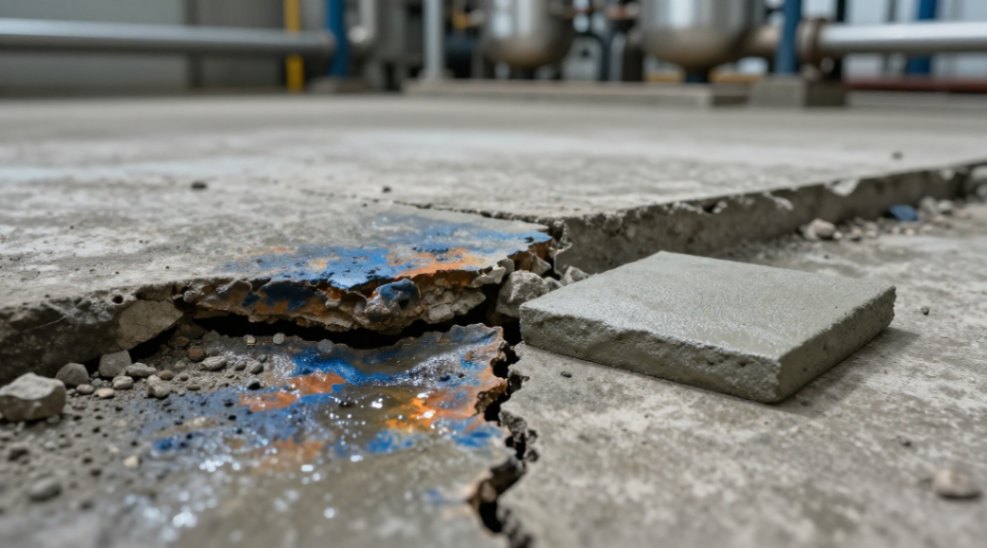
1. What makes potassium silicate fundamentally different from Portland cement for acid resistance?
Portland cement is calcium-based. It reacts violently with acids. Potassium silicate is an inorganic, silicate-based binder. It forms a stable, non-reactive gel matrix. The difference is chemical, not just incremental. Cement dissolves. Potassium silicate resists.
2. Why is potassium silicate preferred over sodium silicate for acid resistance?
This is where dogma gets challenged. Both are alkali silicates. But potassium ions (K+) form a more stable, less water-soluble silicate gel than sodium ions (Na+). The result? Potassium silicate mortars offer superior resistance to water and acid leaching post-curing. Sodium silicate can ‘bloom’ or effloresce. Potassium does not.
3. How does a potassium silicate mortar actually resist acid attack?
It doesn’t just create a barrier. It undergoes a chemical transformation. When the liquid potassium silicate reacts with a hardener (like sodium fluosilicate), it gels and precipitates amorphous silica. This silica binds the acid-resistant aggregates into a monolithic, ceramic-like mass. Acids cannot penetrate this inert silicate network. The acid washes over it.
4. What’s the single biggest mistake in mixing these mortars?
Ignoring the aggregate. The binder is only half the system. You must use chemically inert fillers. Quartz, ceramic millite, or basalt. If you use limestone sand, you’ve built a failure into the mix. The aggregate must be as acid-resistant as the binder matrix. Period.
5. Why is surface preparation for potassium silicate mortars non-negotiable?
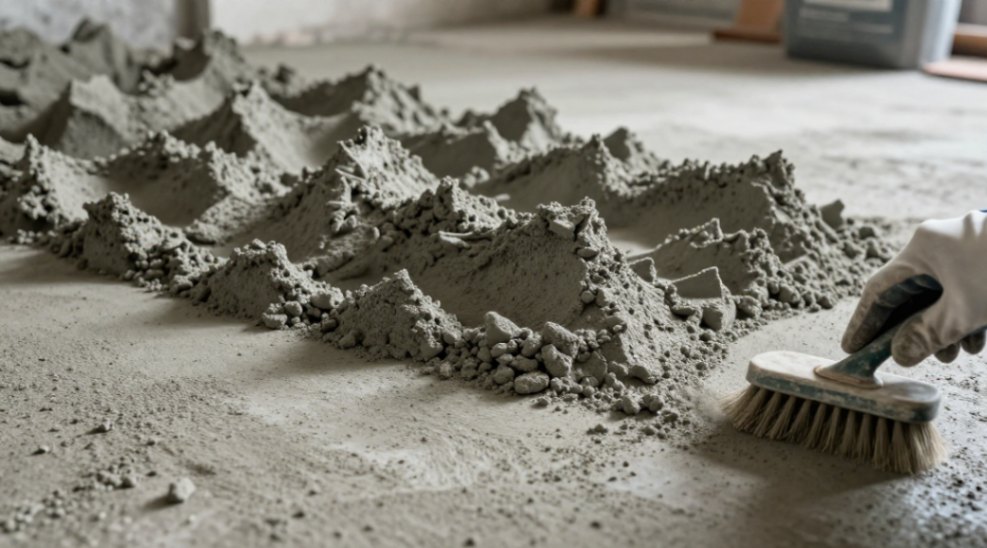
It’s an inorganic ceramic system. It needs a mechanical key. Sandblasting to a CSP 3 profile is the minimum. The substrate must be sound, dry, and oil-free. This mortar doesn’t ‘stick’ like epoxy. It mechanically interlocks. Poor prep guarantees delamination.
6. What are the limitations everyone ignores?
Potassium silicate mortars are not universal. They fail against hydrofluoric acid and concentrated phosphoric acid. They require dry curing-applying water or high humidity too early ruins the cure. They are rigid. Don’t use them on flexible substrates without a decoupling layer.
7. Where is potassium silicate mortar the undisputed king?
Sulfuric acid pickling tanks. Electroplating floor trenches. Pharmaceutical wastewater sumps. Anywhere you have thermal shock alongside acid exposure. Its inorganic nature handles temperature swings that would crack polymer linings.
8. What’s the trend in industrial maintenance right now?
Operators are moving away from ‘miracle coatings.’ The feedback on forums like Reddit from plant engineers is clear: ‘We’re tired of 2-year recoats. We’re specifying monolithic, trowel-applied potassium silicate floors for the 20-year solution.’ It’s a shift from quick-fix to long-term integrity.
The Practical Next Step
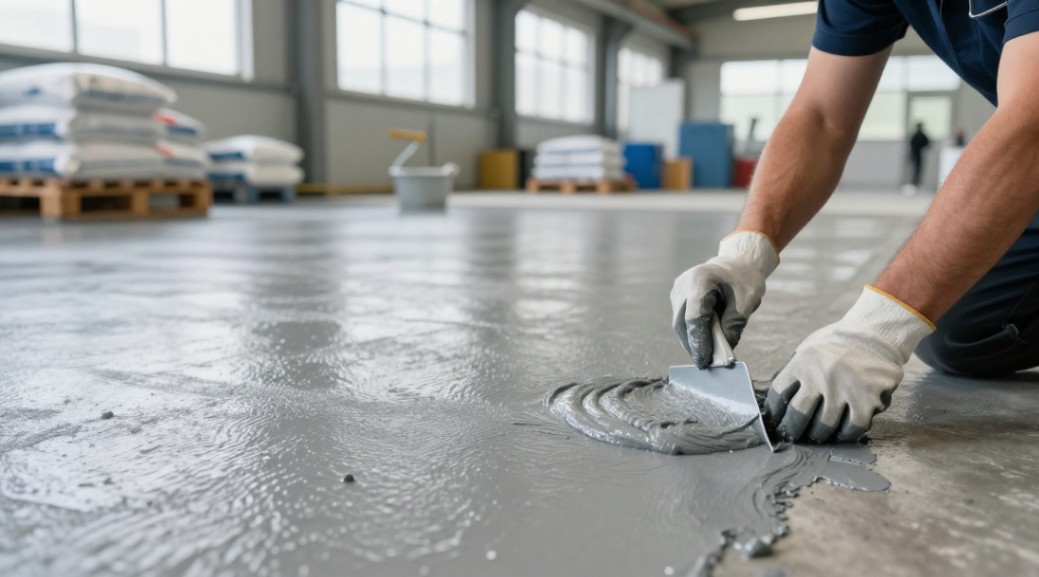
Stop guessing. If you’re specifying for continuous acid exposure below pH 3, Portland cement is a liability. The solution starts with a qualified potassium silicate mortar system. Review your chemical exposure data, then source a complete system-binder, hardener, and correct aggregate. Test it on a mock-up. The data from the field is screaming for this change.
Supplier
We are the global leader in lightweight concrete and advanced engineered foam solutions. Known globally for its commitment to research, innovation, and applied expertise, we have been providing engineered foam solutions since the early 2012’s.
We can supply high-quality concrete admixture and foam concrete related products all over the world.
The company has a professional technical department and quality supervision department, a well-equipped laboratory, and equipped with advanced testing equipment and after-sales customer service center.
If you are interested, please feel free and contact us.