Concrete4U | Concrete Admixtures, Tools, and Production Machines

What is HEC? The Drilling Fluid Polymer That Solves Common Well Control Issues
The Viscosity Problem in the Field
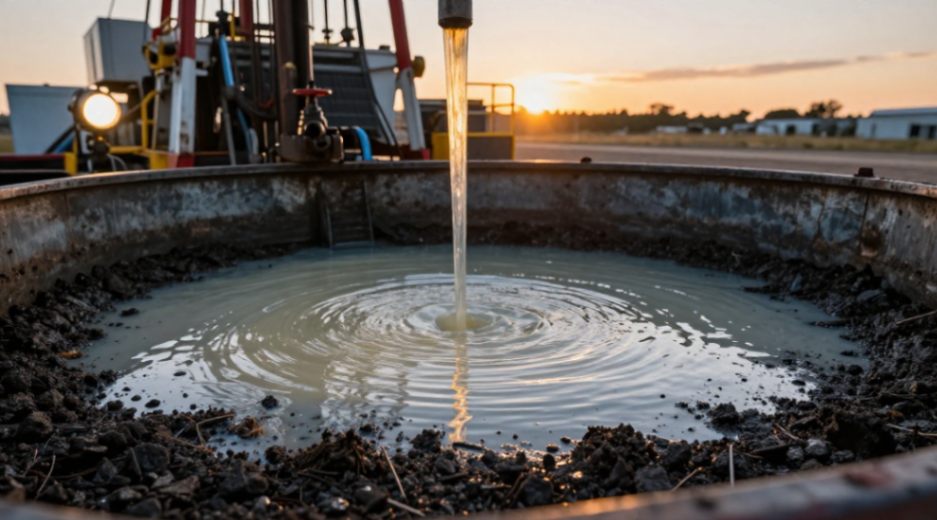
We’ve all been there. You’re running a water-based mud, maybe in a sensitive formation or a high-salinity brine, and the system just won’t hold together. The fluid feels thin, incapable of carrying cuttings. You see solids sagging in the pits. The fluid loss spikes, threatening to damage the producing zone. Do you push more barite? Add a different polymer? The wrong move can lead to stuck pipe, a poor cement job, or even a well control incident. It’s a frustrating, all-too-common scenario.
A Clear Definition of the Solution
So, what is hydroxyethyl cellulose in drilling fluid applications? At its core, Hydroxyethyl Cellulose, or HEC, is a non-ionic, water-soluble polymer derived from cellulose. We classify it as non-ionic for a critical reason: its molecular chain carries no electrical charge. This single characteristic dictates nearly all of its superior performance traits. When you add HEC to water, it hydrates and uncoils, creating a robust, clear, and viscous solution through physical entanglement and hydrogen bonding. It doesn’t react with dissolved salts or clays the way charged polymers do. This is its fundamental advantage.
We rely on HEC primarily as a high-performance viscosifier. Its job is to build and control the rheology of the drilling fluid. This isn’t just about making the mud thicker. It’s about engineering a specific flow profile. We need high viscosity at low shear rates to suspend weight material and drilled cuttings when circulation stops. But we also need low viscosity at high shear rates to minimize pump pressure and efficiently clean the hole while drilling. HEC gives us that precise control.
Why Salt Tolerance is a Game-Saver
Here’s where HEC truly separates itself from alternatives like regular carboxymethyl cellulose (CMC) or even some biopolymers. Many water-soluble polymers precipitate or lose viscosity in the presence of multivalent ions like calcium or magnesium. On forums like Reddit, engineers working on brine-based completion fluids or drilling through salt formations often lament this exact issue. One user shared, “We tried a standard PAC system in a CaCl2 brine, and it turned to soup. Switched to HEC, and the viscosity held like a champ.” This community feedback is spot-on. Because HEC is non-ionic, it remains stable and effective in monovalent brines (KCl, NaCl) and many divalent brines. Its tolerance is a direct result of its chemistry, not a special additive.
More Than Just Thickening: The Multifunctional Role
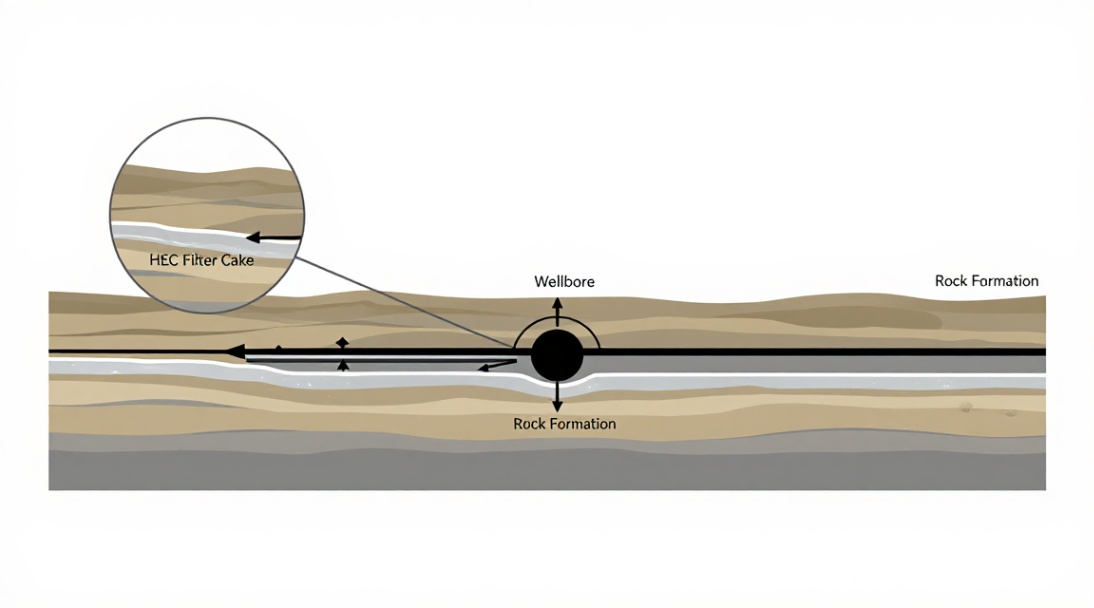
While viscosification is its headline act, HEC’s performance extends into two other critical areas: fluid loss control and shale inhibition. As the polymer hydrates, it forms a flexible, low-permeability filter cake on the wellbore wall. This minimizes filtrate invasion into the formation, protecting reservoir productivity. It’s a physically-plugging mechanism, not a chemical one.
Furthermore, its non-ionic nature makes it an excellent shale inhibitor. Charged polymers can sometimes interact with reactive clays, causing swelling and dispersion. HEC, by contrast, works by coating shale particles and reducing water uptake. It promotes wellbore stability without the chemical complexity of some cationic inhibitors. It’s a gentler, more predictable approach.
Working with HEC: Dosage, Compatibility, and Best Practices
In the field, we typically use HEC at concentrations between 0.5 to 2.0 pounds per barrel (ppb). Starting low and building is always the rule. It’s compatible with nearly all common drilling fluid additives-starches, bicarb, thinners-which gives us tremendous flexibility in formulating a system. The key to handling is to ensure proper dispersion and hydration. We must add it slowly to a vigorously agitated mixing hopper to prevent “fish-eyes,” those annoying gelatinous lumps that never fully dissolve. Pre-mixing in a small volume of non-aqueous fluid or isopropyl alcohol can help, especially in brines.
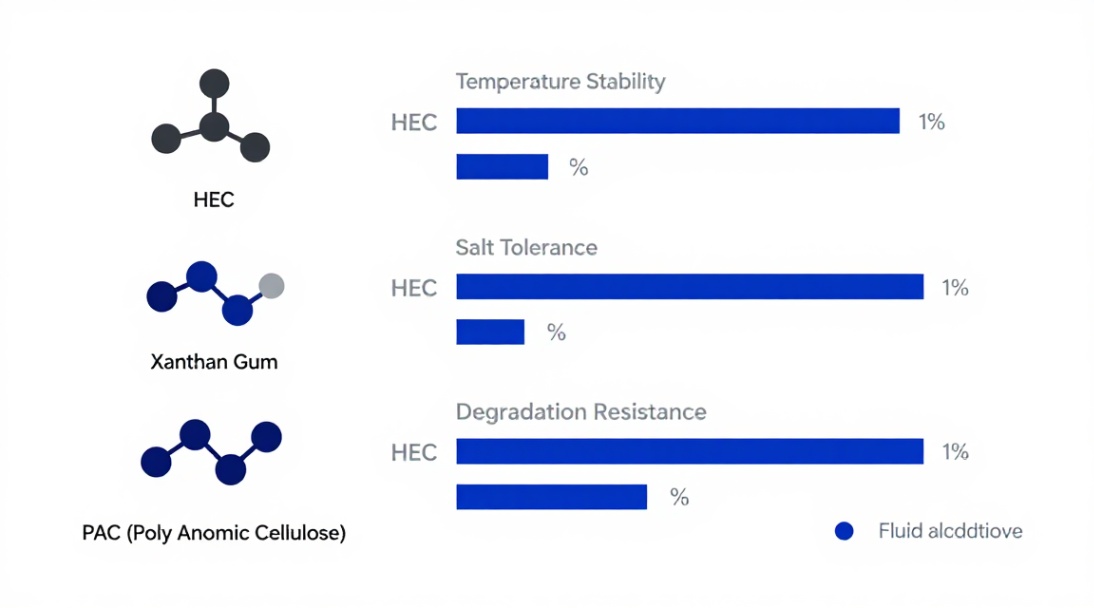
When we compare HEC to other options, the choice becomes clear for specific applications. Versus Xanthan Gum, HEC offers better temperature stability and is less prone to enzymatic degradation. Compared to Poly Anionic Cellulose (PAC), HEC provides far superior salt tolerance, though PAC might offer better fluid loss control in fresh water. You choose the tool for the job. For drilling or completing in salt zones, brine packs, or where environmental regulations are stringent, HEC is very often the first tool we pull from the box.
The Practical Verdict from Decades of Use
After years in the field, we see hydroxyethyl cellulose in drilling fluid applications as a reliable, high-performance workhorse. It solves tangible problems: poor hole cleaning in brines, fluid loss in completions, and shale instability. Its non-toxic, readily biodegradable nature also simplifies waste management and compliance, a point operations managers appreciate. The next time your water-based system isn’t performing in a challenging environment, consider HEC. Start with a simple bottle test. Mix a small sample with your base brine. Watch the viscosity develop. You’ll see a clear, stable gel that does its job without fuss. That’s the mark of a dependable solution. It’s not magic; it’s just good, solid chemistry applied to a tough problem.
Supplier
We are the global leader in lightweight concrete and advanced engineered foam solutions. Known globally for its commitment to research, innovation, and applied expertise, we have been providing engineered foam solutions since the early 2012’s.
We can supply high-quality concrete admixture and foam concrete related products all over the world.
The company has a professional technical department and quality supervision department, a well-equipped laboratory, and equipped with advanced testing equipment and after-sales customer service center.
If you are interested, please feel free and contact us.