Concrete4U | Concrete Admixtures, Tools, and Production Machines

Master Hydroxyethyl Cellulose for Drilling Fluids: Solve Viscosity & Wellbore Issues
Is Your Drilling Fluid Causing You Headaches?
Have you ever watched your carefully engineered water-based mud thin out uncontrollably? Do you spend hours dealing with fluid loss into permeable zones or worrying about shale swelling? I’ve been there. My team has too. It’s frustrating, expensive, and a major safety risk. For decades, field engineers have turned to one reliable, natural solution to tackle these exact problems: hydroxyethyl cellulose (HEC). This guide will show you how to use it effectively. Let’s fix those fluid issues together.

What Exactly Is Hydroxyethyl Cellulose (HEC)?
Think of hydroxyethyl cellulose as a clever upgrade to plain cellulose, the primary structural material in plants. Through a chemical reaction with ethylene oxide, hydroxyl groups on the cellulose chain are modified. This simple change transforms it. It becomes soluble in water. It gains the ability to thicken fluid without needing heat. This non-ionic, water-soluble polymer is the workhorse we rely on for predictable rheology.
Step-by-Step: How to Use HEC in Your Drilling Fluid
Step 1: Preparation and Initial Mixing
Never just dump HEC powder into your mud pit. You’ll create unwieldy fisheyes that dissolve poorly. Follow this process. First, ensure your mixing water is clean and has a neutral to slightly alkaline pH. Start your agitators. Then, sift the HEC powder slowly into the vortex of the moving water. This even dispersion is critical for smooth hydration. As one veteran mud engineer told me, “The vortex is your friend. Respect it, and HEC will work for you.”
Step 2: Achieving Full Viscosity and Fluid Loss Control
After addition, continue mixing for 30 to 60 minutes. You need to give the polymer chains time to fully hydrate and uncoil in the water. This develops the gel structure that provides viscosity and forms a low-permeability filter cake. Monitor your funnel viscosity and API fluid loss. For most applications, a starting concentration of 0.5 to 1.5 pounds per barrel (ppb) is effective. Adjust from there based on your density and downhole conditions.
Step 3: Activating Shale Inhibition and Stabilization
HEC doesn’t just thicken; it protects your wellbore. Its long polymer chains adsorb onto clay surfaces in shale formations. This creates a protective coating. It physically inhibits water from invading the shale and causing swelling or disintegration. For best results, maintain adequate HEC concentration throughout the shale section. Combine it with potassium chloride (KCl) for a synergistic inhibition effect that’s tough to beat.
How HEC Compares to Other Cellulose Derivatives
Choosing the right polymer is vital. This comparison table, based on extensive field data and lab reports, shows why HEC is often the preferred choice for sensitive, high-performance applications.
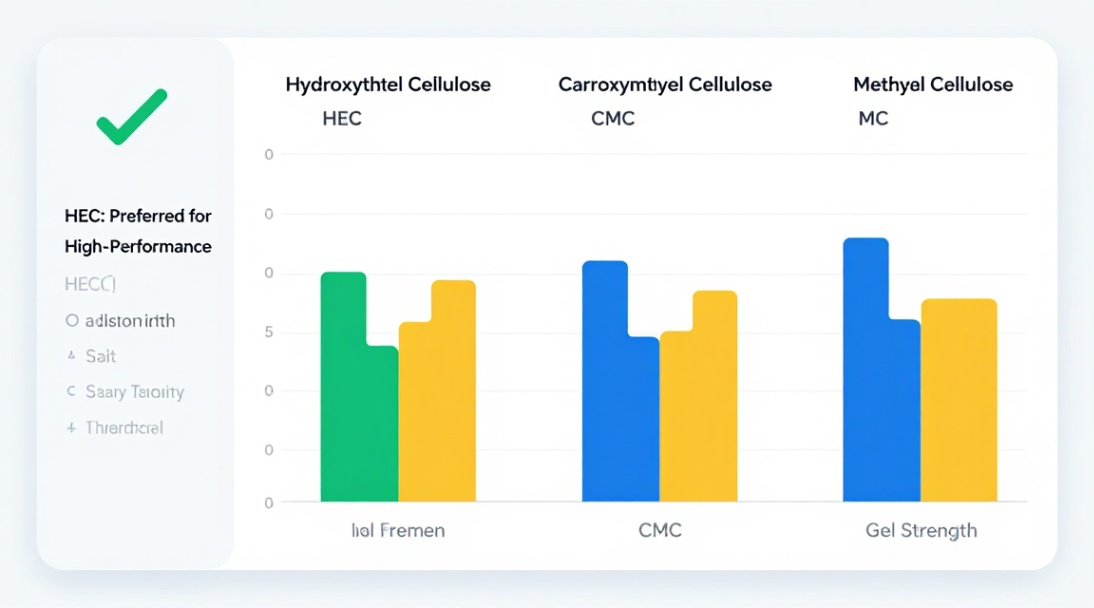
| Polymer Type | Key Strengths | Common Limitations | Best Use Case |
|---|---|---|---|
| Hydroxyethyl Cellulose (HEC) | Superior salt tolerance (KCl, NaCl). Excellent shale inhibition. Clear, non-gelling fluid. | Thermal degradation above 250°F (121°C). Lower yield vs. some synthetics. | Salt-saturated fluids, shale drilling, workover/completion fluids. |
| Sodium Carboxymethyl Cellulose (CMC) | High viscosity yield, cost-effective. | Poor tolerance to divalent ions (Ca++, Mg++). Can gel in high salt. | Freshwater, low-solids muds where cost is key. |
| Polyanionic Cellulose (PAC) | Excellent fluid loss control, good thermal stability. | More expensive. Anionic nature can interact with cationic shales. | High-temperature wells, demanding fluid loss control needs. |
Why We Trust HEC: Environmental and Operational Safety
This is where HEC truly shines. It’s derived from a renewable resource-wood pulp or cotton linters. It is non-toxic and readily biodegradable. You drastically reduce your environmental footprint compared to synthetic polymers. On the rig, its clean solution means less skin irritation for crews and no noxious fumes. It’s a choice that respects both your team and the environment.
Handling and Storage Best Practices
Protect your investment. Store HEC in a cool, dry place, away from moisture. Keep bags sealed until use. Always use personal protective equipment (PPE)-safety glasses, a dust mask, and gloves-when handling the powder to prevent inhalation or eye contact. Remember, proper storage ensures consistent performance job after job.
The Future and Pushing Temperature Limits
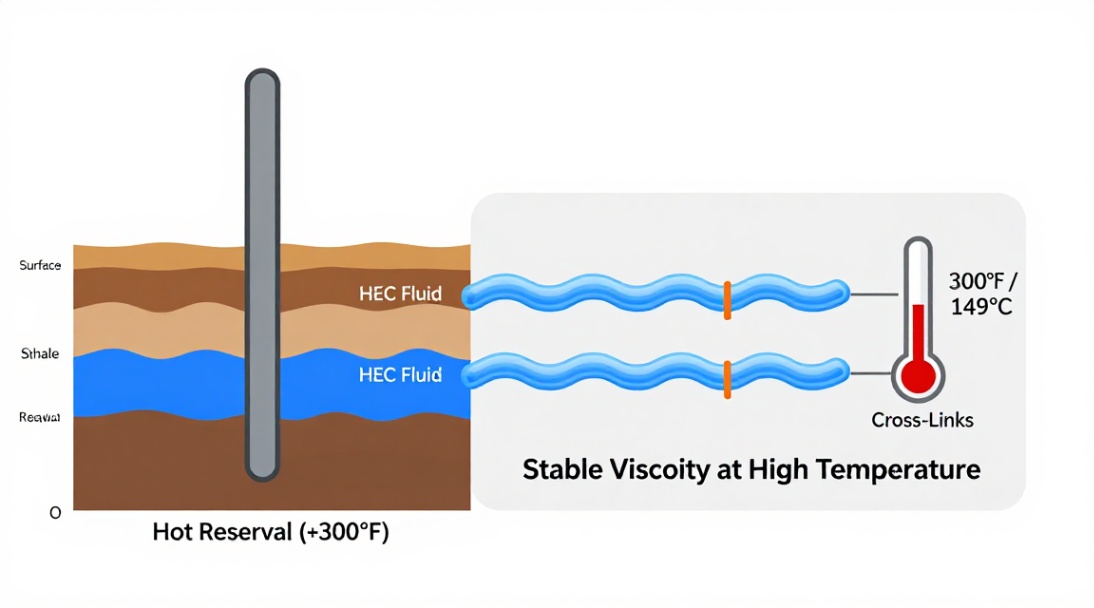
Standard HEC has a thermal ceiling. Research is focused on cross-linking the polymer chains or creating novel hybrids. These modified HEC products can maintain stable viscosity at temperatures approaching 300°F (149°C). The goal is to extend the benefits of this natural polymer into deeper, hotter reservoirs. The future is bright for advanced bio-polymers.
Stop Experimenting and Start Succeeding with a Proven Solution
You don’t need to keep fighting the same fluid problems. After 20 years, I can tell you that consistent results come from using proven, high-quality materials with a clear procedure. For your next well with water-based mud, challenging shales, or salt zones, make the definitive choice. Specify premium-grade hydroxyethyl cellulose from a trusted supplier. Contact our technical team today for a free fluid audit and tailored dosage recommendations. Let’s build a stable, efficient fluid system for your success.
Supplier
We are the global leader in lightweight concrete and advanced engineered foam solutions. Known globally for its commitment to research, innovation, and applied expertise, we have been providing engineered foam solutions since the early 2012’s.
We can supply high-quality concrete admixture and foam concrete related products all over the world.
The company has a professional technical department and quality supervision department, a well-equipped laboratory, and equipped with advanced testing equipment and after-sales customer service center.
If you are interested, please feel free and contact us.