Concrete-mesa | Concrete Admixtures, Tools, and Production Machines

The High Pressure Foam Generator: Your Concrete’s Best Friend or Your Biggest Regret?
The Costly Mistake You’re About to Make
You mixed the foam. You poured the slab. It looks fine. Three weeks later, the lightweight concrete pour has the compressive strength of wet cardboard. The structure is compromised. Your reputation is ruined. The client is furious. This disaster didn’t start at the pour. It started the moment you misunderstood your high pressure foam generator for concrete. This isn’t just another tool. It’s the heart of your foam concrete’s integrity. Get it wrong, and your project fails. Period.
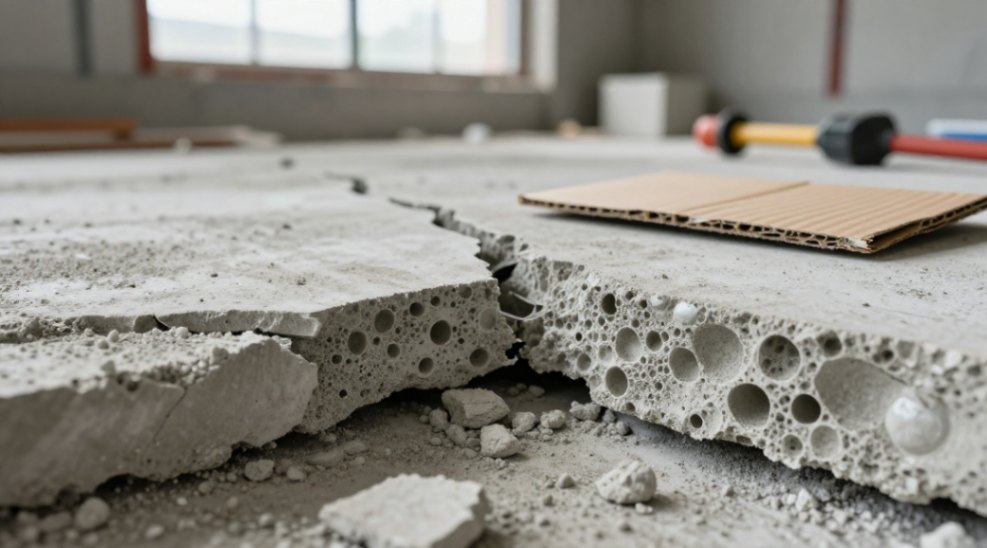
Critical Warning: The Truth Industry Insiders Won’t Tell You
Low pressure systems are dinosaurs. They produce wet, unstable bubbles. They are inconsistent. They are a liability. Yet, contractors buy them because they’re cheaper upfront. This is a trap. The real cost of a weak foam generator isn’t the purchase price. It’s the cost of a structural failure, a callback, and a lawsuit. A true high pressure foam generator for concrete doesn’t just make bubbles. It creates a stable, uniform micro-foam that acts as a perfect, durable void within your mix. This is non-negotiable.
The Hard Questions You Must Ask
We cut through the marketing fluff. Here are the direct answers.
1. What’s the single biggest difference between high and low pressure?
Bubble integrity. High pressure forces the foaming agent solution through a narrow nozzle at immense force, shearing it into billions of tiny, strong bubbles with a thick membrane. Low pressure just blows big, weak bubbles into the mix. Big bubbles pop. They bleed water. They collapse under the weight of cement. Your density control becomes impossible. Your strength vanishes.
2. I’m getting inconsistent foam density. Why?
You are ignoring the system’s feedback loop. A high pressure foam generator for concrete is a precision instrument. The three variables are pressure, flow rate, and foaming agent concentration. Change one, you must recalibrate the others. Most operators set it and forget it. That’s the error. Your water pressure fluctuates. Your pump wears. The foaming agent settles. You must monitor and adjust in real-time. Consistency demands attention.
3. Which foaming agent should I never use?
Any agent not specifically engineered for synthetic, protein-based, or detergent-based high pressure systems. Using a cheap, generic detergent will destroy your foam stability and severely retard cement hydration. The foam will collapse before the concrete sets. The result is a dense, weak mess that defeats the entire purpose of foam concrete. Match the chemistry to the machine.
4. How do I know my generator is failing?
Listen to it. Look at the foam. A healthy generator has a consistent, powerful hiss and produces foam with a glossy, creamy texture that holds its shape. Warning signs include: a pulsating or sputtering discharge, foam that looks watery or separates quickly, and a gradual increase in the air compressor’s cycle time to maintain pressure. These indicate nozzle wear, pump fatigue, or a clogged mixing chamber. Ignoring these sounds costs you tenfold in repairs later.
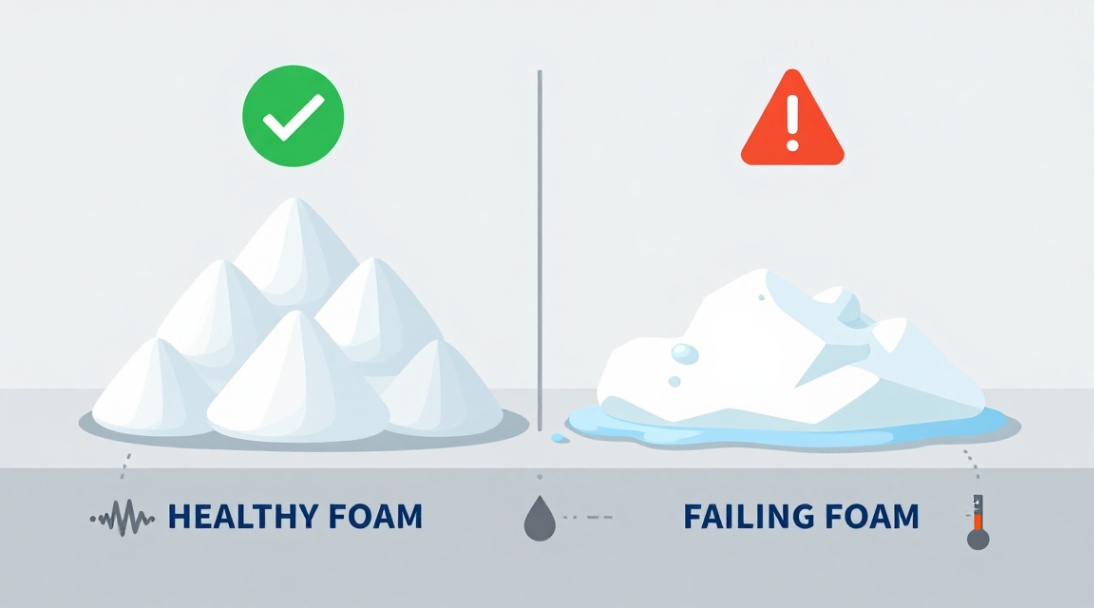
5. Is a bigger generator always better?
No. This is a critical error in judgment. An oversized high pressure foam generator for concrete for a small project will not run at its optimal pressure and flow parameters. It will ‘luge’ and produce poor quality foam. It wastes material and energy. Conversely, an undersized generator pushed to its limits will overheat, wear prematurely, and deliver inconsistent output. You must match the generator’s rated output (in liters per minute of foam) to your project’s continuous pour volume.
The Non-Negotiable Operational Checklist
Follow this logic. Deviate at your own peril.
Daily Startup: Verify clean water supply. Check foaming agent tank levels and ensure the concentrate is properly mixed. Power on the compressor and allow system pressure to stabilize at the manufacturer’s specified setting (typically 4-8 Bar). Open discharge valve slowly to begin foam production. Observe foam quality for 60 seconds before directing to the mixer.
During Operation: Monitor pressure gauge. A drop of more than 0.5 Bar indicates a potential blockage or pump issue. Check foam density every 30 minutes using a liter weight test. Adjust the foaming agent dosing pump incrementally to maintain target density.
| Parameter | Target Range | Consequence of Deviation |
|---|---|---|
| Operating Pressure | 4 – 8 Bar | Low pressure: Large, unstable bubbles. High pressure: System strain, nozzle wear. |
| Foam Density | As per mix design (e.g., 40-80 kg/m³) | Low density: Strength collapse. High density: Wasted material, no weight savings. |
| Water-to-Cement Ratio | Keep constant per design | Varying this to adjust flowability destroys the strength matrix. |
Shutdown & Maintenance: Flush the entire system with clean water for a minimum of 5 minutes to purge all foaming agent residue. This prevents crystallization in the nozzles and pump. Inspect the nozzle for scaling or abrasion weekly. Lubricate pump fittings as per the manual, not when you remember.
Final Verdict: Your Path Forward
Stop looking at the high pressure foam generator for concrete as a commodity. It is the defining component of your foam concrete’s performance. The choice is binary. You can buy based on a cheap sticker price and accept the hidden costs of failure, callbacks, and compromised structures. Or, you can invest in understanding the machine’s logic. You can master its variables. You can treat it as the precision instrument it is. The generator doesn’t make bad concrete. Poor operation does. The information here is your shield. Use it. Your next project’s integrity depends entirely on this decision.
Supplier
We are the global leader in lightweight concrete and advanced engineered foam solutions. Known globally for its commitment to research, innovation, and applied expertise, we have been providing engineered foam solutions since the early 2012’s.
We can supply high-quality concrete admixture and foam concrete related products all over the world.
The company has a professional technical department and quality supervision department, a well-equipped laboratory, and equipped with advanced testing equipment and after-sales customer service center.
If you are interested, please feel free and contact us.