Concrete4U | Concrete Admixtures, Tools, and Production Machines

Your PCE Superplasticizer Is Costing You Money. Here Are 5 Mistakes You Can’t Afford to Make.
Shock, Slump, and Structural Failure
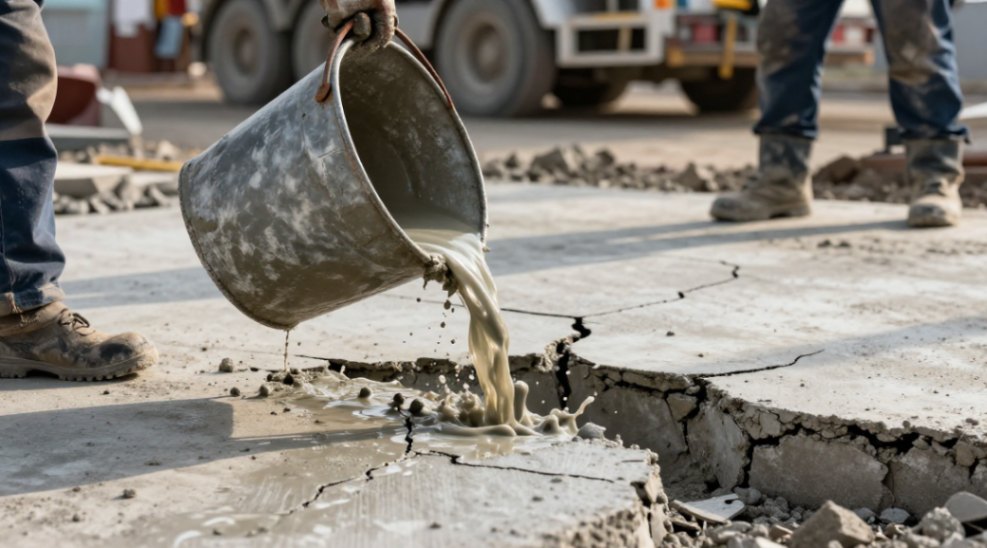
A single misplaced bucket of dirty water can deactivate over $2,000 worth of Polycarboxylate Ether Superplasticizer. The result? Concrete that looks identical at the truck but becomes a liability within hours. This isn’t theory. It’s a daily, expensive mistake on job sites worldwide.
The #1 Costly Error You’re Probably Making
You treat PCE like its outdated cousins, naphthalene or melamine sulfonates. This is your first, and most critical, error. Older plasticizers work by simple electrostatic repulsion. PCE technology operates through a sophisticated, long-chain steric hindrance mechanism. It physically keeps cement particles apart. This fundamental difference dictates everything: from mixing order to compatibility with other admixtures.
The Five Deadly Sins of PCE Application
Ignore these warnings at your project’s peril. Each mistake directly impacts cost, performance, and structural integrity.
| What You Should NEVER Do | The Hidden Consequence | The Correct Action |
|---|---|---|
| Add PCE directly to dry cement or aggregate. | Instantaneous “clumping” and adsorption. Up to 70% of the chemical gets wasted, failing to disperse. You pay for performance you never receive. | Always introduce PCE into the mixing water stream after at least 60% of the total water is in the mixer. The pre-wetted environment is non-negotiable. |
| Use PCE with high-clay-content aggregates without testing. | Clay minerals voraciously absorb the PCE polymer chains. Your designed slump vanishes in minutes, leading to unworkable concrete and rushed, improper placement. | Conduct a mortar flow test with your specific aggregate source. If clay is present, you must use a clay-tolerant PCE variant or a sacrificial pre-dosing agent. |
| Overdose to chase initial slump on a delayed pour. | Catastrophic segregation and bleeding. The concrete will appear soupy, then the paste separates from the aggregate. Final strength plummets by 20% or more. |
We’ve covered the first three critical errors. The final two are subtler but just as damaging. They deal with sequence and synergy.
| What You Should NEVER Do | The Hidden Consequence | The Correct Action |
|---|---|---|
| Mix PCE and calcium chloride-based accelerators directly. | Chemical incompatibility causes immediate flocculation. The mix becomes chunky and unmanageable, requiring disposal. | Use non-chloride accelerators. If you must use CaCl2, introduce them at separate times in the mixing sequence, with thorough blending in between. |
| Assume all PCEs are equal for all cement types. | Cements with high C3A (Tricalcium Aluminate) content can cause rapid slump loss. A generic PCE will fail, leading to constant re-tempering and water addition, which destroys the design strength. | Match your PCE’s molecular structure to your cement’s chemistry. A denser, shorter-side-chain PCE often performs better with high-C3A cements to mitigate rapid adsorption. |
The Logic Behind the Warnings
These rules aren’t pulled from a manual. They are deduced from the polymer‘s behavior. PCE molecules are long, comb-like chains. The “backbone” adsorbs onto cement particles. The “teeth” (polyethylene oxide side chains) extend into the water, creating a physical barrier-steric hindrance. This barrier prevents particles from flocculating.
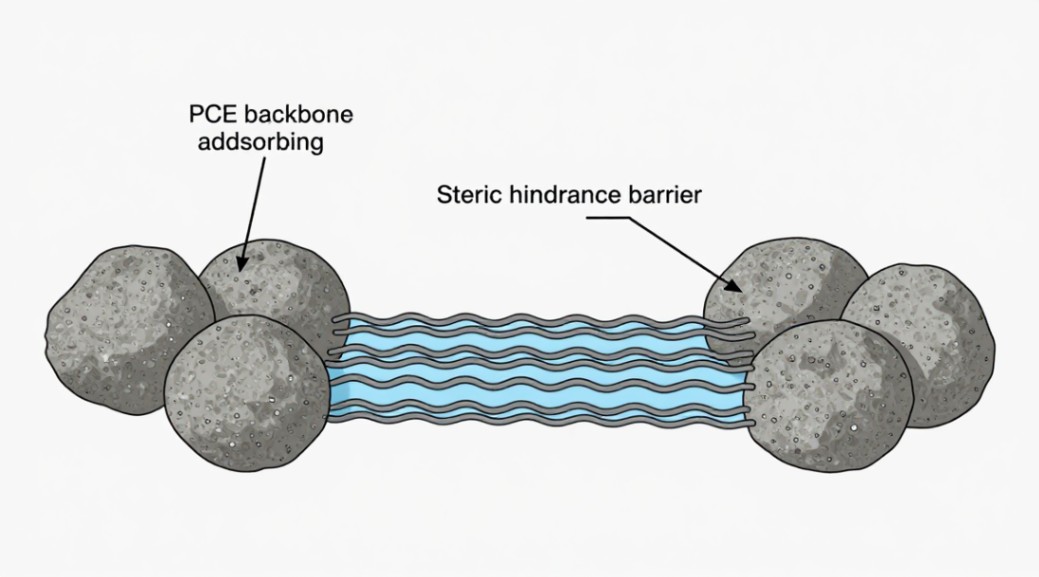
Now apply logic. If you add this delicate polymer to a dry, reactive powder, it will latch onto the first particle it touches, creating a useless, sticky glob. That’s Mistake #1. Clay particles have a massive, hungry surface area. They swallow the polymer whole, starving the cement. That’s Mistake #2. Overdosing collapses the system because there’s not enough solid material to support the excessive lubrication. Gravity takes over, separating the mix. That’s Mistake #3.
Why Steric Hindrance Beats Electrostatic Repulsion
Old-school superplasticizers rely on giving particles the same negative charge so they repel each other. Dissolved salts in the mix can neutralize this charge, causing sudden slump loss. PCE’s steric hindrance is a physical shield. Salts don’t neutralize a wall. This makes PCE performance more reliable and durable, but only if you respect its physical nature.
The Path Forward: No Guesswork, Just Process
Success with PCE superplasticizers demands precision. Stop guessing. Implement a strict protocol.
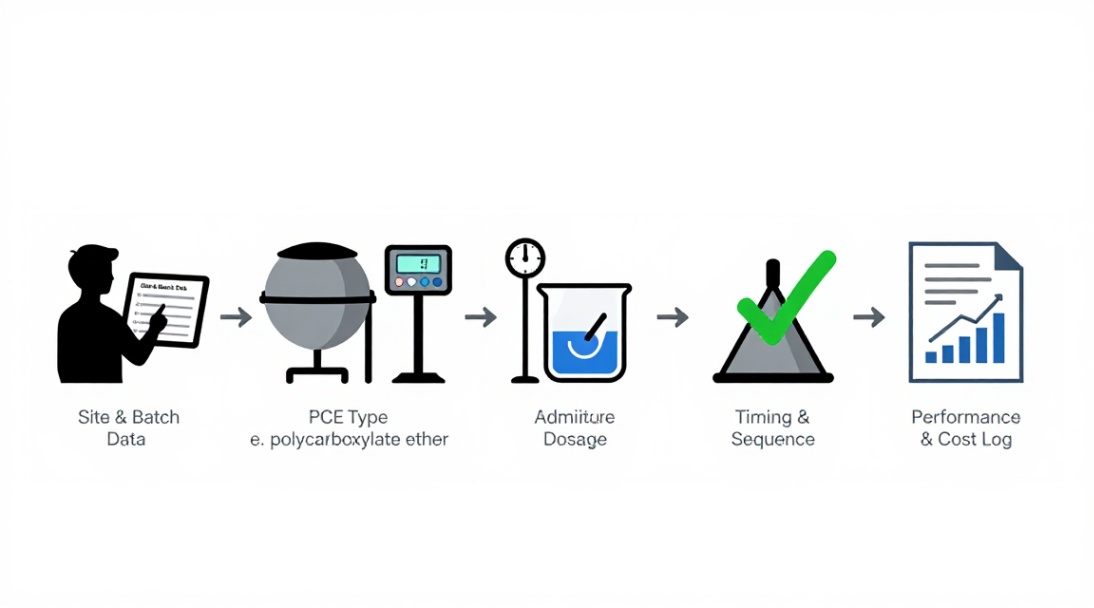
- Test First. Never assume compatibility between your specific cement, aggregates, and PCE. A simple mortar flow test is cheap insurance.
- Control Water Rigorously. The water-cement ratio is sacred. PCE allows you to reduce it for strength, not carelessly increase workability. Every extra liter of water weakens your concrete matrix.
- Sequence Matters. Mixing order is part of the chemical specification. Follow the supplier’s sequence as if it were a safety procedure.
- Train Your Crew. Everyone from the plant operator to the finisher must understand that PCE is not “just another liquid.” Its handling dictates the concrete’s destiny.
This knowledge is your leverage. It turns a problematic, high-tech admixture into your most powerful tool for achieving high-strength, durable, and economical concrete. The difference between success and a costly failure lies in the details you now understand.
Supplier
We are the global leader in lightweight concrete and advanced engineered foam solutions. Known globally for its commitment to research, innovation, and applied expertise, we have been providing engineered foam solutions since the early 2012’s.
We can supply high-quality concrete admixture and foam concrete related products all over the world.
The company has a professional technical department and quality supervision department, a well-equipped laboratory, and equipped with advanced testing equipment and after-sales customer service center.
If you are interested, please feel free and contact us.