Concrete4U | Concrete Admixtures, Tools, and Production Machines

Stop Guessing at Tile Adhesive: What Hydroxypropyl Methyl Cellulose Actually Does
The Job Site Doesn’t Lie
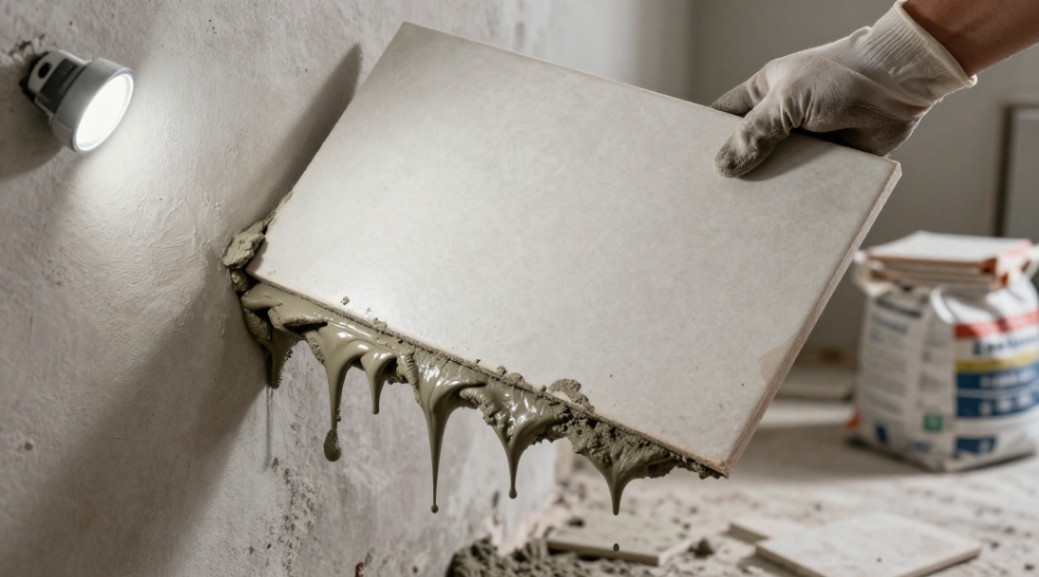
I watched a crew struggle for two hours. They mixed a “premium” bagged adhesive. It looked slick. It spread easily. But the moment they buttered a large-format tile and lifted it, the mortar sagged. The tile slid down the wall, a slow, inevitable failure. The foreman blamed the product. The product rep blamed the water. They were both wrong. The real culprit was a misunderstood, invisible ingredient: the cellulose ether. Specifically, the wrong type or grade of hydroxypropyl methyl cellulose for tile adhesive. That day wasn’t about glue. It was about chemistry controlling physics.
What Is Hydroxypropyl Methyl Cellulose (HPMC)?
Forget the complex name. Think of HPMC as a molecular manager of water. Chemically, it’s a derivative of natural cellulose, modified with propylene oxide and methyl chloride to make it soluble in cold water. In your tile adhesive bucket, it’s a white powder that vanishes on mixing. Its job isn’t to stick. Its job is to control the environment so the cement can stick. It achieves this through three non-negotiable functions: thickening, retaining water, and enhancing workability. Without it, modern tile installation, especially with heavy porcelain, would be a constant battle against gravity and time.
The Core Mechanics: Water, Time, and Flow
The magic of HPMC happens at the molecular level. When you add water, the HPMC particles hydrate and uncoil into long, chain-like molecules. This immediately thickens the mix, providing initial sag resistance. More critically, these dissolved polymers form a protective colloid around the cement grains and trap free water. This is the water retention mechanism. It prevents the substrate and the tile from sucking moisture out of the adhesive too quickly.
Open Time is Your Safety Net
This retained water directly translates to extended open time. Open time isn’t a luxury; it’s your margin for error. It’s the window to adjust a tile, comb a larger area, or correct a layout without the adhesive skinning over. A quality HPMC grade can double or triple the working time compared to a plain cement mix. But here’s the counterintuitive part: more open time doesn’t mean weaker adhesion. Proper hydration leads to stronger, more complete cement crystals.
Adjusting the Feel: Slip Resistance
This is where formulation becomes an art. Slip resistance-the tile’s tendency to slide after placement-is a direct function of the adhesive’s rheology, which HPMC governs. A higher viscosity grade increases “stickiness” and reduces slip, ideal for vertical applications. A lower viscosity offers smoother troweling for floors. The best formulators use HPMC to dial in this exact feel, balancing ease of application with immediate grab.
Beyond the Basics: The Unseen Battles
Most discussions stop at water retention. That’s a mistake. The real value of hydroxypropyl methyl cellulose for tile adhesive is in solving silent application failures.
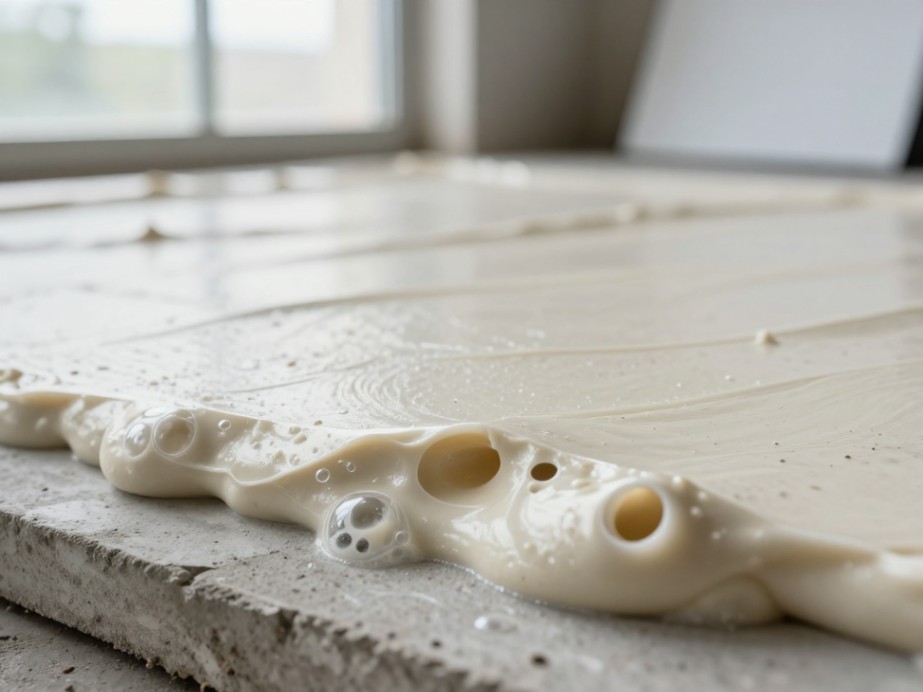
Bubbles and Pinholes: Poorly chosen or low-grade HPMC can entrap excessive air during mixing, leading to a weakened bond. The right grade promotes a creamy, homogenous consistency that minimizes air entrapment.
Cement Hydration Chemistry: By regulating water loss, HPMC ensures the cement hydrates fully and evenly. This isn’t just about initial strength; it’s about long-term durability, reduced shrinkage, and improved water resistance. A starved adhesive is a brittle adhesive.
The Selection Paradox: Viscosity and Gel Point
Choosing HPMC isn’t about picking the “strongest” one. It’s about matching properties to the job. You have two main levers: viscosity and gel point temperature.
- Viscosity (e.g., 40,000 mPa.s, 75,000 mPa.s): Higher viscosity means thicker consistency, better sag resistance, and higher water retention. Use it for walls and large tiles. Lower viscosity improves trowelability and is better for floor screeds.
- Gel Point Temperature: This is the industry’s best-kept secret. When the adhesive heats up on a sun-facing wall or underfloor heating, standard HPMC can gel, becoming lumpy and unworkable. Selecting an HPMC with a high gel point (e.g., above 65°C) prevents this catastrophic failure on hot substrates.
Typical dosage is a precise science, usually between 0.2% to 0.5% of the dry powder weight. Too little, and you lose control. Too much, and you create a gummy, slow-drying mess that delays grouting. Always add it to the mixer with the other powders, never to the water alone, to ensure perfect dispersion.
The Methyl Cellulose (MC) Myth
You’ll hear about plain Methyl Cellulose (MC). Ignore it for tile adhesives. MC has inferior water solubility, lower gel point temperatures, and poorer compatibility with other additives like redispersible polymer powder (RPP). HPMC, with its hydroxypropyl modification, offers better overall performance and stability. In a modern adhesive formula with RPP for flexibility, HPMC is non-negotiable. They work in synergy.
What to Do Next: Trust the Process, Not the Hype
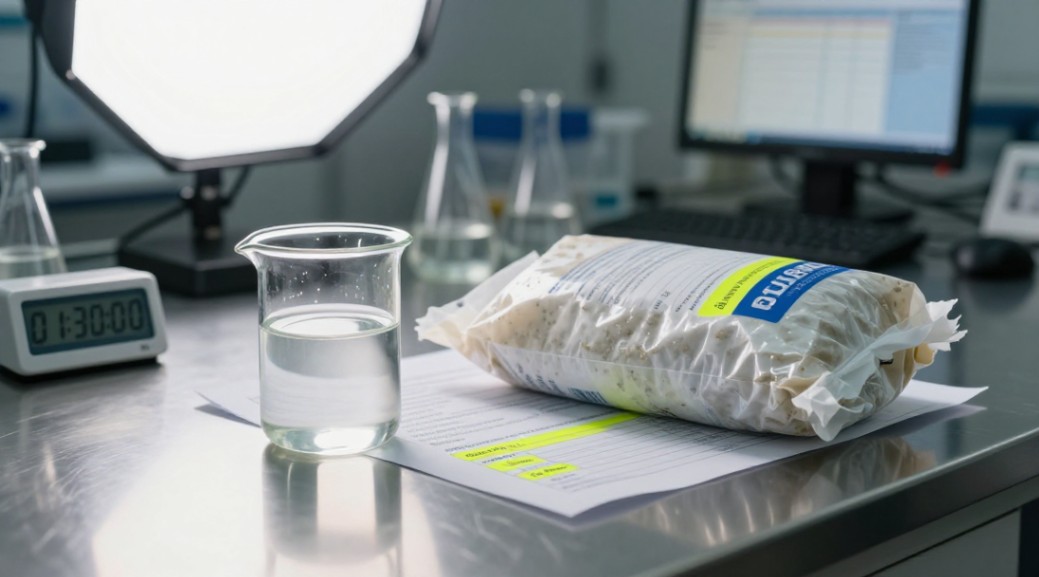
Your adhesive is only as good as its weakest functional ingredient. When you evaluate a bagged adhesive or mix your own, ask the manufacturer about the HPMC specification. What’s the viscosity? What’s the gel point? How does it perform in a 90-minute open time test? Don’t accept vague promises of “high quality.”
For formulators, the path is clear. Stop treating HPMC as a commodity thickener. It is the central nervous system of your adhesive’s application properties. Invest in grades with consistent molecular weight and purity. Test them under real-world thermal stress. Your choice here determines whether an installer succeeds or fails. The chemistry doesn’t compromise. Neither should you.
Supplier
We are the global leader in lightweight concrete and advanced engineered foam solutions. Known globally for its commitment to research, innovation, and applied expertise, we have been providing engineered foam solutions since the early 2012’s.
We can supply high-quality concrete admixture and foam concrete related products all over the world.
The company has a professional technical department and quality supervision department, a well-equipped laboratory, and equipped with advanced testing equipment and after-sales customer service center.
If you are interested, please feel free and contact us.