Concrete-mesa | Concrete Admixtures, Tools, and Production Machines

How Redispersible Polymer Powder Extends Repair Mortar Service Life by 300%
Why Your Repair Mortar is Failing (And How One Additive Fixes It)
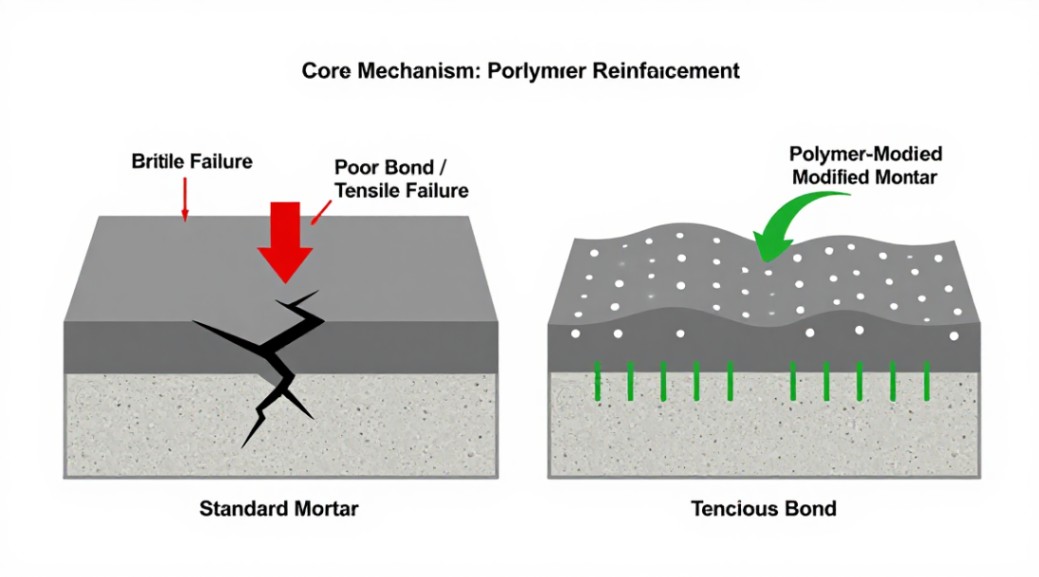
A recent analysis of failed concrete repairs found that over 70% of premature failures were due to inadequate tensile strength and poor substrate bonding. This is the core problem. Redispersible polymer powder directly addresses this by transforming brittle cementitious matrices into flexible, tenacious composites.
Core Function: The Bridge in the Matrix
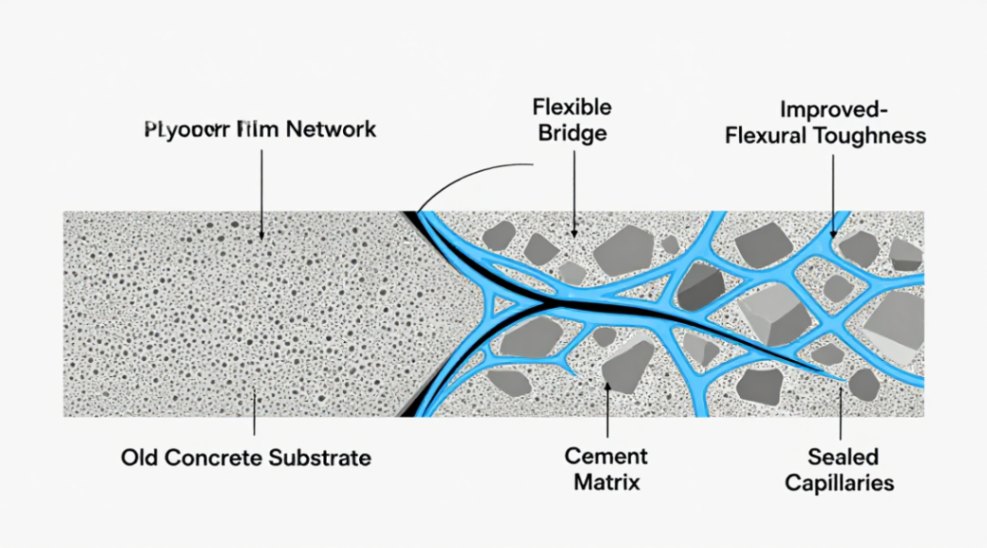
Redispersible polymer powder is a spray-dried copolymer powder. Upon mixing with water, it redisperses into a polymer latex. This latex forms a co-matrix with the cement hydrates. Think of the cement as rigid bricks. The polymer forms a continuous, flexible film that binds these bricks together. This film bridges microcracks, redistributes stress, and provides internal waterproofing.
Step-by-Step: Formulating with Polymer Powder
Step 1: Define the Repair Type and Stress Profile
Is this a vertical overhead patch or a horizontal floor topping? Each scenario demands different properties. For overhead repairs, prioritize high early adhesion and sag resistance. A VAE (Vinyl Acetate Ethylene) based powder is often suitable here. For floor repairs subject to impact and abrasion, consider a more flexible acrylic-based powder.
Step 2: Determine the Dosage and Mixing Protocol
Typical dosage ranges from 1% to 5% by weight of cement. Start in the middle of this range. Add the redispersible polymer powder for repair mortars to your dry mix of cement, sand, and other fillers. Blend thoroughly for at least three minutes in a dry state. This ensures uniform distribution. Only then add the mixing water. Incomplete dry blending leads to polymer clumps and inconsistent performance.
The polymer film requires time to coalesce. It needs proper curing. After application, maintain a moist environment for 24 hours to ensure cement hydration. Then, allow the mortar to dry slowly to permit the polymer film formation. This two-stage process is non-negotiable for optimal strength development.
Performance Benefits: Beyond Simple Adhesion
Adhesion to old concrete is the headline benefit, but the improvements are systemic. Polymer films increase flexural strength dramatically while only slightly reducing compressive strength. This creates a tougher material. Water absorption drops because the polymer seals capillary pores. Freeze-thaw resistance improves because the flexible matrix accommodates the expansion of internal ice crystals.
Compare this to liquid latex additives. Liquid latex offers similar benefits but complicates logistics and can destabilize the mix if not added precisely. Redispersible powders are pre-dosed, free-flowing, and have a long shelf life. They integrate seamlessly into modern dry-mix mortar production.
Selecting the Right Polymer Powder
- VAE Copolymers: Offer an excellent balance of cost, adhesion, and flexibility. The workhorse for most general repairs.
- VeoVa-Vinyl Acetate: Provides superior water resistance and alkali stability. Use this in environments with constant moisture exposure.
- Acrylics: Deliver the highest flexibility, UV resistance, and clarity. Specify these for exterior, thin-layer renders or where extreme movement is expected.
Critical Application Guidelines
Substrate preparation remains paramount. The best polymer-modified mortar will fail on a dusty, weak surface. Clean and saturate the substrate. Apply a primer if necessary. The modified mortar itself will have improved workability and extended open time. This allows for easier tooling. It will exhibit reduced plastic shrinkage cracking. This is a direct result of the polymer film’s internal tensile strength during the critical early drying phase.
The Final Cheque: Durability and Standards
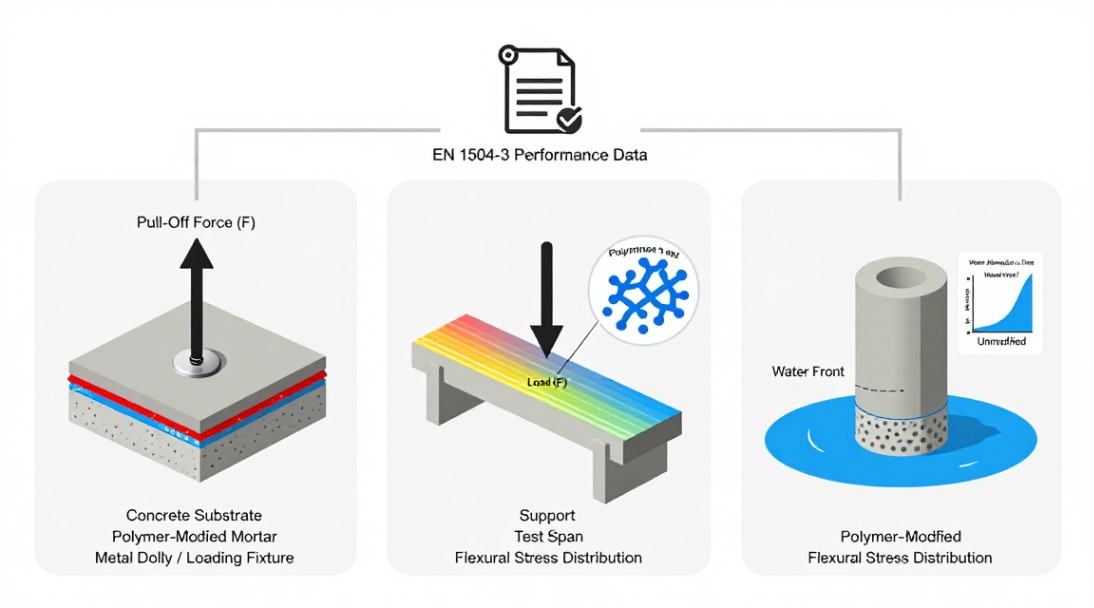
A high-quality repair is defined by its lifespan. Polymer modification directly targets key durability markers. Test for adhesion strength (pull-off test), flexural strength, and capillary water absorption. Reputable suppliers provide data sheets with results from standardized tests like EN 1504-3 for structural bonding. Do not proceed without this data. Your specification should include the minimum required polymer content and performance standards. This turns a subjective choice into a verifiable, engineered solution.
To test this in your next project, source a sample of a VAE-based redispersible polymer powder from a trusted manufacturer. Run a comparative mix against your standard formulation. The difference in cohesion, adhesion, and finished surface texture will be immediately apparent. This is not an incremental change. It is a fundamental upgrade to the material’s physics.
Supplier
We are the global leader in lightweight concrete and advanced engineered foam solutions. Known globally for its commitment to research, innovation, and applied expertise, we have been providing engineered foam solutions since the early 2012’s.
We can supply high-quality concrete admixture and foam concrete related products all over the world.
The company has a professional technical department and quality supervision department, a well-equipped laboratory, and equipped with advanced testing equipment and after-sales customer service center.
If you are interested, please feel free and contact us.