Concrete4U | Concrete Admixtures, Tools, and Production Machines

Superplasticizer Dosage for Concrete: Avoid These 5 Costly Mistakes
Superplasticizer Dosage FAQ: A Warning Guide from the Field
Determining the correct superplasticizer dosage for concrete mix is not a simple formula. Missteps lead to catastrophic failures, wasted budgets, and lost time. Based on decades of field experience and widespread feedback from project engineers, here are the most critical warnings and solutions.
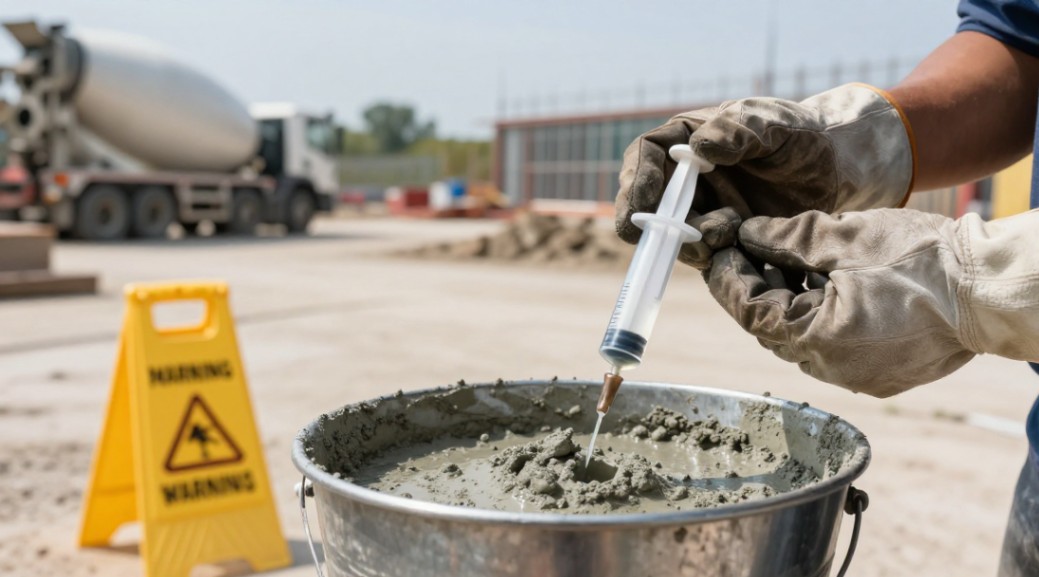
1. What is the biggest mistake with superplasticizer dosage?
Guessing the dosage or using a “standard” rate without testing. The optimum dosage depends on a complex interplay of cement chemistry, aggregate properties, and ambient conditions. Many users on Reddit’s concrete forums lament project delays after their “standard” 1% dosage failed, proving a batch-specific trial mix is non-negotiable.
2. How does cement type affect the required superplasticizer dosage?
Drastically. Cement composition controls dosage needs. High-C3A cements or those with high alkali/sulfate content adsorb more superplasticizer molecules. You need a higher dosage to achieve target slump. Conversely, low-C3A cements like some PPC or slag blends often require less. Never assume two different cement brands need the same dose.
3. Why is the water-cement ratio critical for dosage determination?
Because superplasticizers and water are partners, not replacements. A common error is to add excessive water *and* high superplasticizer dose to chase slump. This destroys strength and increases shrinkage. First, establish the minimum water content for your strength target. Then, use the superplasticizer dosage to fine-tune workability at that low w/c ratio. This is the core of high-performance mix design.
4. What happens if I exceed the saturation point with superplasticizer?
You overdose. Consequences are severe: excessive retardation, severe segregation, bleeding, and plastic shrinkage cracks. The concrete may never achieve proper set. Performance plummets while costs soar. The saturation point is specific to your mix materials. Laboratory testing identifies this precise limit before you order materials for the job.
5. How do aggregate properties influence the correct dosage?
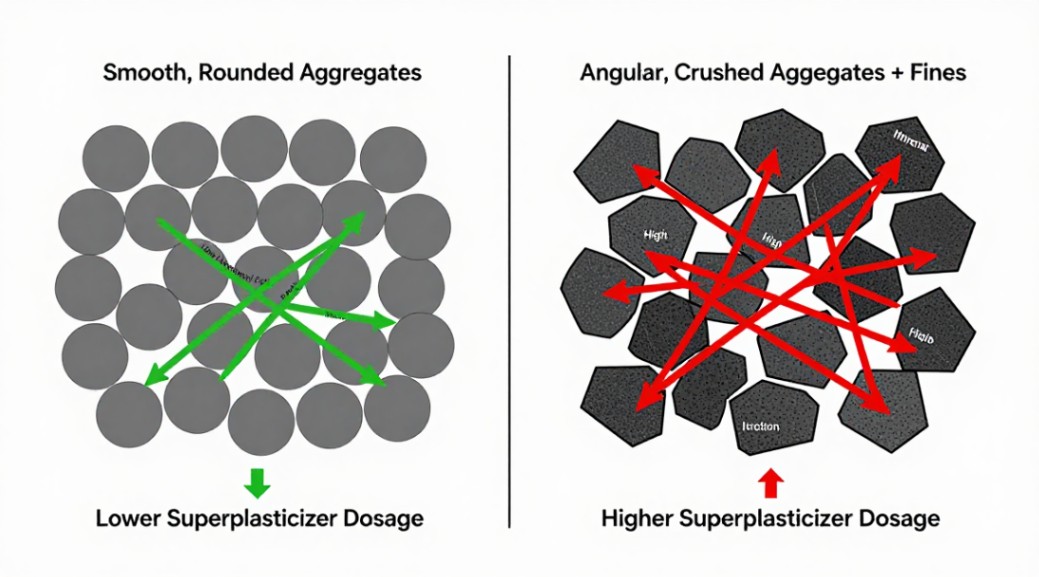
Aggregates are not inert fillers. Their shape, texture, and gradation demand specific lubrication. Angular, crushed aggregates or aggregates with high fines content increase internal friction. They require a higher superplasticizer dosage for concrete mix to achieve the same flow as mixes with smooth, rounded aggregates. Ignoring this leads to poor workability and honeycombing.
6. Is the batching sequence important for superplasticizer performance?
Absolutely. A fatal mistake is adding superplasticizer to dry materials or after initial mixing. For optimal dispersion, introduce 70-80% of the mixing water first. Then add aggregates and cement. Finally, add the superplasticizer diluted in the remaining mixing water. This sequence ensures uniform distribution and maximizes efficiency.
7. How do I manage dosage for slump retention in hot weather or long hauls?
Do NOT simply increase the initial dose. This causes rapid slump loss and potential set issues. The proven method is to use a retarding-type superplasticizer or a combination admixture designed for retention. Sometimes, split-dosing-adding a portion at the plant and a secondary dose on-site-is necessary. Plan for this during mix design.
8. What is the #1 rule for using superplasticizers with other admixtures?
Conduct compatibility tests. Never assume a superplasticizer will work with your chosen air-entraining agent, retarder, or accelerator. Incompatibility can cause rapid slump loss, foam collapse, or unpredictable set times. Mix all admixtures with your specific cement and aggregates in a trial batch. Observe behavior over 60-90 minutes.
9. How do I balance cost-effectiveness with performance for superplasticizer dosage?
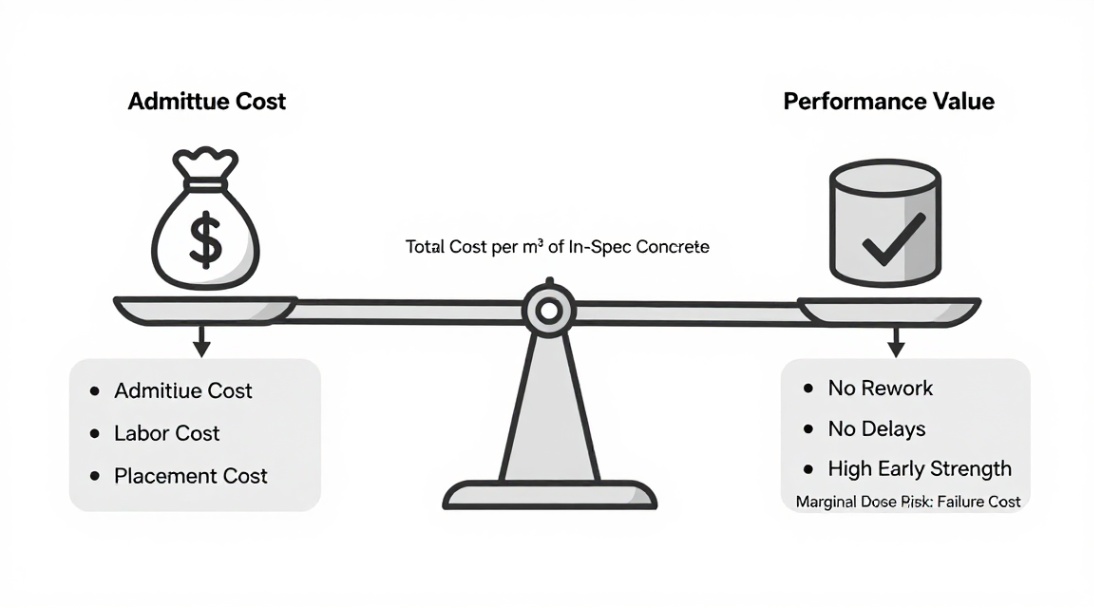
Optimize for cost per cubic meter of *in-spec* concrete, not cost per litre of admixture. A slightly higher dosage that ensures reliable placement, eliminates vibration, and delivers high early strength is more cost-effective than a marginal dose that causes rework. Calculate the total cost of placement, labour, and potential failure.
The Final Warning: Your Action Plan
Stop treating superplasticizer dosage for concrete mix as an afterthought. It is a core design variable. Invest in comprehensive trial batching with your job-specific materials. Document the saturation point, compatibility, and slump retention profile. This upfront diligence is the only reliable method to avoid the expensive, time-consuming pitfalls that plague unprepared teams. Your concrete’s performance depends on this precision.
Supplier
We are the global leader in lightweight concrete and advanced engineered foam solutions. Known globally for its commitment to research, innovation, and applied expertise, we have been providing engineered foam solutions since the early 2012’s.
We can supply high-quality concrete admixture and foam concrete related products all over the world.
The company has a professional technical department and quality supervision department, a well-equipped laboratory, and equipped with advanced testing equipment and after-sales customer service center.
If you are interested, please feel free and contact us.