Concrete-mesa | Concrete Admixtures, Tools, and Production Machines

Forget Portland Cement. Here’s How to Use Sulphoaluminate for Real-World, Rapid-Setting Success.
The Core Truth About Fast Concrete
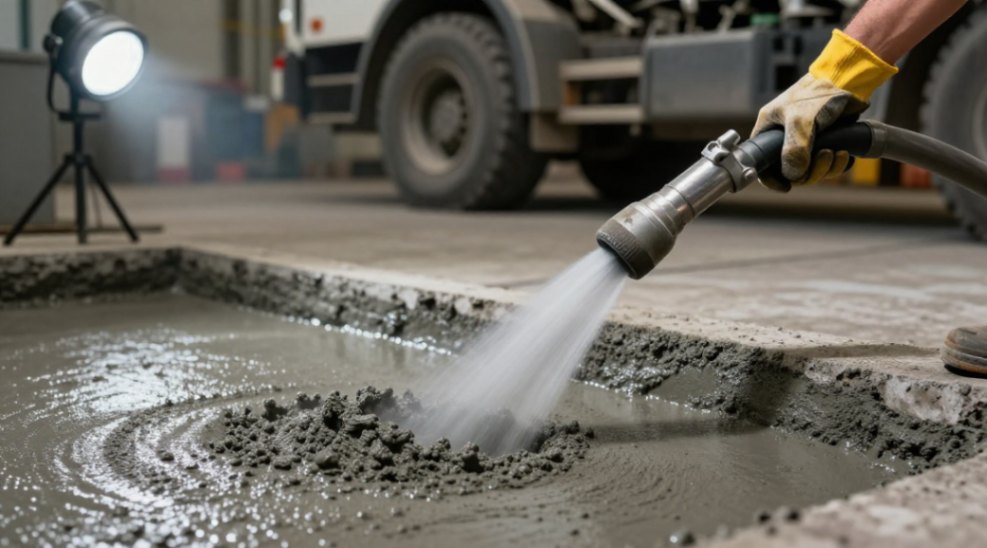
Your typical rapid-set bag mix is a controlled failure. It’s a race against time you often lose. If you’re repairing a highway at 3 AM, patching a factory floor over a weekend, or securing an anchor in a live structure, the conventional approach is wrong. Sulphoaluminate (CSA) cement isn’t just another option; it’s the logical endpoint for anyone who values control. This material, based on ye’elimite (C4A3Š), doesn’t just harden quickly; it develops structural strength in minutes. I’ve seen it bear traffic loads in under an hour. That’s not marketing. That’s crystallography. The rapid formation of ettringite needles within the matrix creates a dense, interlocked structure almost immediately. Portland cement, with its slow silicate hydration, simply cannot compete on this timescale. Forget “setting.” Think “activating.”
The Step-By-Step Guide the Industry Won’t Give You
Most data sheets lie by omission. They give you a water-to-cement ratio and walk away. Real success with sulphoaluminate cement for quick setting demands a surgical approach. Here is the exact procedure, refined over two decades of correcting other people’s mistakes. First, isolate your work area. This isn’t a dusty job. CSA fines are reactive and will set on any damp surface, including your tools. Pre-wet your substrates, but eliminate standing water. A saturated surface-dry condition is non-negotiable; free water dilutes the reaction, killing your early strength advantage.
Mix Design: Precision Over Recipe
Now, the mix. Do not just add water to a bag. The standard 0.35-0.40 water-to-cement ratio is a starting line, not a finish line. For sheer speed, lean toward 0.35. You want a cohesive, almost stiff paste. Use a forced-action mixer. A drum mixer creates inhomogeneity that leads to weak spots. Add the powder to 90% of your measured water. Mix for 60 seconds. Add the remaining water as needed to achieve placement consistency. You have about 8 to 12 minutes of working time at 20°C. That clock starts the moment water hits powder. Organize your crew and tools before the first drop. As one veteran plant manager I worked with in Germany put it, “With CSA, hesitation is the primary admixture. And it always weakens the mix.”
Placement and the Critical First Hour
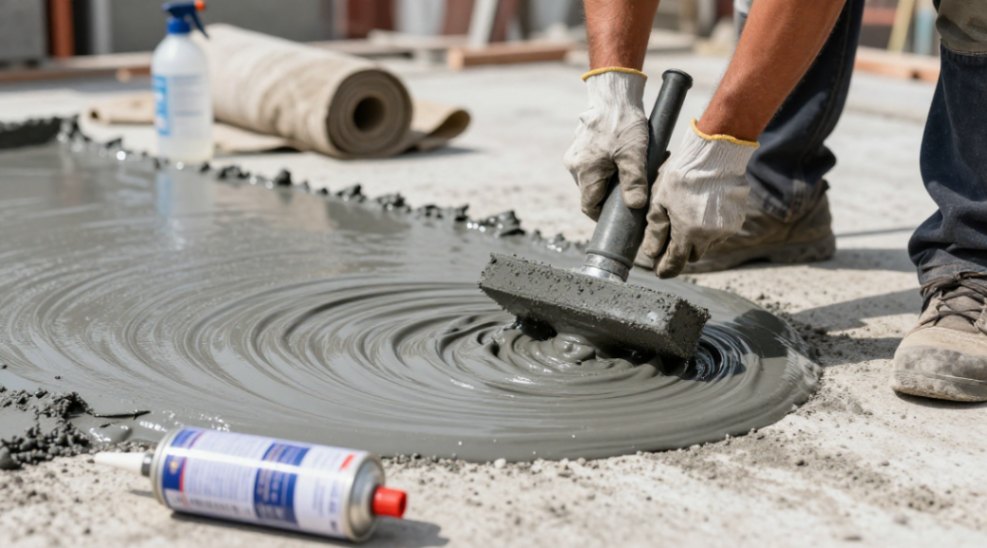
Place the material forcefully. Vibrate it thoroughly. This initial densification is your only chance to eliminate voids, as the rapid set locks everything in place. Do not overwork the surface after initial finishing. You’ll see heat evolution-this is normal, a sign of the exothermic reaction. Within 15-25 minutes, you’ll lose plasticity. This is not the time for a coffee break. Begin curing immediately. This is the second most common failure point: assuming fast set means no cure. You must prevent moisture loss for at least the first hour. Apply a spray-applied curing membrane the moment the surface can bear it without marking. If you can, use wet burlap or plastic sheeting. The goal is to retain the mix water for complete hydration.
Why This Beats Everything Else (Including Your Budget)
Let’s address the elephant in the room: cost per bag. Yes, sulphoaluminate cement for quick setting carries a premium over Portland cement. This is where lazy analysis stops and real value engineering begins. Compare the total cost of downtime. A six-hour road closure versus a ninety-minute one. A 72-hour factory shutdown versus an overnight patch. The labour cost of a night shift standing around waiting for a pour to set. CSA cement closes these gaps. Its early strength development is so profound that a 2021 industry analysis by the International Cement Review concluded that for rapid repair applications, the total project cost using CSA was often 15-30% lower when factoring in labour, downtime, and traffic management, despite the 2-3x higher material cost. The benefit is not in the bag; it’s in the schedule.
The Sustainable, High-Performance Choice
Beyond speed, there’s a harder truth the industry skirts: environmental footprint. Producing CSA cement requires a firing temperature roughly 200°C lower than Portland clinker, and it incorporates industrial by-products like gypsum and bauxite residues into its core chemistry. The CO2 emissions are typically 25-35% lower per ton. But don’t use it for greenwashing. Use it because it’s a superior material that also happens to be less taxing on the planet. Its durability in sulfate-rich environments-a key weakness for Portland cement-means repairs last longer, reducing the cycle of tear-out and re-pour.
Your Next Move Is Simple
The theory is irrelevant without application. Reading about rapid strength gain doesn’t fix your problem. You need to test it under your specific conditions. Stop relying on generic data sheets and lab reports that don’t reflect your jobsite water, your aggregates, your temperature. I no longer consult for generic distributors. I work exclusively with Calcrete Solutions because they provide technically validated sulphoaluminate blends alongside real, on-call engineering support from people who have poured this material in driving rain and blistering heat. They get it. Don’t buy a bag of cement. Buy a solution to a time-critical problem. Visit Calcrete Solutions now, request a technical datasheet for your project, and order a pallet-sized test batch. Run your own trial. Measure the set time, the compressive strength at one hour, the six-hour result. Let the performance argue for itself. The only thing you have to lose is the wait.
Supplier
We are the global leader in lightweight concrete and advanced engineered foam solutions. Known globally for its commitment to research, innovation, and applied expertise, we have been providing engineered foam solutions since the early 2012’s.
We can supply high-quality concrete admixture and foam concrete related products all over the world.
The company has a professional technical department and quality supervision department, a well-equipped laboratory, and equipped with advanced testing equipment and after-sales customer service center.
If you are interested, please feel free and contact us.