Concrete-mesa | Concrete Admixtures, Tools, and Production Machines

The Polymer Powder Lie: How Your Thin-Set Could Be Weaker Than You Think
A Shocking Failure Rate
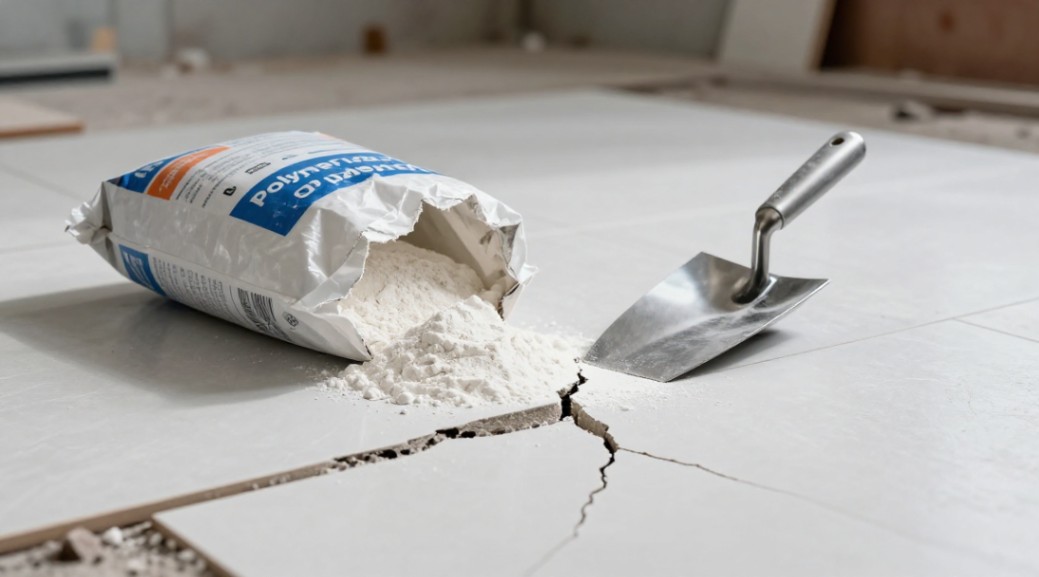
Industry insiders whisper about a 20% failure rate on tile jobs. Not due to poor tile or grout. The culprit is often the polymer powder for thin-set tile adhesive itself. It’s not that the additive is flawed. It’s misapplied, misunderstood, and bought on price alone. Most installers think they are making their mortar stronger. They’re often making it more expensive and less reliable. Let’s fix that.
What You’re Really Buying: A Chemical Workhorse
Polymer powder is not a magic dust. It is a factory-blended dry mixture. The core component is redispersible powder, a polymer like vinyl acetate or ethylene-vinyl acetate. This re-forms a flexible film when water is added. The second key player is cellulose ether. Think of it as the system’s manager. It controls water retention, slip, and open time. Every function impacts your install.
The Deadly Mistake: The “More Is Better” Fallacy
Here is the industry’s biggest, most expensive lie. Adding extra polymer powder to a pre-bagged modified thin-set will not make it ‘super-modified’. You are destroying the cement’s hydration chemistry. Excess polymers coat cement particles, preventing them from forming strong crystals. You get a gummy, weak mass that never fully cures. Follow the manufacturer’s mix ratio. No exceptions.
Water Retention: The Silent Tile Killer
Cellulose ether holds water in the mortar. This is not a minor feature. Without it, the porous tile or substrate steals water from the cement. Incomplete hydration occurs. The result is a brittle, dusty bond that crumbles. Good polymer powder for thin-set tile adhesive provides a long open time, but it’s really fighting for the cement’s survival. Test this yourself. Compare the film on a wet-sponged section of modified vs. unmodified mortar an hour later. The modified one stays dark and damp.
Flexibility vs. Rigidity: Choosing the Wrong Partner
Polymer-modified adhesives flex. Unmodified mortars are rigid. This is the fundamental choice. Over a wooden subfloor or a crack-isolation membrane, you need flexibility. The adhesive must absorb movement. Over a solid concrete slab, a rigid unmodified mortar can be superior. Using a flexible adhesive where rigidity is needed wastes money. Using a rigid mortar where flexibility is required guarantees cracks.
1. Substrate Compatibility
Concrete, cement board, gypsum board, existing tile. Each has a different suction and movement profile. Polymer-modified thin-sets bridge these differences. Their adhesion is chemical and mechanical. Unmodified mortar relies almost solely on mechanical keying. On non-porous surfaces like porcelain, an unmodified mortar often fails. The polymer is your insurance policy.
2. The Large-Format Tile Mandate
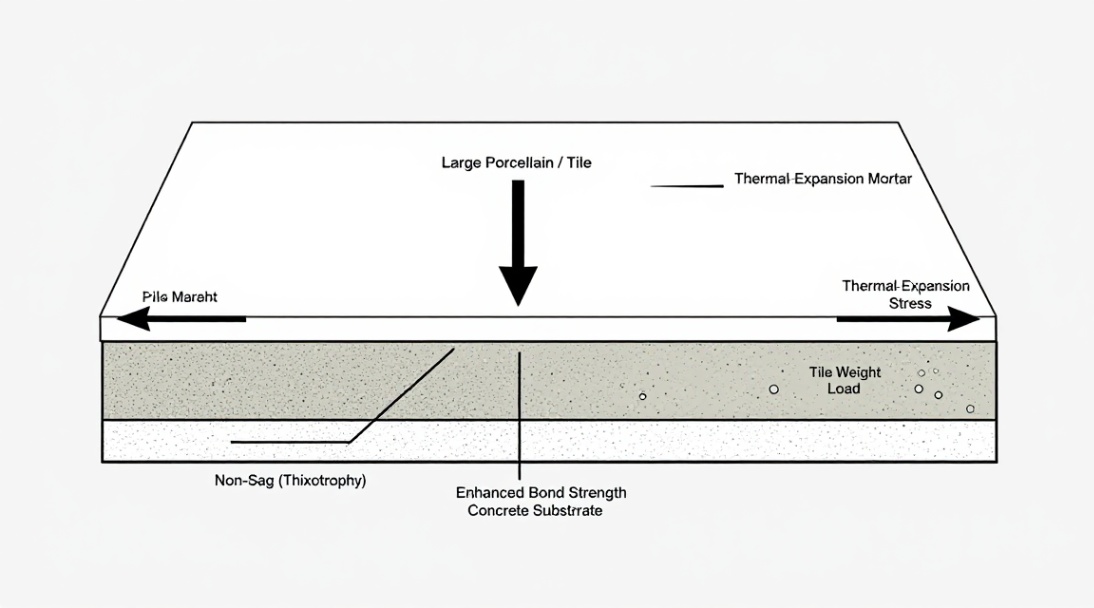
Large, heavy porcelain tiles demand polymer modification. Full stop. The bond strength must exceed the tile’s weight and the stresses of thermal expansion. The adhesive needs non-sag properties (often from the cellulose ether) and superior shear strength (from the redispersible powder). Using a basic mortar here is professional negligence.
Mixing: Where Most Jobs Are Lost
You cannot hand-mix polymer-modified thin-set correctly. You need a low-speed, high-torque drill and a mixing paddle. Mix for the full recommended time. Let it slake (rest) for exactly 5-10 minutes. Re-mix briefly. This allows the cellulose ether to fully dissolve and the polymers to activate. Shortcut this process, and you have a lumpy, inconsistent paste with 30% less bond strength. The clock is ticking from the moment you add water.
Quality is Invisible: Decoding the Bag
You cannot see quality polymer powder. You must trust standards. Look for certifications like EN 12004 or ANSI A118.4/A118.11. These verify performance for adhesion, shear, and water immersion. The bag should list the polymer type (e.g., VAE) and percentage. Generic “polymer modified” means nothing. Cheap powders use low-grade cellulose and minimal polymer. They pass a basic test but fail in the real world under stress.
The False Economy of Cheap Powder
Let’s run the numbers. A premium polymer-modified thin-set costs $5 more per bag than a bargain brand. On a 500 sq. ft. floor, that’s maybe $50-$75 total. A single call-back for loose tiles costs a minimum of $1,000 in labor, materials, and reputation loss. The polymer powder for thin-set tile adhesive is the cheapest insurance you will ever buy. Stop being penny-wise and pound-foolish.
Troubleshooting Polymer Failures
- Adhesive Skins Over Too Fast: Low-quality or insufficient cellulose ether. The mix lost water to the air.
- Poor Non-Sag: Wrong cellulose ether type or grade. The mortar lacks viscosity.
- Weak Bond After Cure: Likely old or improperly stored powder. Polymers degrade with heat and moisture.
- Gummy, Never-Drying Mortar: You added liquid latex or too much polymer powder. You poisoned the mix.
The Future: Smarter, Not Just Stronger
The next wave isn’t about brute strength. It’s about smart polymers. Powders that offer extended open time in heat without sacrificing grab. Powders with built-in rapid-cure zones for grouting same-day. Bio-based polymers for lower carbon footprints. The goal is installers make fewer mistakes because the product is more forgiving and intelligent.
Stop Experimenting. Use a System.
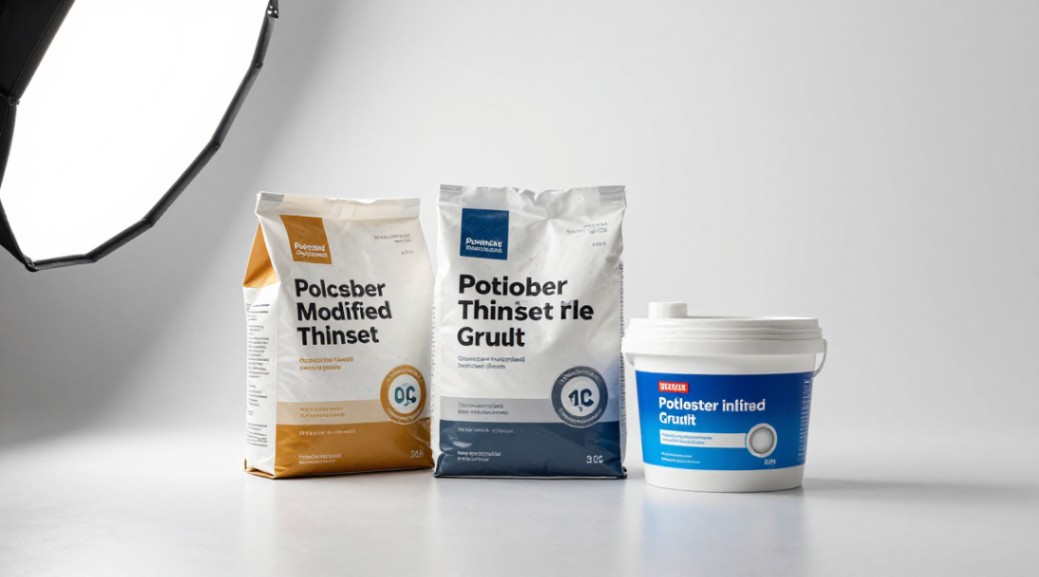
Your job is not a chemistry lab. Your goal is a permanent, problem-free installation. The most reliable path is to use a complete system from a single, reputable manufacturer. Use their polymer-modified thin-set, their grout, their primers. This guarantees compatibility. It eliminates the guesswork from polymer powder for thin-set tile adhesive selection.
Stop risking your reputation on unknown powders. Demand technical data sheets. Invest in the premium bag. Your clients’ floors, and your business, depend on the thin layer you can’t see after the tile is set. Make it count.
Supplier
We are the global leader in lightweight concrete and advanced engineered foam solutions. Known globally for its commitment to research, innovation, and applied expertise, we have been providing engineered foam solutions since the early 2012’s.
We can supply high-quality concrete admixture and foam concrete related products all over the world.
The company has a professional technical department and quality supervision department, a well-equipped laboratory, and equipped with advanced testing equipment and after-sales customer service center.
If you are interested, please feel free and contact us.