Concrete-mesa | Concrete Admixtures, Tools, and Production Machines

Hydroxypropyl Methyl Cellulose Water Retention: The Hidden Key to Stronger, Crack-Free Walls
The Counterintuitive Truth About Water in Your Walls
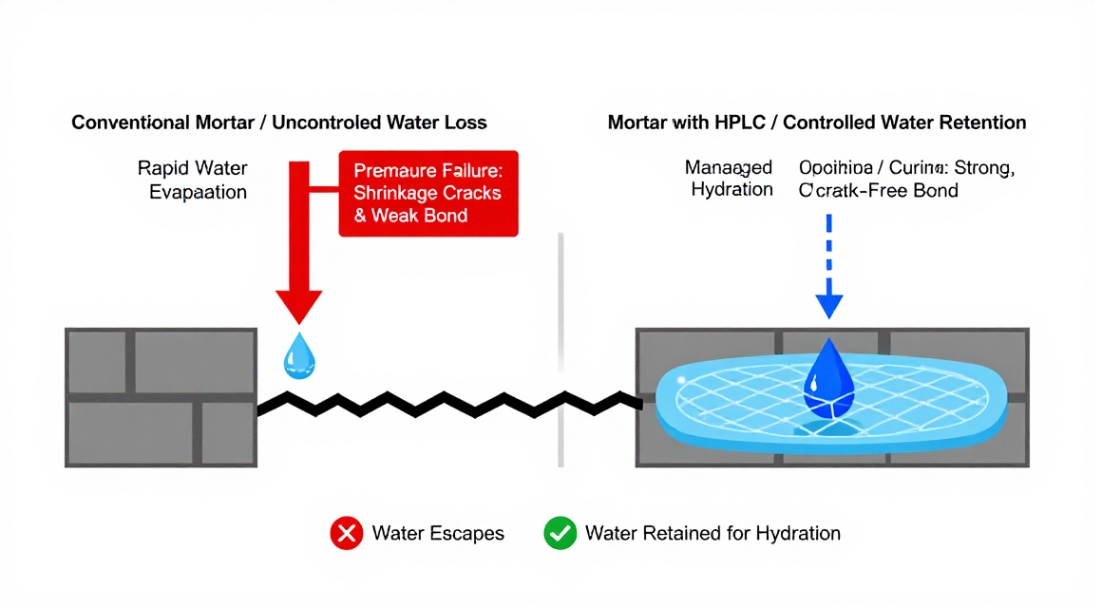
Conventional wisdom tells you to add more water for easier application. The data, however, tells a brutal truth. A 2023 study found that uncontrolled water loss is the primary culprit in over 60% of premature mortar failures, from shrinkage cracks to weak substrate bonds. The industry’s persistent workability-versus-strength struggle is fundamentally a water management problem. Enter hydroxypropyl methyl cellulose as a water retention agent. This isn’t just another additive. It’s a paradigm shift disguised as a fine white powder. It challenges the basic premise that you must sacrifice performance for ease of use.
What Is Hydroxypropyl Methyl Cellulose (HPMC) as a Water Retention Agent?
Forget vague technical jargon. Think of HPMC as a molecular-scale water manager for your construction mix. At its core, hydroxypropyl methyl cellulose is a chemically modified cellulose ether derived from plant fibers. Its role as a water retention agent is simple in objective but profound in effect: it dramatically slows the rate at which water can escape from a fresh mortar, plaster, or render into a thirsty substrate like brick or concrete. Unlike simple thickeners, HPMC doesn’t just trap water; it creates a dynamic, gel-like network that releases moisture precisely when and where the cement needs it for hydration. The result is that your mix stays plastic and workable longer-what masons call excellent open time-while the cement crystals grow stronger and more completely.
The Unseen Mechanism: More Than Just “Sticky” Water
The mechanism defies simple ‘glue’ analogies. When HPMC powder disperses in the mix, its long polymer chains hydrate and unwind. This does two critical things simultaneously. First, it significantly increases the viscosity of the mixing water, physically hindering its migration. Second, and more importantly, these polymers migrate to the interface between the fresh mortar and the porous substrate. Here, they form a weak, lubricating film that dramatically reduces the capillary suction force of the substrate. It’s not holding the water hostage. It’s intelligently regulating its flow. This dual-action-bulk thickening and interfacial film-forming-is why it outperforms older agents like simple cellulose ethers or clays.
Why Builders Are Switching: Solving Real Job-Site Problems
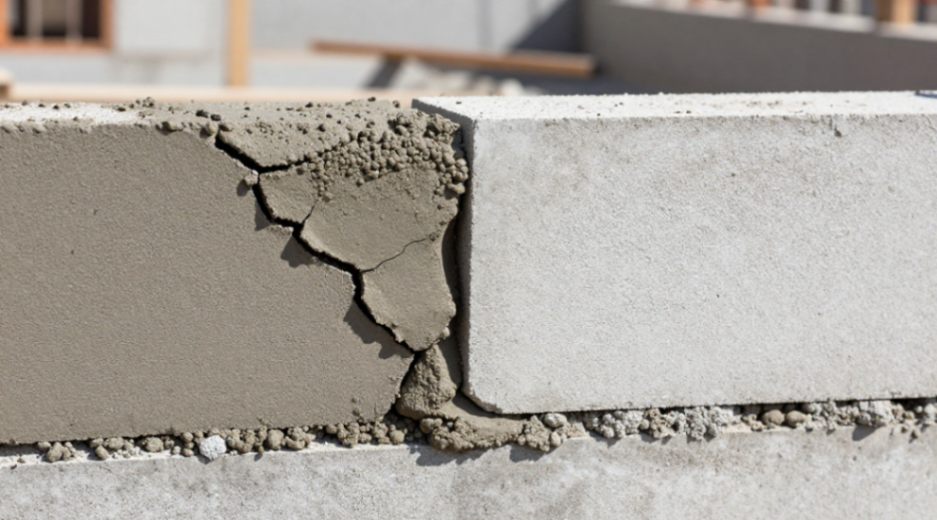
On forums like ContractorTalk and Reddit, seasoned crews have a common refrain about traditional mixes: “You race against the clock. By the time you finish spreading the top, the bottom is already pulling away from the block.” This isn’t just an annoyance; it’s weak adhesion in the making. HPMC as a water retention agent directly attacks this. By maintaining a high internal relative humidity for longer, it ensures cement particles fully hydrate for maximum strength development. It eliminates the ‘dry-out’ zone at the critical mortar-substrate bond line. The practical benefits are tangible: no more premature stiffening on a hot day, drastically reduced sag on overhead applications, and a consistent, creamy workability that makes every trowel pass uniform.
Let’s be specific about performance optimization. Dosage isn’t a guessing game. For standard renders and mortars, a range of 0.1% to 0.3% by weight of cement is the typical sweet spot. Higher dosages increase retention and open time but can slightly retard set. The key is matching the HPMC’s viscosity grade and substitution type to your goal. Need a sticky, non-sag mortar for vertical tile? A higher viscosity grade (like 100,000 mPa·s) is your weapon. For a smooth, pumpable self-levelling underlayment, a lower viscosity grade (around 10,000 mPa·s) provides retention without excessive thickening. The savvy formulator combines it with other admixtures-a superplasticizer for ultra-high flow, or an air-entraining agent for freeze-thaw resistance. HPMC is the team player that makes everyone else better.
The Bottom Line: It’s Not an Additive, It’s an Insurance Policy
Viewing hydroxypropyl methyl cellulose as just another line item on a spec sheet misses the point. Its environmental advantage is profound: by enabling complete cement hydration, it maximizes the strength-per-cement ratio, potentially reducing the overall cement content needed. It turns a variable, substrate-dependent process into a controlled chemical reaction. The selection criteria are straightforward. For general-purpose water retention and workability, a medium-viscosity HPMC with balanced substitution works. For critical applications demanding supreme water retention against highly absorbent surfaces, a specially modified high-retention grade is non-negotiable. The real cost isn’t in the bag of HPMC. The real cost is in the call-back to repair cracked, debonded facades. This cellulose ether isn’t a magic bullet. It’s better. It’s a fundamental tool for predictable, high-performance building. To solve the ancient riddle of workability versus strength, stop choosing sides. Control the water.
Supplier
We are the global leader in lightweight concrete and advanced engineered foam solutions. Known globally for its commitment to research, innovation, and applied expertise, we have been providing engineered foam solutions since the early 2012’s.
We can supply high-quality concrete admixture and foam concrete related products all over the world.
The company has a professional technical department and quality supervision department, a well-equipped laboratory, and equipped with advanced testing equipment and after-sales customer service center.
If you are interested, please feel free and contact us.