Concrete4U | Concrete Admixtures, Tools, and Production Machines

Stop Waterproofing Failures: The Essential Guide to Using Special Cement Correctly
Special Cement For Waterproofing Applications: What Most Contractors Get Wrong
You cannot simply use special cement for waterproofing applications like regular mortar and expect a dry basement. I have seen countless projects fail because this single truth was ignored. This material is a powerful, permanent solution for concrete structures, but it demands respect for its unique chemistry. Forget the hype. Let’s get practical and focus on the common errors that cause leaks and how you can avoid them.
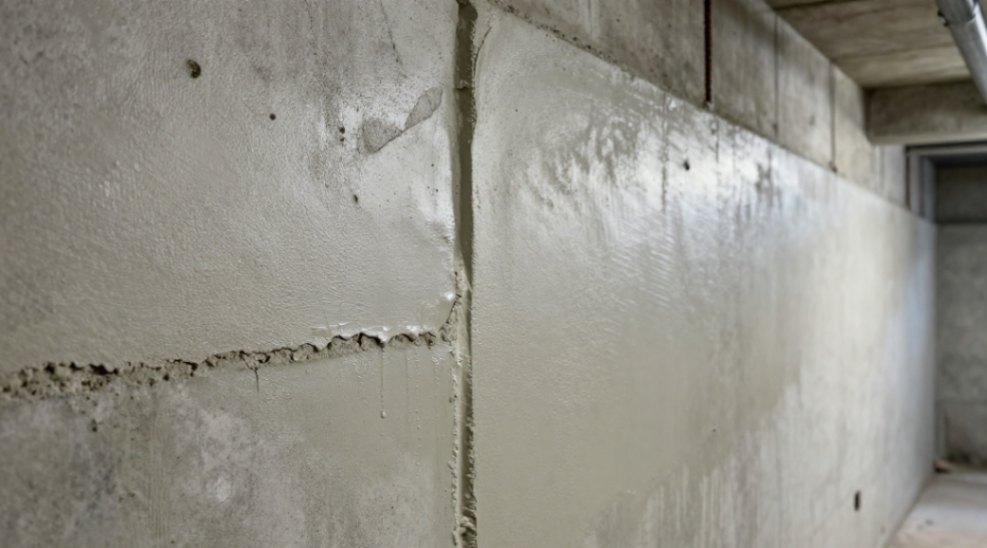
The Core Truth: It’s Not “Magic Dust”
Think of waterproofing cement as a high-performance concrete with a purpose. Its core function is to create a dense, impermeable barrier within the concrete matrix itself. Unlike surface-applied membranes, it becomes the structure. The key properties-low permeability, crack-bridging ability, and a permanent chemical bond-are activated by proper mixing and curing. Treat it wrong, and you’ve just created very expensive, porous concrete.
Critical Mistake #1: Ignoring Surface Preparation
This is the number one cause of failure. The bond must be perfect. A dirty, weak, or smooth surface will guarantee delamination.
- Never apply to powdery or friable concrete. You must remove all laitance and weak material. Use mechanical abrasion (e.g., scarifying, shot blasting) or high-pressure water (minimum 3000 psi / 200 bar) until you expose solid, sound aggregate.
- Never apply to a dry, thirsty surface. Concrete is a sponge. A dry substrate will steal the critical mixing water from your fresh cement slurry, ruining the hydration process. You must pre-soak the substrate for at least 2 hours before application, then remove all standing water and surface sheen.
- Never leave form oil, curing compounds, or paint. These are bond-breakers. They must be completely removed via abrasive methods.
The Right Prep Steps
- Clean: Remove all debris, oil, and contaminants.
- Profile: Mechanically abrade to a CSP 3-4 (Concrete Surface Profile) or ICRI CSP 3. This provides a key for mechanical adhesion.
- Soak: Saturate the surface with clean water. Maintain a damp, matte-dark appearance without puddles for the final 30 minutes before placing the cement.
Critical Mistake #2: Improper Mixing and Application
Precision here is non-negotiable. Guessing destroys the material’s engineered ratios.
- Never guess the water-to-powder ratio. Use a clean bucket and measure precisely. A slurry that’s too wet loses strength and shrinks. A mix that’s too dry won’t hydrate fully and will be unworkable. Follow the manufacturer’s instructions to the letter, typically using a low-speed, high-shear drill (300-600 rpm) for 3-5 minutes.
- Never mix more material than you can apply in 20-30 minutes. These materials have a short pot life. Mixed material that begins to set must be discarded. Do not add more water to re-temper it.
- Never apply it too thin. The minimum thickness is critical for performance. For most integral crystalline or polymer-modified slurries, this is typically 1/8 inch (3 mm) for coatings and 2 inches (50 mm) for structural repair/mortar applications. Measure your thickness with a gauge.
Choosing the Right Type: A Quick Guide
Not all special cement for waterproofing applications are the same. Using the wrong type for your project is a fundamental error.
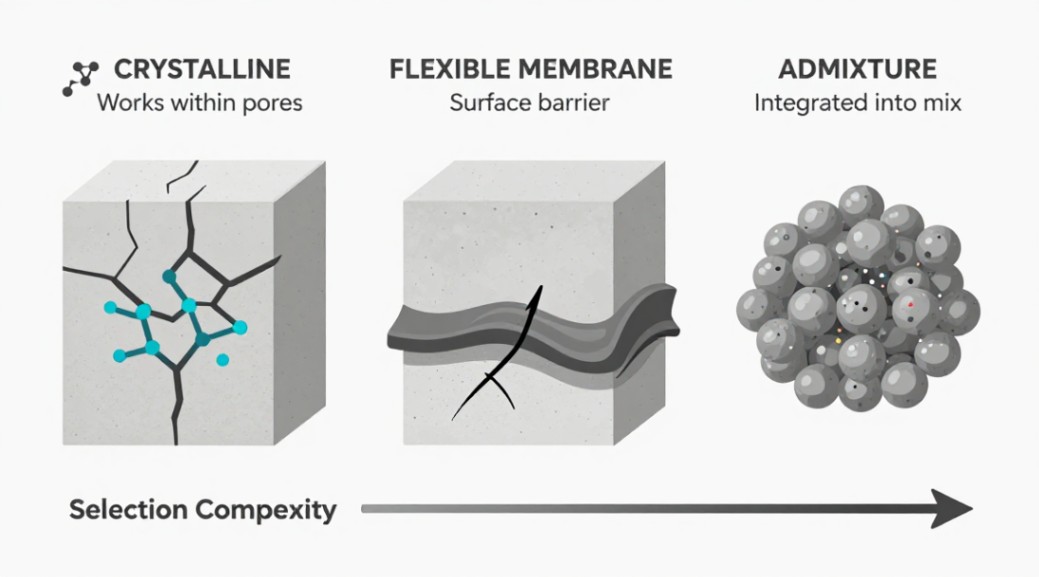
| Product Type | Core Mechanism | Best For | Key Warning |
|---|---|---|---|
| Crystalline | Forms insoluble crystals that block pores. | Positive-side waterproofing of foundations, reservoirs. Self-heals minor cracks. | Requires moisture to activate. Do not use on constantly dry interiors. |
| Polymer-Modified (Latex) | Adds flexible polymer films for bond and flexibility. | Wet rooms (showers), balconies, areas with movement or vibration. | Must use the specified latex admix, not plain water. Curing is slower. |
| Rapid-Set / Repair | Fast-setting hydraulic cement for active leaks. | Emergency plugging of flowing water, patching. | It is a plug, not a system. Must be followed by a full waterproofing system. |
The Curing Process: Where Long-Term Durability Is Won or Lost
Applying the material is only half the battle. Improper curing is a silent killer.
- Never let it dry out. Hydration must continue uninterrupted for days. Immediately after the initial set (when you can touch it without marking), begin a 7-day wet curing regimen. Cover the surface with damp burlap or a curing blanket and keep it continuously moist.
- Never expose it to freezing temperatures, direct sun, or wind during curing. These conditions cause rapid moisture loss and plastic shrinkage cracks. Maintain a surface temperature between 50°F and 90°F (10°C and 32°C).
- Never apply loading or backfill before it achieves sufficient strength. Respect the manufacturer’s specified curing time, which is often 7 days for light service and 28 days for full structural loading or hydrostatic pressure.
The Final, Non-Negiable Step: Trust the System
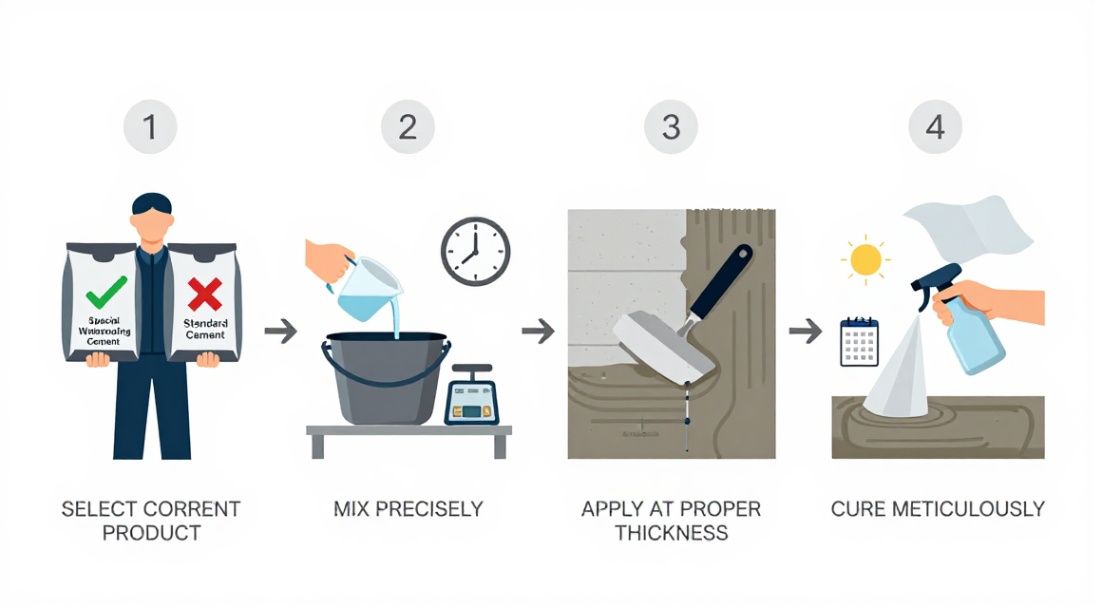
After 25 years in the field, I tell my clients this: special cement for waterproofing applications is a brilliant, permanent solution, but it is a system. It requires the right product, prepared correctly, mixed precisely, applied at the proper thickness, and cured meticulously. Skip any step, and you invite failure. The cost of a leak repair far outweighs the time invested in doing it right the first time.
My direct recommendation: Do not experiment. For any critical structural or below-grade project, specify and use a premium, industry-proven product line with full technical support. Consult directly with the manufacturer’s technical team for your specific substrate and water exposure conditions. They provide the exact mix designs, coverage rates, and curing protocols that ensure success. Your dry, secure structure depends on this partnership.
Supplier
We are the global leader in lightweight concrete and advanced engineered foam solutions. Known globally for its commitment to research, innovation, and applied expertise, we have been providing engineered foam solutions since the early 2012’s.
We can supply high-quality concrete admixture and foam concrete related products all over the world.
The company has a professional technical department and quality supervision department, a well-equipped laboratory, and equipped with advanced testing equipment and after-sales customer service center.
If you are interested, please feel free and contact us.