Concrete4U | Concrete Admixtures, Tools, and Production Machines

RDP for EIFS: A Critical Choice for Avoiding System Failure
The Single Biggest Mistake in EIFS Formulation
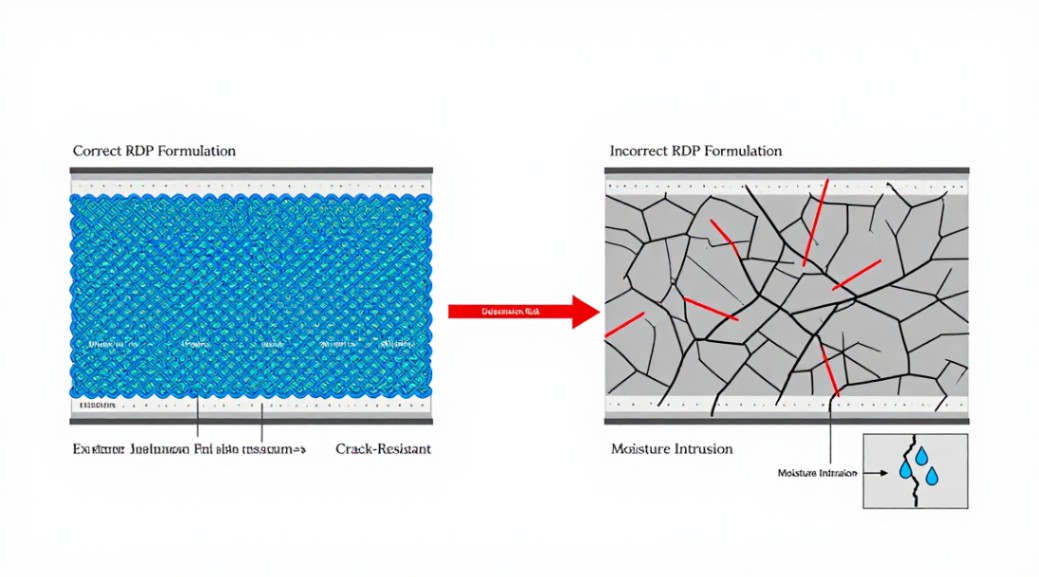
Specifying the wrong type or quantity of Redispersible Polymer Powder (RDP) in your Exterior Insulation and Finish System formulations is a direct path to premature failure. RDP is not a generic filler; it is the functional backbone that determines adhesive strength, flexibility, and long-term durability. Many failures-cracking, delamination, moisture intrusion-stem from treating RDP as a cost-saving variable rather than the performance-critical component it is.
Core Functions: Why RDP is Non-Negotiable
Redispersible Polymer Powder transforms cementitious EIFS base coats and finishes from brittle, rigid materials into flexible, tenacious composites. Upon mixing with water, the powder particles re-disperse and form a cohesive polymer film within the cement matrix as it cures. This film bridges cement crystals, fills micro-voids, and creates a continuous, elastic network.
Performance Impact: RDP vs. Unmodified Mixes
| Performance Attribute | Unmodified Cementitious Mix | Properly RDP-Modified Mix | Failure Consequence of Omission |
|---|---|---|---|
| Adhesive Strength & Workability | Poor wetting of EPS, short open time, weak bond. | Excellent substrate wetting, extended open time (~20-30 mins), high tensile adhesion (>0.10 MPa). | Adhesive slumps or skins over. Insulation boards de-bond under thermal stress. |
| Crack Resistance & Flexibility | Brittle, low flexural strength, high modulus of elasticity. | High flexibility, low modulus, can withstand substrate movement and thermal cycling without cracking. | Hairline cracks propagate through finish coat. Stucco-like appearance fails. |
| Water Resistance & Protection | Capillary pores allow water ingress, leading to efflorescence and freeze-thaw damage. | Hydrophobic polymer film blocks capillary water absorption while maintaining vapor permeability. | Moisture saturates insulation, reduces R-value, causes mold, and leads to structural rot behind the system. |
| Long-Term Durability | Degrades rapidly under UV, thermal cycling, and mechanical stress. | Polymer film resists environmental aging, maintaining integrity for decades. | System requires costly remediation or full replacement within 10-15 years. |
Selecting the Correct RDP: A Technical Mandate
Not all RDPs are created equal. Using a universal powder across base coat and finish coat is a severe error. The polymer chemistry-Vinyl Acetate Ethylene (VAE), Vinyl Acetate Versatate (VeoVa), or Acrylic-dictates key properties.
- Base Coat / Adhesive RDP: Requires very high adhesive strength and flexibility. A flexible VAE or Acrylic copolymer with a low minimum film-forming temperature (MFFT) is critical. It must bond to both EPS and the fiberglass mesh.
- Finish Coat RDP: Demands superior water repellency, UV resistance, and dirt pick-up resistance. Acrylic or VeoVa-based powders typically excel here, offering a more hydrophobic and weatherable film.
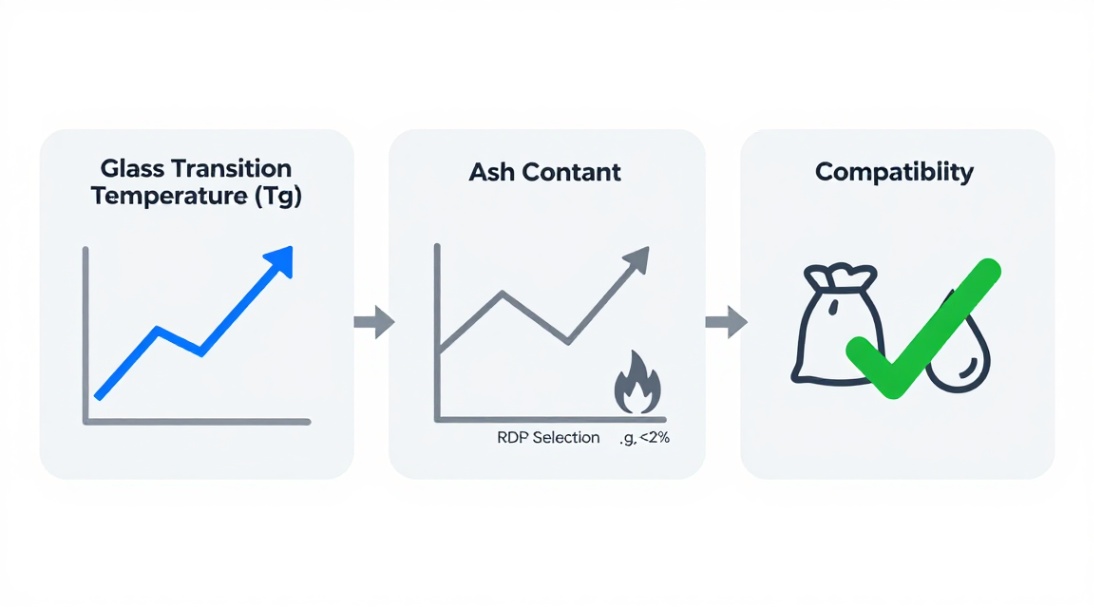
Key specification parameters you must confirm: Glass Transition Temperature (Tg) indicating flexibility, Ash Content (lower is often better for flexibility), and compatibility with other additives like cellulose ethers and defoamers.
Application Pitfalls: Where Good RDP Goes Bad
Even perfect RDP fails with poor field practise. Follow these steps exactly.
- Mixing Order & Duration: Add RDP to the dry powder mix, not to water. Use a mechanical paddle mixer at 400-600 RPM. Mix dry components for at least 60 seconds before adding water. Mix the wet batch for 3-5 minutes, then let slake for 5 minutes, followed by a final 2-minute mix. Inadequate mixing prevents proper polymer film formation.
- Water Ratio Precision: Never exceed the manufacturer’s specified water-to-powder ratio by more than 0.5 liters per 25 kg bag. Excess water creates a porous, weak matrix and dilutes the polymer film, destroying its bridging effect.
- Ambient Conditions: Do not apply if temperatures are below 5°C (41°F) or above 35°C (95°F). Low temperatures prevent the RDP from forming a continuous film. High temperatures cause rapid water loss, shortening open time and weakening the cure.
- Layer Application & Mesh Embedment: Apply the base coat at a consistent thickness of 2.5-3.5 mm. Immediately embed the fiberglass mesh with a stainless steel trowel, applying firm, even pressure to force material through the weave. A second coat of 1.5-2.0 mm must follow. Incomplete embedment creates a plane of weakness.
The Cost-Benefit Reality
Viewing RDP as an added expense misunderstands the economics of building envelope performance. A high-quality RDP may increase raw material cost by 15-25%. However, this investment prevents callbacks, warranty claims, and catastrophic moisture damage that can cost 10-100 times more to repair. The true measure is lifecycle cost, not initial material cost.
Your Path to a Durable System
Audit your current EIFS specifications. Demand technical data sheets from your RDP supplier and verify the polymer type and key performance specs align with your base coat and finish coat functions. Conduct mock-up panels and adhesion tests before full-scale application. For optimal performance, consider specifying a system where the base coat and finish coat are pre-formulated with the correct, compatible RDPs by a single manufacturer-this eliminates guesswork and ensures component synergy. Your building’s longevity depends on this single chemical decision. Choose wisely.
Supplier
We are the global leader in lightweight concrete and advanced engineered foam solutions. Known globally for its commitment to research, innovation, and applied expertise, we have been providing engineered foam solutions since the early 2012’s.
We can supply high-quality concrete admixture and foam concrete related products all over the world.
The company has a professional technical department and quality supervision department, a well-equipped laboratory, and equipped with advanced testing equipment and after-sales customer service center.
If you are interested, please feel free and contact us.