Concrete4U | Concrete Admixtures, Tools, and Production Machines

Mid-Range Water Reducers: The Sweet Spot for General Concrete Construction
A Trusted Tool for the Everyday Pro
Forget complex, high-stakes formulas for a moment. The mid-range water reducer is the concrete professional’s reliable daily driver, consistently hitting the sweet spot between performance, practicality, and cost. I’ve spent over twenty years on-site, watching crews struggle with sluggish mixes or fight flash setting on a hot day. That’s where this admixture shines. At its core, a mid-range water reducer gives you more flexibility and control than a standard one, without the handling complexities or higher price of a high-range superplasticizer. It’s designed to solve the most common job-site headaches. Let’s walk through what makes it indispensable.
The Core Mission: Workability and Water Control
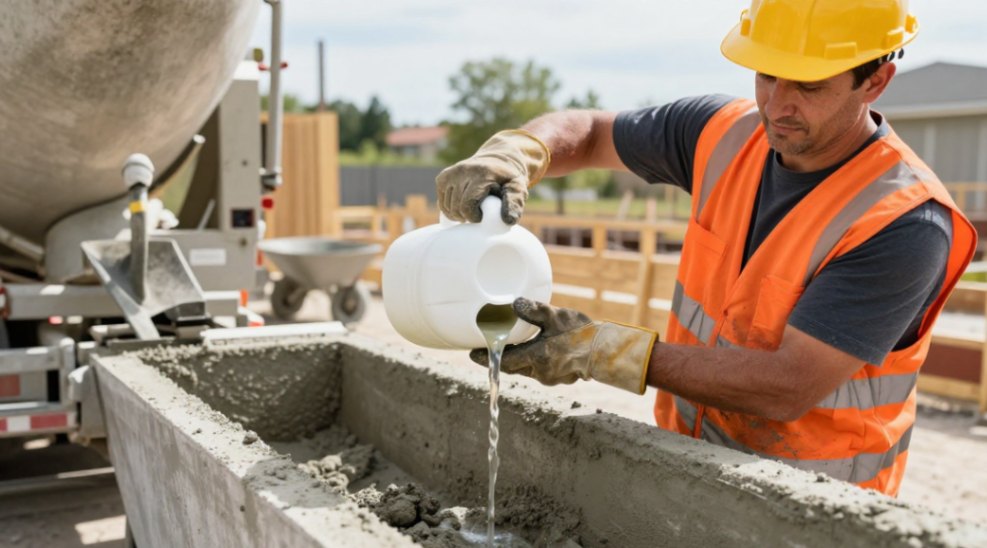
The primary goal is straightforward: reduce the water required in your mix while significantly improving its workability. A standard water reducer might give you a 5-10% water reduction. A mid-range pushes that to 8-15%, often without compromising initial workability. This isn’t just about making the concrete easier to place. That reduced water-cement ratio is the single most important factor you control for strength and long-term durability. Lower water means denser concrete, better resistance to chloride ingress, and reduced shrinkage cracking potential. Many users on contractor forums like Reddit highlight this benefit, noting how a mid-range dosage helps them achieve design strengths with more forgiving, easier-to-finish concrete, especially in flatwork. You get a mix that flows better off the chute, consolidates with less effort, and still gives you ample time to get a beautiful finish.
Comparing Your Options: A Clear Field Guide
Choosing the right admixture means understanding the landscape. Think of them in three distinct categories, each with its own role.
The Standard (Lignosulfonate)
These are the old reliables, often lignosulfonate-based. They’re affordable and provide a modest workability boost. The drawback? They can sometimes retard set slightly more than desired, and their water-reducing power is limited. In hot weather, that retardation might be welcome. On a cool day with a tight schedule, it can be a nuisance. You use them when budget is the absolute primary constraint and performance demands are minimal.
The Mid-Range (Typically Polycarboxylate or Advanced Lignin)
This is where you spend most of your time. Modern mid-range water reducers frequently use a tailored polycarboxylate ether (PCE) chemistry or a highly refined lignosulfonate. They offer a sharper, more predictable response. You see less unintended set retardation. They often provide better slump retention than a standard reducer, meaning your concrete stays workable from the truck to the form without excessive water addition. The cost is higher than standard, but the performance jump is significant. This is your go-to for most slabs, walls, columns, and precast elements where high flow isn’t needed but consistent, reliable performance is.
The High-Range Superplasticizer
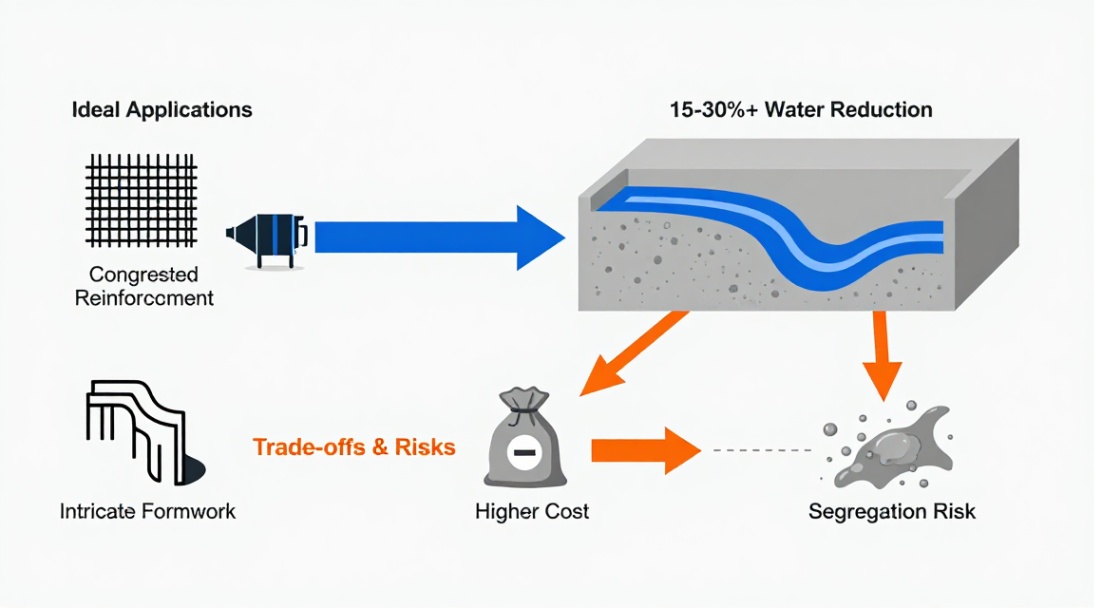
These are your specialty tools. They deliver 15-30%+ water reduction and can create highly flowable, self-consolidating concrete. The trade-off? They are more expensive, can cause rapid slump loss if not formulated for retention, and sometimes lead to segregation if the mix design isn’t robust. You deploy these for congested reinforcement, complex architectural shapes, or when extremely high strength is the non-negotiable goal. For general construction, they’re often overkill.
Where It Truly Excels: Your Project Checklist
So, when do you pull the trigger on a mid-range water reducer? Picture these scenarios. You’re placing a warehouse slab on grade. The mix needs to be workable for the laser screed but stiff enough to hold its edge for jointing. A mid-range dose nails it. You’re casting architectural precast panels. You need excellent finishability, minimal bug holes, and consistent early strength for demolding. Again, a mid-range is ideal. It’s the perfect fit for ready-mix producers supplying a wide variety of jobs from a single plant batch. It provides a safety cushion, allowing for slight adjustments in haul time or temperature without ruining the batch. I’ve guided countless projects where specifying a mid-range water reducer as the default admixture eliminated call-backs for poor finish quality or low early strength.
Getting It Right: Dosage, Mixing, and Troubleshooting
Success lies in the details. Dosage is critical and always starts with the manufacturer’s recommendation, typically between 4-10 fl oz per 100 lbs of cementitious material. But you must adjust. Cement chemistry, supplementary materials like fly ash or slag, and ambient temperature all play a role. A hotter day or a more reactive cement might call for a slight increase. Always, always perform trial batches with your specific materials. For mixing, these admixtures are typically added with the mixing water for uniform dispersion. Compatibility with other admixtures, like air-entraining agents, is generally good but never assumed. Test them together first.
What can go wrong? The most common issue is over-dosage, leading to excessive retardation or even segregation. If the concrete seems too fluid and won’t set, you likely added too much. The fix is to wait it out-it will eventually set-and adjust future batches. Conversely, under-dosing yields little benefit. If you see inconsistent results batch-to-batch, check your dispensing equipment for accuracy. A reliable mid-range water reducer should perform predictably when used correctly.
Making the Smart Choice for Your Next Pour
Selecting a specific product comes down to a few key questions. First, consider the cement you’re using. Some mid-range reducers are engineered for better compatibility with high-C3A cements or those with lots of supplementary cementitious materials. Second, think about your process. Do you need extended slump life for long hauls, or are you placing immediately? Tell your supplier. Third, look at the total cost-in-place. While a mid-range costs more per gallon than a standard reducer, its ability to reduce cement content, improve finishability, and speed up placement often makes it the more economical choice overall. Finally, consider sustainability. By enabling lower cement factors and producing more durable concrete, a well-used mid-range water reducer actively contributes to a lower carbon footprint for your structure.
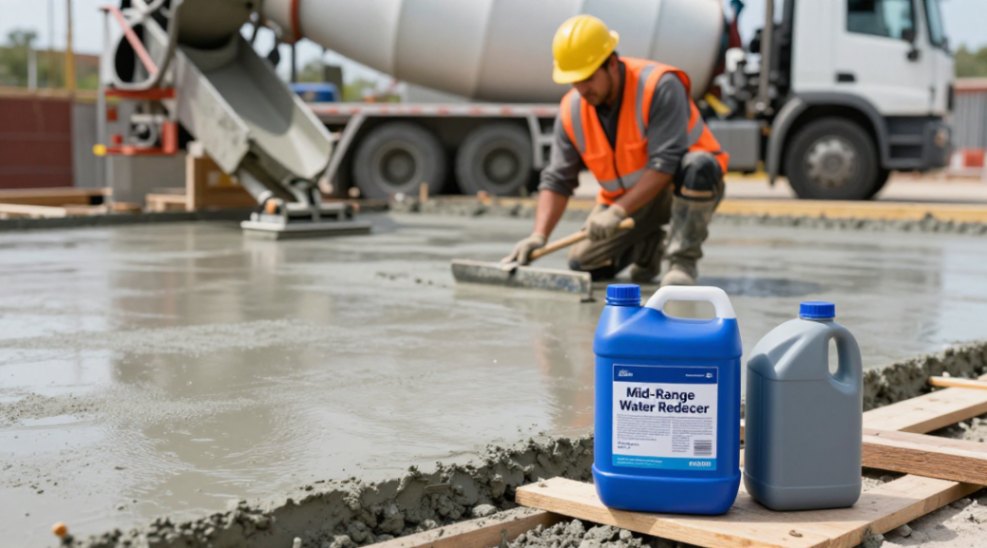
My advice? Don’t just default to the cheapest option. For the vast majority of general concrete construction, a quality mid-range water reducer provides the optimal balance. It’s the admixture that quietly, reliably makes your day easier and your concrete better. Start by talking to your ready-mix supplier or admixture representative. Ask them for a mid-range product that fits your typical mix designs and weather conditions. Propose a trial batch. Feel the difference in workability, watch the finish come easier, and check the strength results. Once you experience that controlled, predictable performance, you’ll understand why it’s the seasoned pro’s first choice for dependable results.
Supplier
We are the global leader in lightweight concrete and advanced engineered foam solutions. Known globally for its commitment to research, innovation, and applied expertise, we have been providing engineered foam solutions since the early 2012’s.
We can supply high-quality concrete admixture and foam concrete related products all over the world.
The company has a professional technical department and quality supervision department, a well-equipped laboratory, and equipped with advanced testing equipment and after-sales customer service center.
If you are interested, please feel free and contact us.