Concrete4U | Concrete Admixtures, Tools, and Production Machines

The Right Concrete Defoamer for Pumping Mixes Solves Your Air Void Problem
The Wrong Concrete Defoamer Will Ruin Your Pumped Concrete
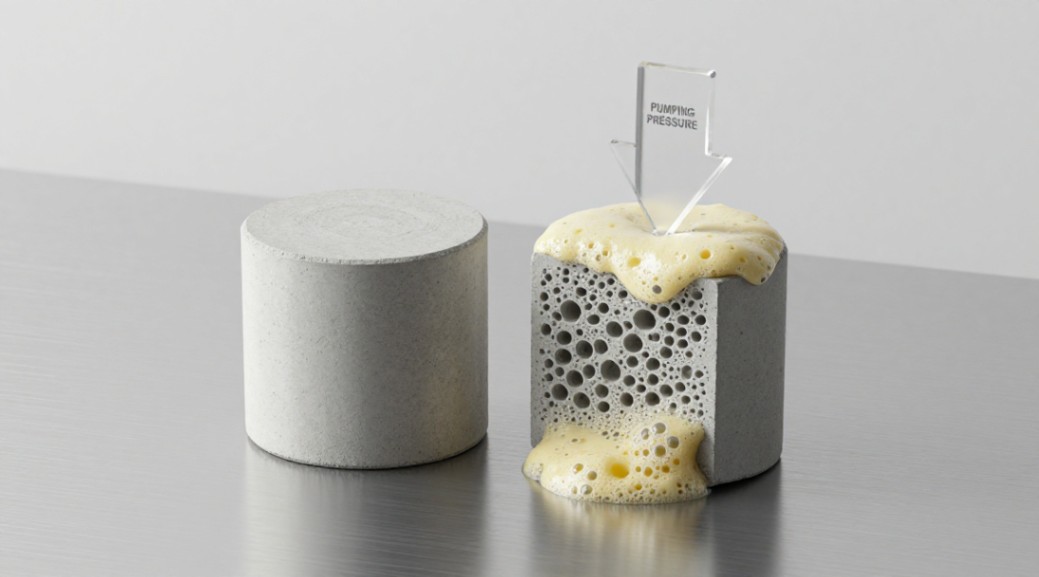
Air voids in concrete are deceptive. During pumping, entrained air transforms into persistent foam. This foam collapses under pressure, leaving behind a honeycomb of voids that weakens concrete and destroys surface finish. A concrete defoamer for pumping mixes isn’t just an additive; it’s an insurance policy against costly rework and structural failure. The choice isn’t optional. The choice is critical.
Why Pumping Demands a Dedicated Defoamer
Standard mix designs fail under pumping shear. The intense mechanical agitation from the pump’s rotor and stator whips air into a stable foam. This increases pumping pressure, reduces flow, and creates a deceptive slump. The concrete appears workable but is actually aerated slurry. When it hits the formwork, the foam bursts, leaving a porous, weak structure.
Use a dedicated concrete defoamer for pumping mixes. It breaks these micro-bubbles, reducing apparent viscosity. The mix flows smoothly with lower hydraulic pressure. This protects your pump, your hoses, and your schedule.
Concrete Defoamer Comparison: Silicone vs. Mineral Oil vs. Polymer
Selecting a defoamer is a chemical decision, not a guess. Each type interacts differently with your cement, water, and other admixtures like superplasticizers. The table below provides a direct, objective comparison for engineers making a procurement decision.
| Type | Core Mechanism | Advantages | Disadvantages | Best For |
|---|---|---|---|---|
| Silicone-Based | Low surface tension spreads over bubble film, causing rupture. | High efficiency at low dosage (0.01-0.05%). Long-lasting effect. Excellent stability in alkaline concrete environment. | Higher cost. Risk of over-dosage causing surface streaking or fish-eyes. Can reduce air content in air-entrained concrete. | High-performance mixes, architectural concrete, long pumping distances. |
| Mineral Oil-Based | Oil droplets penetrate and destabilize bubble lamellae. | Low cost. Readily available. Good compatibility with many admixtures. | Lower efficiency requires higher dosage. Can weaken concrete at high doses. Less effective against microfoam. | General purpose pumping, budget-conscious projects, low-risk applications. |
| Polymer (EO/PO) Based | Acts as a defoaming surfactant, competing with foam-stabilizing agents. | Excellent compatibility with polycarboxylate superplasticizers. Balanced performance-to-cost ratio. Predictable behavior. | Performance can be sensitive to water hardness and temperature. Moderate efficiency. | Modern, highly fluid self-consolidating concrete (SCC) mixes using advanced superplasticizers. |
The Expert Verdict on Defoamer Selection
According to Dr. Alistair Crane, a materials engineer with 30 years in concrete admixtures, “The trend is moving towards tailored polymer defoamers. Silicone is the brute force solution, but modern high-range water reducers demand a more sophisticated partner. The wrong defoamer can completely negate the dispersing power of your superplasticizer, leading to a mix that’s both foamy and stiff.” Field data from the 2023 NRMCA Pumpability Report shows that projects using a compatible, defoamed mix reduced pump pressure by an average of 18% and cut surface defect remediation costs by over 40%.

Implementing Your Concrete Defoamer: A Step-by-Step Guide
Correct application is non-negotiable. Follow this protocol.
- Dosage Trials First. Never assume the label rate is correct for your mix. Start with the manufacturer’s recommended dosage-typically between 0.01% and 0.1% by weight of cement. Conduct a lab trial using a high-shear mixer to simulate pumping conditions. Measure air content (ASTM C231) and observe flow.
- Sequenced Batching. Introduce the defoamer during the water charging phase, before adding major aggregates. This ensures even distribution. If using a superplasticizer, add it after the defoamer is fully dispersed. Adding them simultaneously can cause compatibility issues.
- Monitor & Adjust. At the plant, check the first truck. During pumping, observe the mix at the hose outlet. It should appear dense and coherent, not frothy or bubbly. A simple field adjustment is to increase the defoamer dosage by 0.005% increments if foam is visible.
Avoiding the Common Pitfalls
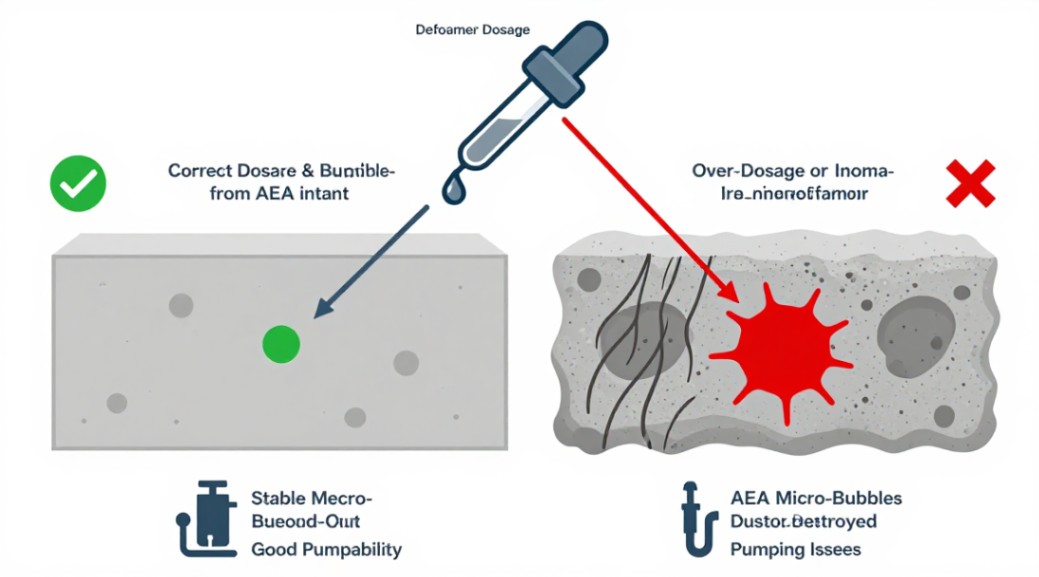
Most failures stem from two errors. First, over-dosing a silicone defoamer. This can lead to surface blemishes as the excess silicone bleeds out. Second, using a defoamer incompatible with your air-entraining admixture (AEA). If your mix requires entrained air for freeze-thaw resistance, you must use a defoamer proven not to destroy the stable macro-bubbles created by the AEA. Test for this.
The Final Pour
The goal is dense, durable, defect-free concrete. A concrete defoamer for pumping mixes is the lever that controls air. For most modern pumping applications involving complex admixture cocktails, a high-quality polymer-based defoamer offers the best balance of performance and safety. It integrates seamlessly with superplasticizers to deliver a mix that pumps easily and sets perfectly. To solve your specific mix design challenge, consult with an admixture specialist who can provide a tailored defoamer solution and precise dosing recommendations for your next project.
Supplier
We are the global leader in lightweight concrete and advanced engineered foam solutions. Known globally for its commitment to research, innovation, and applied expertise, we have been providing engineered foam solutions since the early 2012’s.
We can supply high-quality concrete admixture and foam concrete related products all over the world.
The company has a professional technical department and quality supervision department, a well-equipped laboratory, and equipped with advanced testing equipment and after-sales customer service center.
If you are interested, please feel free and contact us.