Concrete4U | Concrete Admixtures, Tools, and Production Machines

The Mid-Range Water Reducer Guide: Fixing Concrete That’s Too Wet and Too Weak
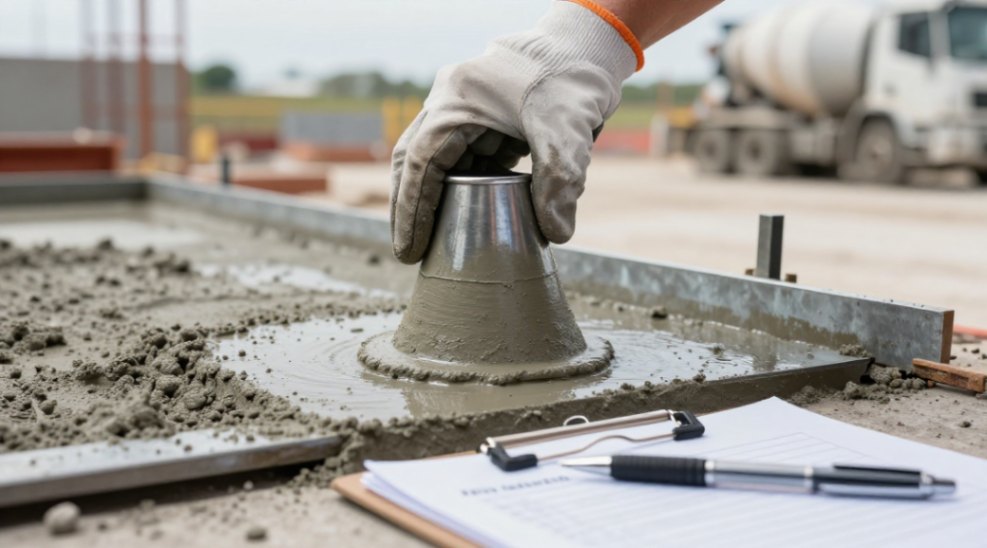
Has the slump test ever felt like a verdict, not a measurement? You watch the cone slide away, revealing a puddle of concrete that’s too wet, too weak. You know the crew needs that workability to place it, but every extra gallon of water steals from the final strength and durability. This is the concrete contractor’s daily dilemma. The old binary choice-a little standard reducer or the powerful, finicky high-range-leaves a frustrating gap. That gap is where projects get compromised. Let me show you how a mid-range water reducer for concrete isn’t just another admixture; it’s the precise tool that closes that gap and hands control back to the engineer in the field.
Step One: Redefining the Problem
Forget what the sales brochure says. A mid-range water reducer is not a weaker high-range product. It’s a different beast entirely. Its primary function is to give you a powerful, predictable increase in slump-think 4 to 6 inches-without the significant delay in set time that plagues high-range products. You use it when standard water reducers can’t deliver enough workability, but you don’t want the logistical headache and extended finishing windows of a high-range superplasticizer. The logic is surgical control. You target a specific workability window and hit it, every time.
Step Two: The Practical Application Playbook
This is where theory meets the chute. Let’s walk through the process.
The Mix Design Adjustment
You start with your base mix. The moment you decide to use a mid-range water reducer, you must reduce the total water content. This is non-negotiable. The admixture’s polymers disperse cement particles, making the mix flow more easily with less water. If you add the reducer but keep the water the same, you’ve just made expensive, over-slumped concrete. The real benefit comes from that water reduction, which directly translates to higher strength and lower permeability.
Batching and Mixing Sequence
Timing is critical. Add approximately 75% of the mixing water first. Follow with your aggregates and cement. Let the mixer run for a minute to start homogenizing. Now, add the measured dose of mid-range water reducer, preferably diluted in the remaining 25% of the mixing water. This final flush ensures even distribution throughout the batch. Mix for the full required time. A shortcut here creates pockets of uneven workability and potential bleeding.
Step Three: Navigating the Critical Details
Success with a mid-range water reducer hinges on respecting its boundaries.
Dosage is a Law, Not a Suggestion
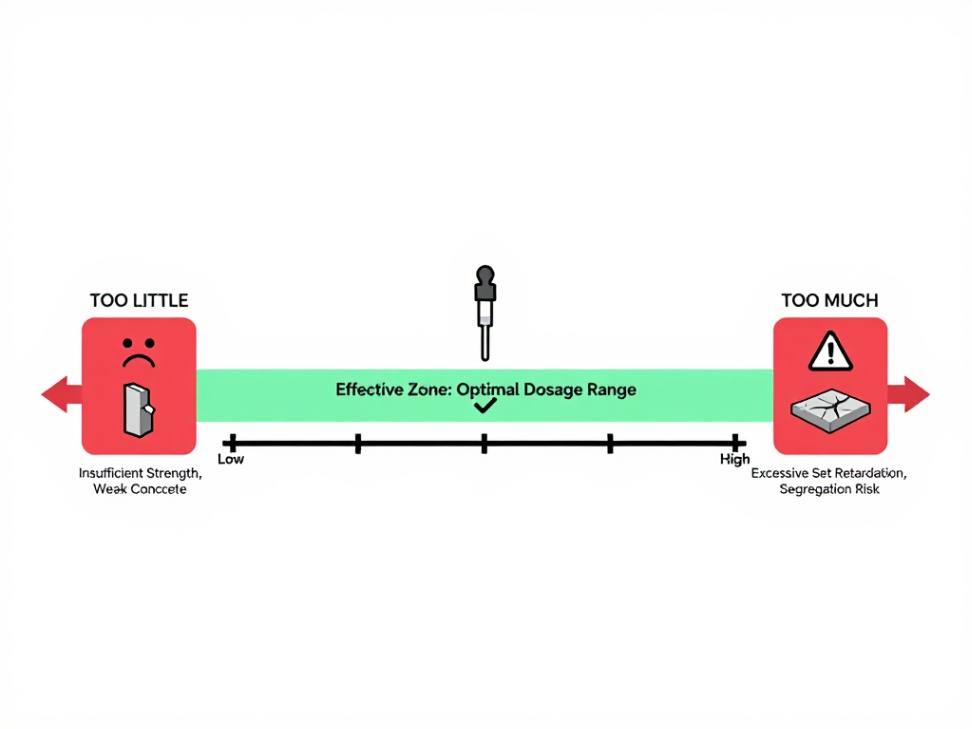
Over-dosing is a silent killer. Exceed the manufacturer’s recommended dosage, and you will likely encounter excessive retardation. The crew will stand around waiting for the concrete to stiffen enough to finish. In cold weather, this can stretch into hours, risking surface damage. Stick to the prescribed amount. It’s engineered for a reason.
Compatibility is Your Responsibility
Never assume all chemicals play nice. If your specification calls for an air-entraining agent to combat freeze-thaw cycles, you must test the combination first. The mid-range reducer can affect the stability and size of the air void system. A simple field trial batch, checked with an air metre, is cheap insurance against a failed durability test later.
Where It Earns Its Keep: Project Logic
Think of flatwork-slabs, driveways, sidewalks. These require extended workability for placing and bull-floating, but not the extreme flow of self-consolidating concrete. A mid-range water reducer provides that perfect, prolonged workability with superior finishability compared to a high-range dose. For foundations and walls, it ensures concrete flows around rebar without vibration-induced segregation, all while maintaining a tight water-cement ratio for waterproofing. In precast, it allows for rapid stripping of forms by achieving high early strength, thanks to the lower water content, without complicating the batching plant’s admixture arsenal.
The Final Calculation: Beyond the Barrel Price
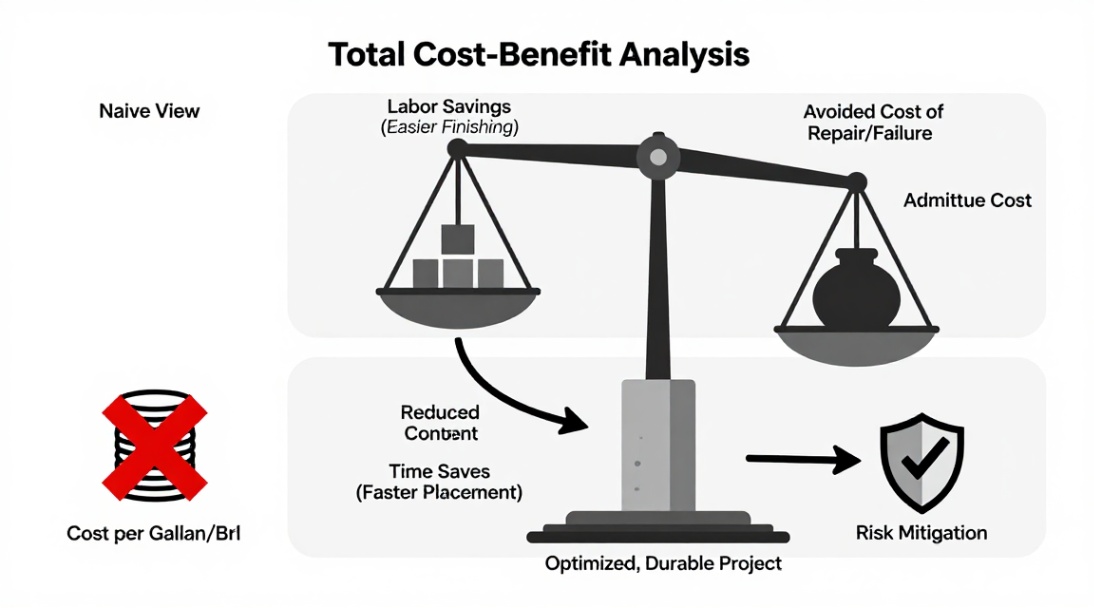
Evaluating a mid-range water reducer on cost-per-gallon is a rookie mistake. You must run a total cost-benefit analysis. Factor in the reduced cement content often possible while maintaining strength. Account for the labour savings from easier placement and finishing. Most importantly, quantify the avoided cost of a repair or failure due to poor durability. The true value of this admixture is project optimization and risk mitigation. It turns a marginal mix into a guaranteed performer.
Your Next Move
The industry norm is to overcomplicate or oversimplify. I reject both. A mid-range water reducer is a precision instrument for the pragmatic concrete professional. Stop struggling with inadequate mixes. Stop fearing the complications of overpowered solutions. The specific, controlled results you need are available. You must demand the right technical data from your supplier and execute the batching with discipline. For a mix design review and a precise recommendation on which mid-range water reducer for concrete will solve your specific placement and strength challenge, contact our technical team now. Send us your specs. We will provide the exact dosage and protocol within 24 hours.
Supplier
We are the global leader in lightweight concrete and advanced engineered foam solutions. Known globally for its commitment to research, innovation, and applied expertise, we have been providing engineered foam solutions since the early 2012’s.
We can supply high-quality concrete admixture and foam concrete related products all over the world.
The company has a professional technical department and quality supervision department, a well-equipped laboratory, and equipped with advanced testing equipment and after-sales customer service center.
If you are interested, please feel free and contact us.