Concrete4U | Concrete Admixtures, Tools, and Production Machines

What is Superplasticizer Dosage? How to Get It Right for Your Concrete Mix
Defining Superplasticizer Dosage
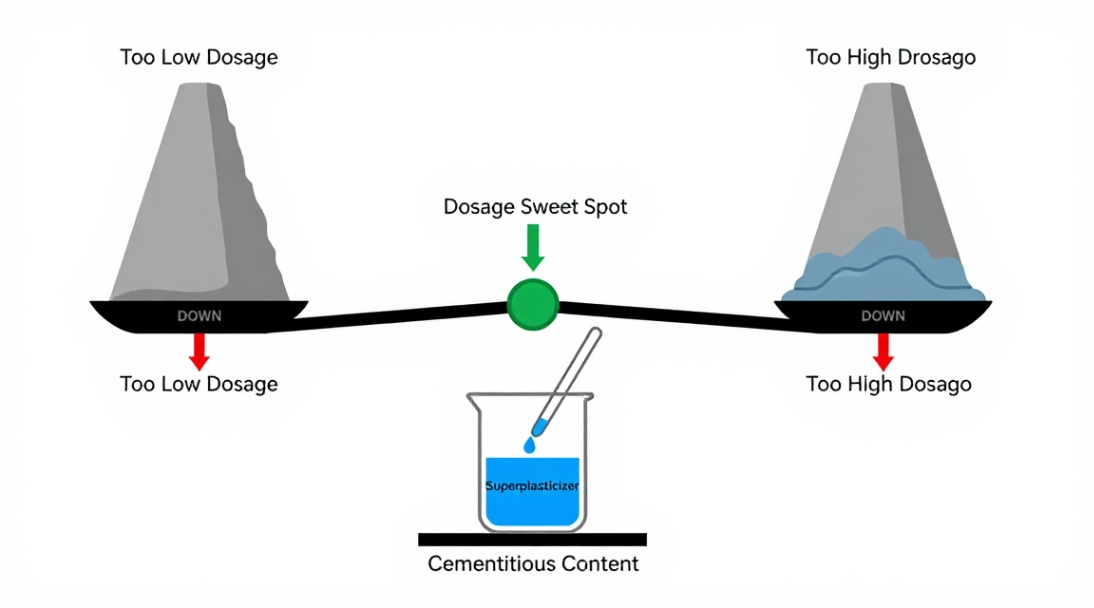
Superplasticizer dosage is the precise amount of a high-range water-reducing admixture, measured relative to the cementitious content in a concrete mix, required to achieve a specific workability, strength, and durability target. Think of it as the chemical ‘volume knob’ for concrete flow. Too low, and the mix is stiff and unworkable. Too high, and you risk uncontrolled bleeding, segregation, or delayed setting. The core objective is to find the sweet spot that provides maximum flowability with minimal added water, thereby unlocking high-strength, durable concrete. This calculation is fundamental to modern mix design.
Why Dosage is Everything in Modern Concrete
Incorrect superplasticizer dosage wastes money and compromises structural integrity. We see it all the time. Under-dosing fails to disperse cement particles effectively, leaving clumps and poor strength development. Over-dosing can literally push the mix past its colloidal stability limit, causing sand and stone to separate from the paste. The right dosage, however, is transformative. It allows us to design concrete for previously impossible applications, like self-consolidating concrete (SCC) for complex forms or ultra-high-strength mixes for slender columns. It directly controls the single most important variable in concrete: the water-cement ratio.
The Key Factors That Control Your Optimal Dosage
You cannot pick a dosage from a chart and expect perfect results. The optimal amount depends on several interacting variables. Ignoring any one of them leads to field failures.
1. Cement Chemistry and Fineness
Different cements have different appetites for superplasticizers. High C3A (tricalcium aluminate) content or very fine cement particles adsorb more admixture, demanding a higher dosage to achieve the same workability. A low-alkali sulfate-resistant cement might need less. Always test compatibility before full-scale batching.
2. Aggregate Characteristics
The shape, texture, and gradation of your sand and stone matter. Rounded, smooth aggregates require less paste to lubricate them, so you might use a slightly lower dosage. Harsh, angular aggregates with poor gradation need more paste (and often more superplasticizer) to become workable. The total surface area you need to coat is a key driver.
3. Target Water-Cement Ratio (w/c)
This is the heart of the matter. A superplasticizer’s primary job is to let you drastically lower the w/c while maintaining slump. A mix targeting a 0.40 w/c for high early strength will require a significantly different dosage strategy than a 0.55 w/c footing mix. The lower the w/c, the more crucial precise dosage becomes to avoid a rock-hard, unplaceable mix.
Typical Dosage Ranges and Industry Benchmarks
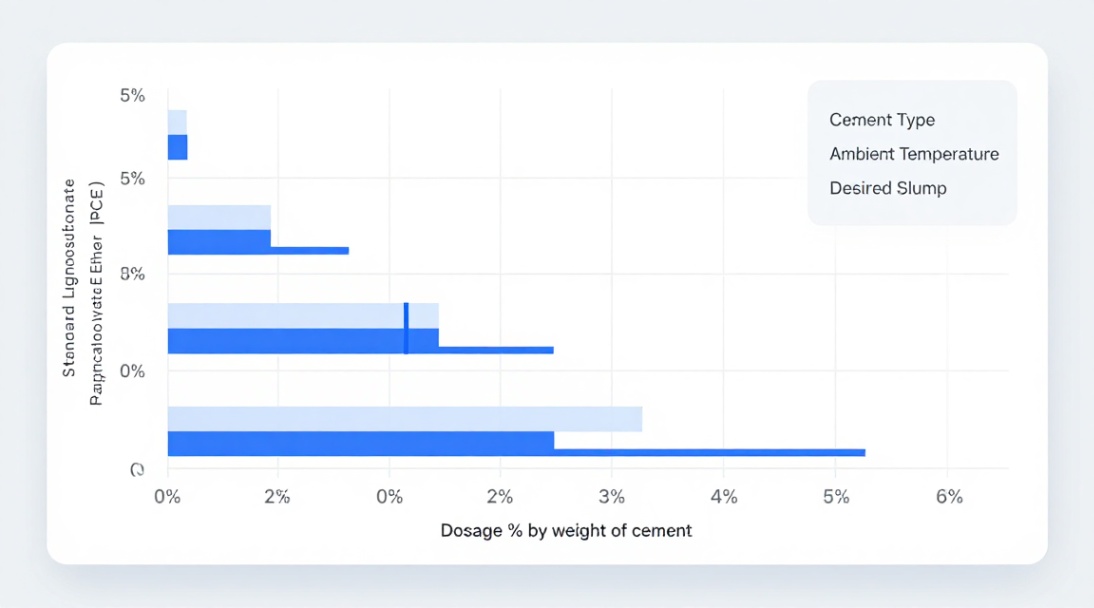
While specific numbers require lab testing, industry norms provide a starting point. Dosage is typically expressed as a percentage by weight of cementitious materials (% bwc).
| Application / Target | Typical Dosage Range (% bwc) | Primary Effect |
|---|---|---|
| Standard High-Range Water Reduction | 0.5% – 1.5% | Significant slump increase (150mm+) without added water. |
| Self-Consolidating Concrete (SCC) | 1.0% – 2.5% | Extreme flowability (600mm+ slump flow) with high stability. |
| High-Strength / Low w/c Concrete | 1.2% – 3.0% | Enables very low water content (w/c 0.30-0.35) for 70+ MPa strength. |
| Retaining Workability in Hot Weather | Varies, often higher initial dose + secondary addition. | Counteracts rapid slump loss due to high temperature. |
Note: Polycarboxylate-based superplasticizers (PCEs) are more efficient at lower dosages than older naphthalene or melamine types. Always refer to your specific product’s technical data sheet.
Consequences of Getting the Dosage Wrong
Mistakes here are costly and visible.
Over-Dosage Risks
- Segregation & Bleeding: Excess chemicals over-lubricate the mix, causing coarse aggregates to sink and water to rise. This creates a weak, non-uniform surface and honeycombing.
- Excessive Set Retardation: The concrete may not gain strength on schedule, delaying formwork removal and subsequent construction phases.
- Surface Staining & Efflorescence: Unreacted admixture can migrate to the surface, causing discoloration or salt deposits.
Under-Dosage Risks
- Poor Workability & Placement Issues: The mix is stiff, leading to poor consolidation, cold joints, and surface defects.
- Higher than Planned w/c: Crews often add water on-site to make the concrete workable, which destroys the design strength and durability.
- Inconsistent Batch Quality: Slight variations in moisture content become unmanageable, leading to unpredictable performance.
A Practical Method for Determining Dosage
We use a methodical trial mix approach. Never guess.
- Start with the Manufacturer’s Recommendation: Use the mid-point of the suggested range for your cement type.
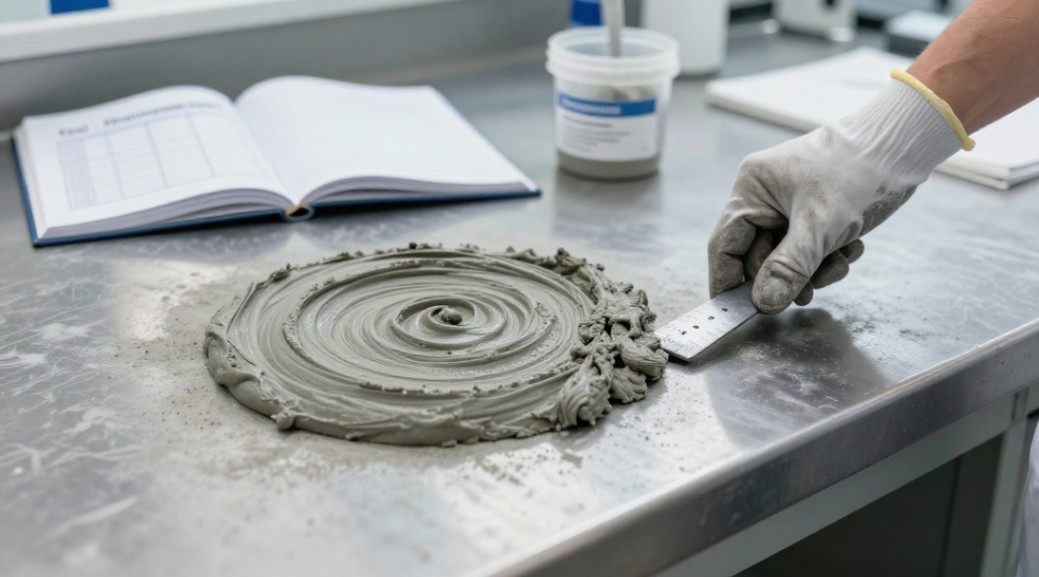
- Conduct Slump & Flow Tests: Prepare a laboratory batch. Measure initial slump. Then, incrementally add superplasticizer (e.g., 0.1% bwc increments) and retest until you hit your target workability. Record the exact dosage.
- Cheque for Stability: Observe the mix visually for signs of segregation or rapid bleeding. A simple column test can help.
- Make Field Adjustments: Account for temperature, mixer drum residue, and haul time. In hot weather, you may split the dose, adding half at the plant and half on-site just before discharge.
For critical projects, verifying performance with tools like a Marsh cone test for paste or a flow table test for mortar provides an extra layer of confidence before ordering 10 cubic meters. This process ensures your superplasticizer dosage for concrete mix is not just a number, but a validated key to performance.
Putting Knowledge Into Practice
Understanding superplasticizer dosage separates adequate concrete from exceptional concrete. It’s the lever that controls efficiency, cost, and final performance. Start with the fundamentals: know your materials, run trials, and respect the chemical limits of your mix. The right dosage doesn’t just make concrete flow-it makes your entire project flow smoother, from placement to long-term durability. For precise formulation, consult with your admixture supplier and always perform site-specific compatibility tests. Your strongest mix depends on it.
Supplier
We are the global leader in lightweight concrete and advanced engineered foam solutions. Known globally for its commitment to research, innovation, and applied expertise, we have been providing engineered foam solutions since the early 2012’s.
We can supply high-quality concrete admixture and foam concrete related products all over the world.
The company has a professional technical department and quality supervision department, a well-equipped laboratory, and equipped with advanced testing equipment and after-sales customer service center.
If you are interested, please feel free and contact us.