Concrete4U | Concrete Admixtures, Tools, and Production Machines

Sulphoaluminate Cement for Quick Setting: The Expert’s Guide to Rapid, Durable Repairs
What is Sulphoaluminate Cement?
Sulphoaluminate cement is a specialized hydraulic binder designed for extremely fast setting and high early strength development. Its core mineralogy centers on ye’elimite (C4A3$̄S$), which reacts rapidly with water and calcium sulfate. This reaction forms ettringite needle-like crystals almost immediately, creating a dense microstructure that locks in strength within hours, not days.
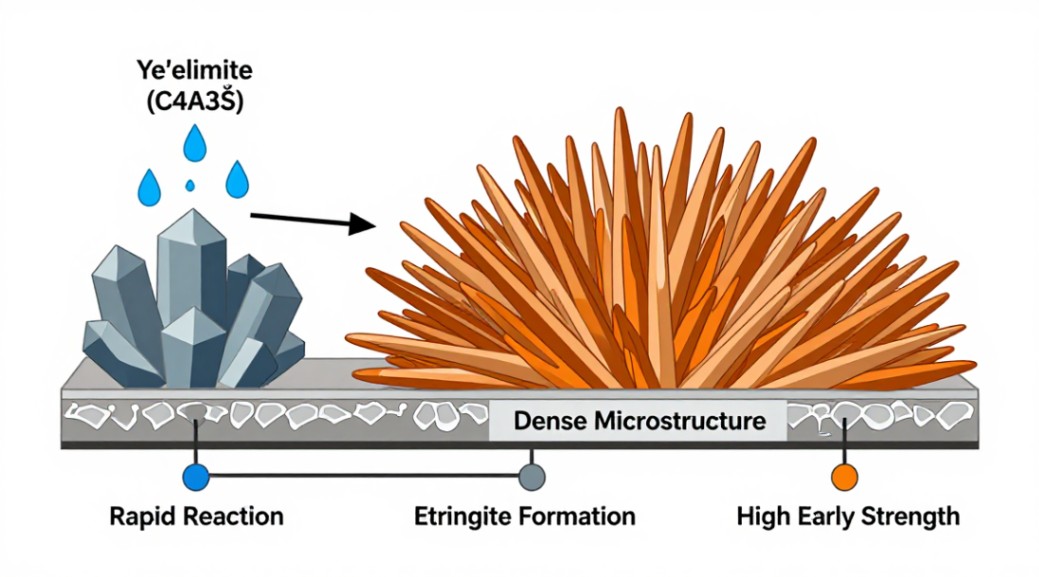
How Sulphoaluminate Cement Achieves Rapid Setting
The speed is a direct function of chemistry. Unlike Portland cement, which relies on slower silicate hydration, sulphoaluminate cement’s primary reaction is exothermic and swift. It consumes mix water quickly to form ettringite and aluminium hydroxide gel. The result? Initial set can occur in 5 to 20 minutes. Final set often follows within 30 to 60 minutes. You achieve structural integrity for foot traffic or light loads in just 1-3 hours.
Key Factors Controlling Set Time
- Water-to-Cement Ratio (w/c): Use a low w/c (0.28-0.32). Higher water content dilutes the reaction, slowing the set and reducing final strength.
- Temperature: Higher ambient temperature accelerates setting. In cold conditions, use warm mixing water.
- Mixer Type & Duration: Use a forced-action or high-shear paddle mixer. Mix for the minimum time required for homogeneity-typically 2-3 minutes. Prolonged mixing can initiate false set.
- Admixtures: Lithium carbonate is a powerful accelerator. Retarders like citric acid or borax can extend working time but must be dosed with precision.
Step-by-Step Application Guide for Quick Setting
Success depends on preparation and speed. Follow these steps precisely.
Step 1: Surface Preparation
This is the most critical phase. The substrate must be sound, clean, and saturated-surface-dry (SSD). Remove all laitance, dust, oil, and loose material by mechanical means like shot blasting or grinding. Pre-wet the surface thoroughly, but remove all standing water before application.
Step 2: Proportioning and Mixing
- Batch Size: Mix only the amount you can place and finish within 10-15 minutes.
- Sequence: Add 80% of the measured water to the mixer. Add the full bag of cement. Mix for 30 seconds. Add remaining water to achieve the desired consistency. Mix for an additional 1-2 minutes until uniform.
- Consistency: Aim for a stiff, mortar-like consistency. It should not be fluid or self-leveling.
Step 3: Placement and Finishing
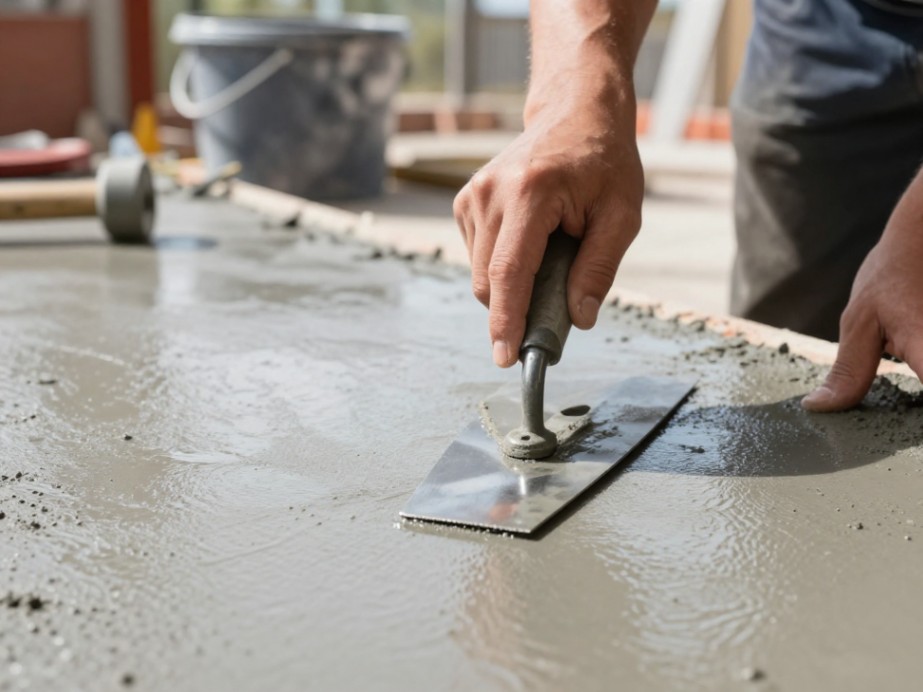
Place the mixed material immediately. Use trowels-not floats. Apply firm pressure to ensure bond and eliminate air pockets. You have a narrow window for finishing. Complete all troweling before the surface loses its glossy sheen, indicating the onset of final set. Do not add water to the surface.
Step 4: Curing
Begin curing the instant finishing is complete. This cement requires moisture to continue strength development and prevent plastic shrinkage cracking. Apply a fine water mist or cover with damp burlap and plastic sheeting for at least 24 hours. Do not use curing compounds that form a membrane, as they can inhibit hydration.
Advantages, Limitations, and Best Use Cases
Primary Advantages
- Extreme Speed: Restore critical infrastructure like airport runways, bridge decks, or factory floors in a single shift.
- Cold Weather Performance: Hydrates and gains strength effectively at temperatures as low as 0°C (32°F).
- Shrinkage Compensation: Slight expansion during early hydration minimizes micro-cracking and ensures excellent bond.
- High Early Strength: Achieves 20-40 MPa compressive strength in 24 hours.
Critical Limitations and Durability Notes
- Carbonation: The high alumina content makes it more susceptible to carbonation, which can reduce pH and affect long-term durability in exposed, wet-dry cyclic environments.
- Sulfate Exposure: While it resests external sulfate attack well, internal sulfate from excessive gypsum can cause delayed expansion.
- Thermal Sensitivity: The high heat of hydration requires careful planning for mass pours to avoid thermal cracking.
- Cost: It is 3-5 times more expensive than Portland cement. Use it strategically where time is the primary cost driver.
Optimal Applications
This cement excels in specific, time-sensitive scenarios:
- Emergency repairs to roads, pipelines, and structural elements.
- Anchoring bolts and machinery where early load-bearing is required.
- Precast concrete elements needing fast formwork turnaround.
- Vertical and overhead repairs where thick, non-sag material is needed.
- Grouting and leveling under tight deadlines.
Making the Decision: Sulphoaluminate vs. Other Options
Do not use it as a direct substitute for ordinary concrete. Compare it against alternatives:
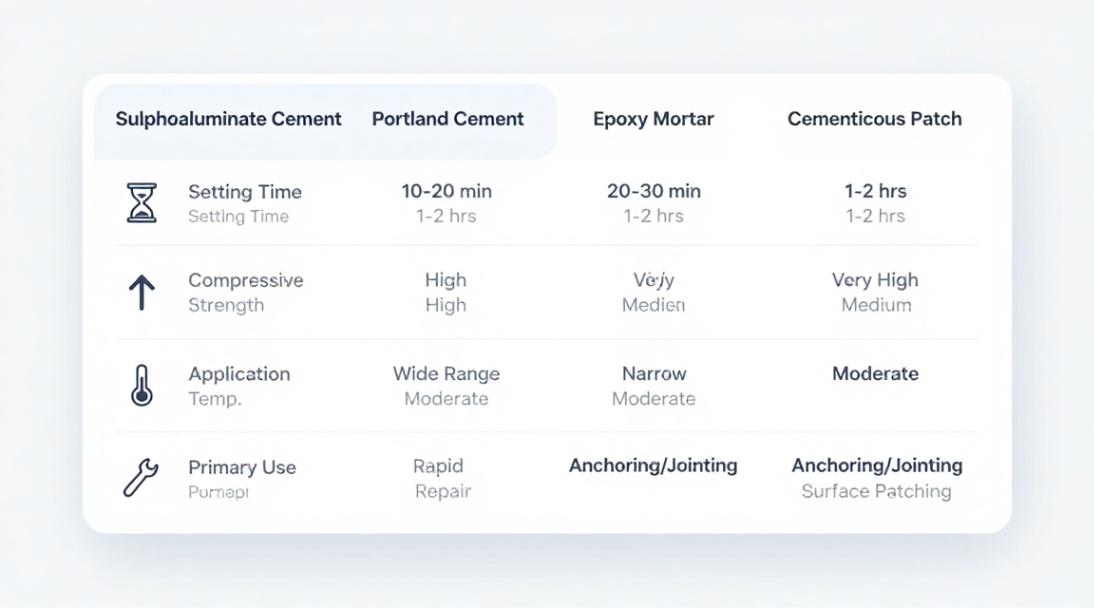
- vs. Portland Cement with Accelerators: Sulphoaluminate provides faster ultimate set and higher very-early strength (1-6 hours). Portland/accelerator mixes may set quickly but gain strength more slowly.
- vs. Magnesium Phosphate Cements: Magnesium phosphates set even faster and are superior for ultra-cold conditions (below -10°C) but are often more expensive and have lower long-term strength.
- vs. Rapid-Set Patch Materials: Many proprietary patches use sulphoaluminate cement as a base. A pure cement gives you control over mix design and aggregate selection for structural repairs.
The choice is clear. Use sulphoaluminate cement when downtime costs exceed material costs, and you need guaranteed, predictable rapid hardening. Master its mixing and placement rhythm, and you control the clock.
Supplier
We are the global leader in lightweight concrete and advanced engineered foam solutions. Known globally for its commitment to research, innovation, and applied expertise, we have been providing engineered foam solutions since the early 2012’s.
We can supply high-quality concrete admixture and foam concrete related products all over the world.
The company has a professional technical department and quality supervision department, a well-equipped laboratory, and equipped with advanced testing equipment and after-sales customer service center.
If you are interested, please feel free and contact us.