Concrete4U | Concrete Admixtures, Tools, and Production Machines

Stop Guessing: The Smart Engineer’s Guide to Selecting the Right Concrete Foaming Agent
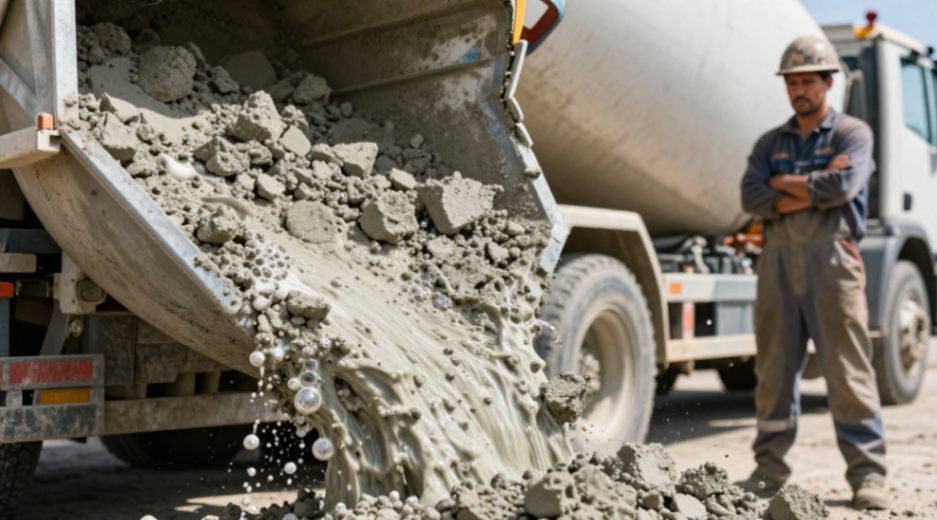
Have you ever watched a batch of lightweight concrete collapse in the truck chute? Or spent an entire day fighting a foam generator that refuses to produce consistent bubbles? You are not alone. I have spent two decades in this industry, and I have seen far too many promising projects derailed by a single mistake: choosing the wrong Concrete Foaming Agent.
The secret to high-performance foamed concrete isn’t magic. It is chemistry, controlled by a logical decision tree. This guide walks you through that tree. We look at why agents behave differently, how to match them to your specific goal, and what trends are reshaping the market. By the end, you will know exactly what to specify for your next project.
What is a Concrete Foaming Agent? (The Simple Chemistry)
Concrete Foaming Agent is a surfactant concentrate. Think of it as a soap, but designed for the harsh alkaline environment of cement. Its job is to reduce the surface tension of water. This allows it to trap air into millions of tiny, stable bubbles when mixed with air or injected through a Foam Generator.
Here is the critical distinction: these agents do not create gas through chemical reactions. They are physical foamers. You mix the concentrate with water (typically 1:20 to 1:50 ratio), generate the foam, and then blend that foam into a cement paste or mortar. The resulting material is Foamed Concrete, also known as lightweight concrete.
Why Bubble Stability is Your Real Problem
Your success hinges on one thing: foam stability. If the bubbles pop or coalesce (merge into bigger, weaker bubbles) before the cement sets, you get shrinkage, strength loss, and segregation.
A stable bubble is one that resists drainage (water leaving the film) and rupture. This stability depends on three factors:
- Film Strength: The molecular structure of the surfactant must create a tough, elastic film.
- Drainage Resistance: The viscosity of the liquid film must slow down water loss.
- Chemical Resistance: The film must survive the high pH and calcium ions from cement hydration.
If you see large, irregular bubbles in your hardened concrete, your Concrete Foaming Agent failed the stability test.
Synthetic vs. Protein-Based: The Logic-Driven Comparison
Choosing between these two families is the first major decision. Each excels in a different environment. Do not let sales hype guide you. Let the data do it.
Here is a direct comparison based on two decades of field data:
| Property | Synthetic Agents | Protein-Based Agents |
|---|---|---|
| Primary Composition | Sodium lauryl sulfate, Alpha-olefin sulfonates | Hydrolyzed animal proteins (keratin, collagen) |
| Foam Stability (Time) | Good for 30-60 minutes. Requires fast placement. | Excellent for 2-4 hours. Tolerates longer transport. |
| Bubble Size | Fine, uniform (0.3 – 1.0 mm). Excellent for insulation. | Coarser, more varied (0.5 – 2.5 mm). Better for structural fill. |
| Water Demand | Higher water demand in base mix. | Lower water demand. Better for high-density mixes. |
| Cement Compatibility | Works with most Special Cement and OPC. | May interfere with some Superplasticizer admixtures. |
| Cost Efficiency | Lower cost per cubic meter of foam. | Higher cost, but lower dosage rates can balance it. |
My Rule of Thumb: For precast blocks and panels where you need excellent thermal performance, go synthetic. For high-volume structural fills or trench backfills that must stay stable for 90 minutes, choose protein-based.
Key Applications: Where Each Type Wins
Your job site conditions dictate the choice. Do not be rigid. Adapt.
Application 1: Lightweight Fill & Geotechnical Backfill
This is the large-volume game. Density targets are usually 400 – 1000 kg/m³. You need low strength (0.5 – 2.0 MPa) but excellent flowability.
Protein-based agents dominate here. They produce coarser bubbles that collapse less under their own weight. They tolerate longer pumping distances. If you are filling an abandoned tunnel or a bridge abutment, this is your safe bet.
Application 2: Insulating Concrete Floors & Roofs
Here, thermal conductivity is king. Density must be low (300 – 600 kg/m³), and bubble uniformity is critical. Air voids must be isolated, not interconnected.
Synthetic agents win. They create the finest, most uniform bubble structure. This provides the best light weight concrete insulation values. Pair this with a compatible Concrete Defoamer for your molds to ensure a clean surface finish.
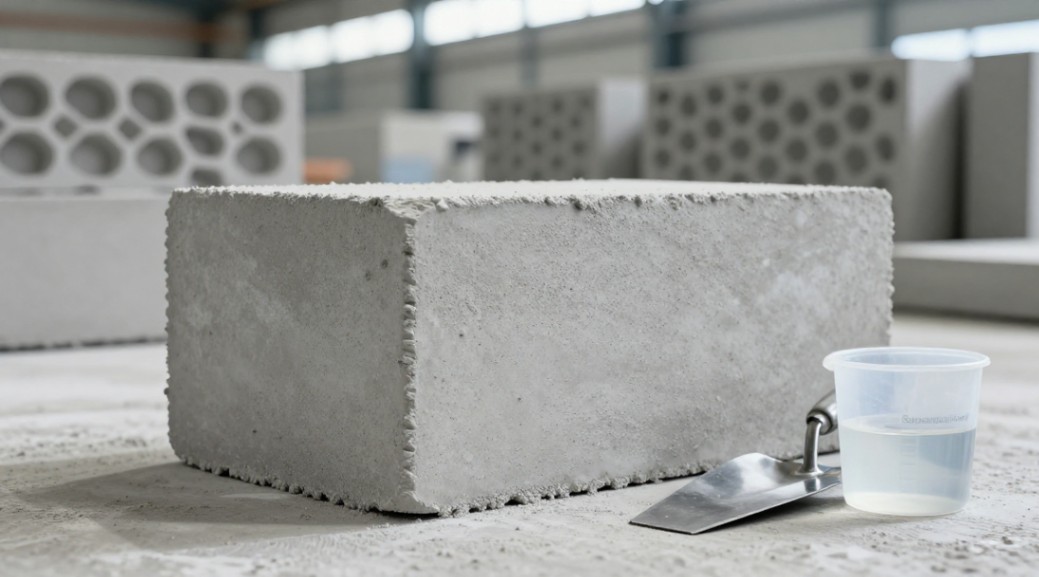
Application 3: Precast Blocks & Panels
This is a hybrid environment. You need fast set times for demolding but also stable foam for storage. Many modern precasters use a blend: a synthetic base with a small addition of protein stabilizer.
You must control your water-cement ratio tightly. Use a Concrete Water Reducer (superplasticizer) to keep water low. If your mix is too wet, the foam will disappear into the water.
Critical Performance Factors: The Must-Use Checklist
Before you order a single drum, verify these five factors in your lab or from seasoned supplier specifications.
- Dilution Ratio Precision: Do not guess 1:30. Measure by volume or weight. A variance of 10% in your dilution ratio changes your final density by 50 kg/m³.
- Foam Generator Calibration: Your machine must produce foam at a consistent density (typically 50-80 g/L). Calibrate it daily. A dirty generator is the #1 reason for field failures.
- Base Mix Compatibility: Test your agent with your specific cement, Fiber (if used), and Nano-modifier. Some fibers kill foam. Some Early Strength Agent chemistries do too.
- Bubble Size Distribution: Use a microscope or a simple scale test. Take a known volume of foam, weigh it, and look for uniformity. Bubbles over 3 mm are structural weaknesses.
- Settling / Shrinkage Time: Fill a measuring cylinder with fresh foamed concrete. Measure the height immediately and after 60 minutes. A drop of more than 5% means your Concrete Foaming Agent is too weak for your cycle.
Avoid These Common Lightweight Concrete Mistakes
I see three recurring errors on jobsites. Fix these, and your success rate jumps significantly.
Mistake 1: Over-Mixing the Foamed Concrete. Do not mix the foam into the cement paste for more than 2-3 minutes. Long mixing pops the bubbles. Use a gentle folding action, not a high-shear paddle.
Mistake 2: Ignoring the Water Profile. The foam adds water to your mix. It is mostly water. Calculate your total water (mix water + foam water) and keep it at a minimum. Dense foam equals strong concrete.
Mistake 3: Using the Wrong Admixtures. Adding a standard Concrete Water Reducer meant for dense concrete can destabilize your foam. You need a superplasticizer specifically formulated for lightweight mixes. Always conduct a trial.
The Trend You Must Know: The Shift to Hybrid and Modified Agents
The industry is moving beyond simple synthetic vs. protein. Smart formulators are creating hybrid Concrete Foaming Agent blends. They combine the fine bubble structure of synthetics with the stability of proteins. We also see manufacturers adding Hydroxypropyl Methyl Cellulose (HPMC) or Hydroxyethyl Cellulose (HEC) to the agent itself. These cellulose ethers thicken the bubble film, dramatically improving stability against drainage.
Another emerging trend is the use of Nano-modifier particles in the foam. Nano-silica or nano-alumina particles sit inside the bubble film. They act as physical reinforcements, preventing coalescence. This yields concrete that can reach 5-8 MPa at densities as low as 800 kg/m³. That is a structural lightweight concrete.
Finally, look at Sodium Silicate and Potassium Silicate as foam stabilizers. These chemicals speed up the initial set of the cement paste. When added to a Foam Generator system, they accelerate the setting around each bubble. The concrete ‘locks’ the foam in place before it can drain. This technique is revolutionizing fast-cast precast operations.
Environmental & Safety Considerations: Handle with Respect
Foaming agents are surfactants. They are not typically toxic, but they are irritants. Always wear gloves and safety glasses. High concentrations can cause skin irritation.
From an environmental perspective, protein-based agents are biodegradable. Synthetic agents can be, but many degrade slowly. Check your local regulations for discharge of wash water. Never let high-foam concentrate enter a storm drain. It will cause a spectacular, and very illegal, foam blanket.
The trend is toward bio-based, low-VOC agents. Many suppliers now offer products derived from corn, coconut, or soy. These perform equally well with a smaller carbon footprint. Ask your supplier for their eco-profile.
Your Next Move: Stop Researching. Start Testing.
You now have the logical framework. You know that synthetic agents win for insulation jobs, protein-based agents dominate for backfill stability, and hybrid/modified agents are the future for high-strength lightweight concrete. You know to check foam stability, water balance, and generator calibration.
The question is not if you can make foamed concrete work. It is which Concrete Foaming Agent is the exact fit for your chemistry. The only way to know for sure is with a field trial.
I recommend you contact TRUNNANO today. Their technical team can provide you with optimized formulations for your specific application. They offer the full spectrum of solutions: Synthetic, Protein-based, and Modified agents (including those blended with Redispersible Polymer Powder and Cellulose Ethers). Do not waste another batch.
Request a sample kit. Run a head-to-head test. See the difference stable foam makes. Your next project deserves a concrete that does not crack, settle, or disappoint. Make the call now.
Supplier
We are the global leader in lightweight concrete and advanced engineered foam solutions. Known globally for its commitment to research, innovation, and applied expertise, we have been providing engineered foam solutions since the early 2012’s.
We can supply high-quality concrete admixture and foam concrete related products all over the world.
The company has a professional technical department and quality supervision department, a well-equipped laboratory, and equipped with advanced testing equipment and after-sales customer service center.
If you are interested, please feel free and contact us.