Concrete4U | Concrete Admixtures, Tools, and Production Machines

The Hidden Pressure Paradox: Why the Best Foam Generating Machine with Foam Pump Isn’t About Maximum PSI
The Standard Industry Fallacy
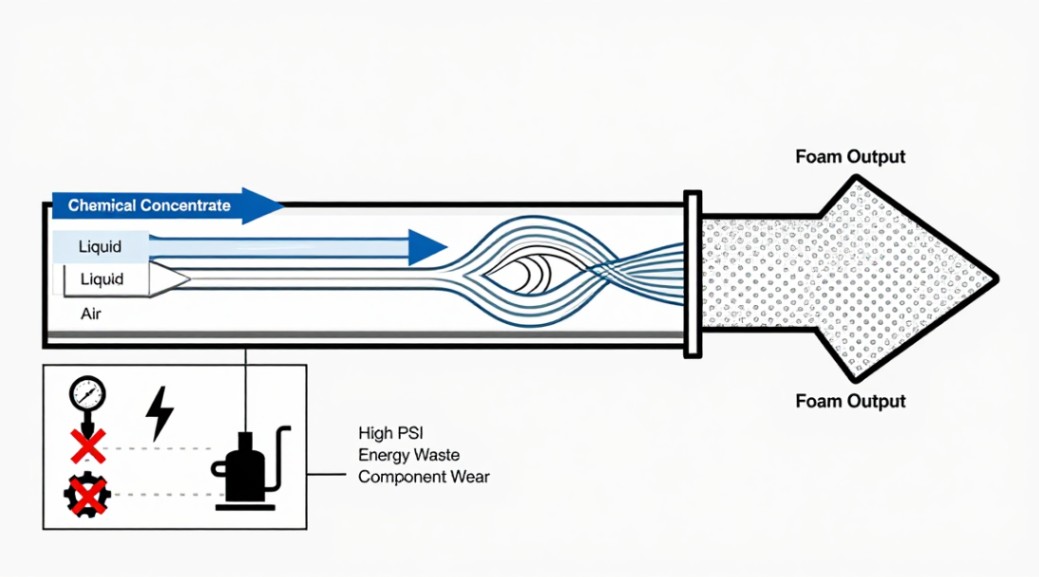
Conventional wisdom in selecting a foam generating machine with foam pump fixates on maximum pressure. A 2023 industry survey by the Fluid Application Technology Council found that over 40% of buyers specify pump pressure 25-50% higher than their actual process requires. This leads to excessive energy consumption, accelerated component wear, and surprisingly, inferior foam quality. The real engineering challenge isn’t generating force; it’s achieving precise, consistent mixing of air, liquid, and chemical concentrate. The pump is the heart, but the mixing chamber is the brain.
Deconstructing the System: More Than a Pump and a Pipe
A true foam generating machine with foam pump is an integrated system of controlled energy transfer. The pump, typically a positive displacement or centrifugal type, has one job: deliver a precise flow of liquid solution at a stable pressure. The real magic happens downstream. Here, the pressurized liquid is forced through a venturi or specialized orifice into an expansion chamber. This action creates a vacuum that draws in ambient air. The turbulence within the chamber shears the air into microscopic bubbles, mixing it uniformly with the surfactant-rich solution. The pump doesn’t make foam. It creates the conditions for foam to form.
The Critical Interplay: Pressure, Flow, and Ratio
Three variables dictate system performance. Pump pressure determines the initial energy for bubble formation and projection distance. Flow rate, measured in gallons or liters per minute (GPM/LPM), dictates coverage speed and foam volume. The third, often overlooked, is the air-to-liquid ratio controlled by the venturi and check valves. A high-pressure pump with a poorly designed mixing chamber will produce a wet, sloppy foam that drains quickly. A lower-pressure pump paired with an optimized chamber can generate a drier, clingier, more stable foam that maximizes dwell time and chemical efficiency. Engineers prioritize matching the pump’s performance curve to the backpressure characteristics of the foam generation head.
Application Dictates Architecture
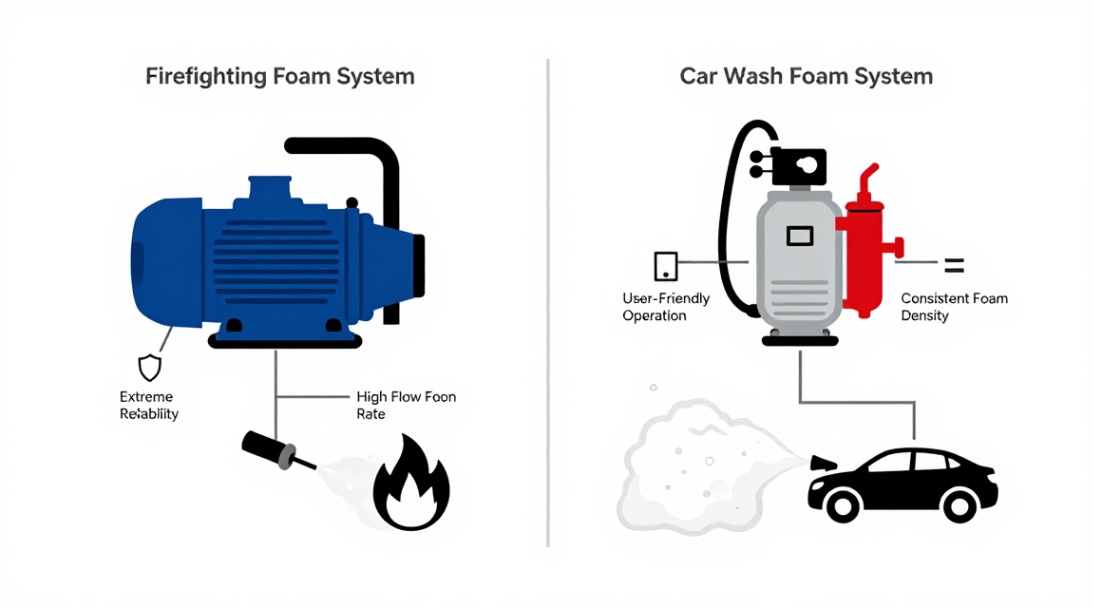
The ideal machine configuration shifts dramatically with the use case. Firefighting foam pumps demand extreme reliability, high flow rates for rapid expansion, and compatibility with alcohol-resistant concentrates. They often use industrial-grade piston or rotary gear pumps. Car wash systems prioritize user-friendly operation, consistent foam density for customer appeal, and resistance to frequent on-off cycling. They favor durable diaphragm or centrifugal pumps integrated with proportional chemical injectors. Industrial cleaning and agricultural disinfection units balance chemical injection accuracy with robust construction for harsh environments. A foam generating machine for a touchless car wash and a foam generating machine for soil stabilization in agriculture share a principle but require entirely different pump metallurgy and sealing technologies.
Selecting for Value, Not Just Specifications
Beyond basic pressure and flow, material compatibility defines longevity. Pump housings and seals must resist the specific chemicals used-alkaline cleaners, acidic sanitizers, or hydrocarbon-based foam agents. Stainless steel components offer broad resistance but increase cost. Engineering plastics like PTFE or PVDF provide excellent chemical resistance for specific duty cycles. Evaluate the total cost of operation. A cheaper pump with lower efficiency will consume more electricity over its lifespan than a premium, optimized model. Consult system diagrams. Look for units with accessible strainers, easy-clean mixing chambers, and standard pump motor interfaces to simplify future maintenance. The goal is sustained, consistent performance, not peak output on day one.
The Future is Precise and Connected
The next evolution for the foam generating machine with foam pump moves beyond mechanical consistency to digital control. Leading manufacturers now integrate sensors for real-time density monitoring and IoT-enabled pumps that adjust flow based on water pressure fluctuations. This allows for adaptive foam quality, guaranteeing identical results from the first application to the last. The data from these systems reveals optimization opportunities previously invisible, such as pinpointing exact chemical dilution ratios that eliminate waste. The technology is converging on a single point: absolute predictability of the foam blanket, every single time. This transforms foam from a generic application into a measurable, repeatable process variable.
Mastering foam generation requires understanding this pressure paradox. The most effective system isn’t the loudest or the most powerful. It’s the one where the pump, the mixing chamber, and the chemical delivery work in seamless, calibrated harmony. Your process doesn’t need brute force. It needs precise, reliable, and intelligent energy conversion. That is the mark of a truly engineered solution.
Supplier
We are the global leader in lightweight concrete and advanced engineered foam solutions. Known globally for its commitment to research, innovation, and applied expertise, we have been providing engineered foam solutions since the early 2012’s.
We can supply high-quality concrete admixture and foam concrete related products all over the world.
The company has a professional technical department and quality supervision department, a well-equipped laboratory, and equipped with advanced testing equipment and after-sales customer service center.
If you are interested, please feel free and contact us.