Concrete4U | Concrete Admixtures, Tools, and Production Machines

High Efficiency Defoamer for Mortar: Stop Weakening Your Mix Before You Pour
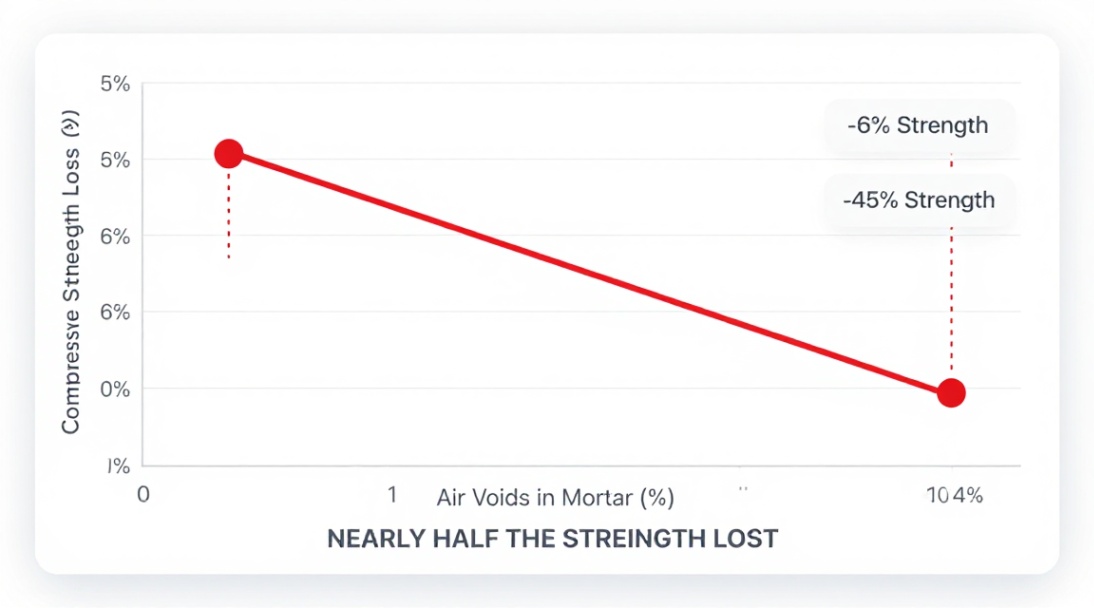
A sobering study from a leading materials institute revealed that for every 1% increase in unwanted air in your mortar, you can lose between 5% and 8% of its compressive strength. Think about that. An air void level of just 6%-a common sight in poorly controlled mixes-could be quietly robbing you of nearly half the strength you designed for. This isn’t a minor detail; it’s a structural liability hiding in plain sight. That’s the silent, costly problem a true high efficiency defoamer for mortar applications is engineered to solve.
The Crucial Role of a High Efficiency Defoamer in Mortar
Let’s be clear: a defoamer isn’t just an “additive.” It’s a precision tool for density control. Its core job is to eliminate entrapped air bubbles-the large, irregular voids whipped in during mixing and handling-without destroying the beneficial, microscopic entrained air that improves freeze-thaw resistance. A high efficiency defoamer for mortar does this with surgical precision: it must act fast (rapid knockdown) and keep working (persistent foam control) to prevent air re-entrainment during pumping and placing. Getting this wrong doesn’t just affect strength; it creates surface blemishes, ruins coating adhesion, and leads to inconsistent batch performance.
The Three Biggest Mistakes You’re Probably Making
Over two decades, I’ve seen the same errors sink projects. Here are the pitfalls you must avoid.
1. Treating All Defoamers as Equal
This is the cardinal sin. Pouring a generic oil-based defoamer into a complex modern mix with polycarboxylate superplasticizers is a recipe for failure. The defoamer can become incompatible, leading to separation, spotting, or a complete loss of effectiveness. You must match the defoamer’s chemistry to your mortar’s specific formula.
2. Ignoring the Incorporation Method
Dumping your defoamer directly onto dry cement or into a nearly finished mix is practically useless. For a high efficiency defoamer to work, it needs to disperse uniformly. The optimal method is adding it to the mixing water or during the sand/cement blending phase. This ensures it’s present to act the moment foam starts to form.
3. Guessing the Dosage
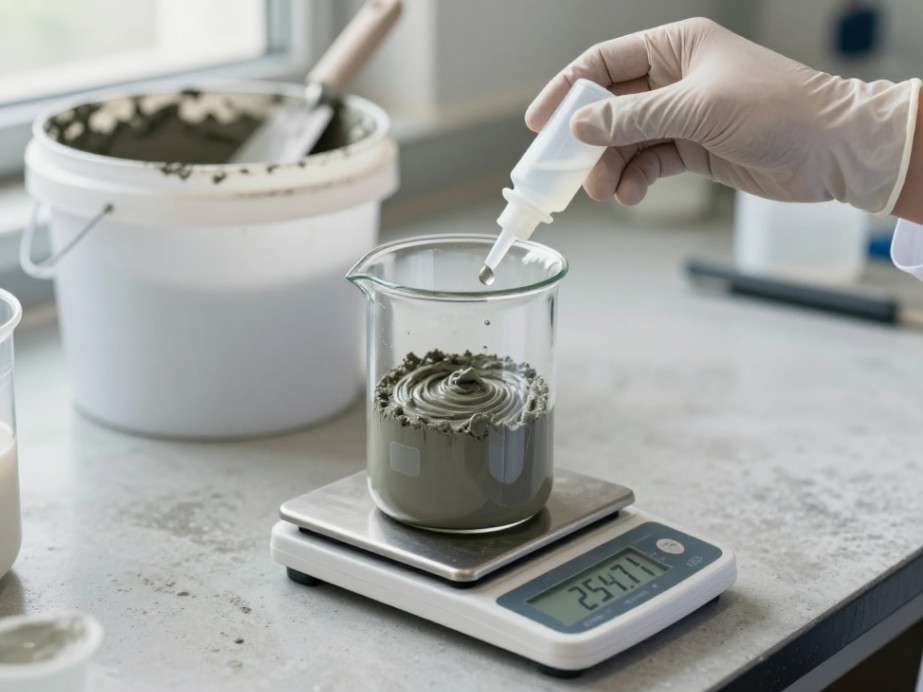
More is not better. An overdose can cause severe side effects: surface pitting, adhesion failure with tiles or coatings, and even reduced workability. Always, always conduct small-scale trial mixes. Start at the manufacturer’s recommended dose-typically 0.1% to 0.5% by weight of cement-and adjust based on your specific materials and mixing energy.
Choosing the Right Tool: A Comparative Guide
Selecting a defoamer is about balancing performance with compatibility. Use this guide to steer clear of poor choices.
| Defoamer Type | Best For | Key Advantages | Potential Pitfalls (What to Avoid) |
|---|---|---|---|
| Mineral Oil-Based | Basic renders, simple bag mixes. | Cost-effective, good initial knockdown. | Poor long-term stability, can cause staining or weaken air-entrainment. Avoid in finish coats or with sensitive admixtures. |
| Silicone-Based (Modified) | Self-levelling mortars, high-performance mixes, pump applications. | Exceptional efficiency at low dosage, excellent compatibility with complex admixture systems. | Higher cost. Overdosing can severely harm surface wettability. Never use without precise dosing control. |
| Polymer-Based/Synthetic | Mortars requiring extreme durability, low-temperature applications. | High chemical stability, long shelf life, minimal impact on setting time. | Can be slower acting. Ensure it’s designed for the rapid mix cycles of mortar, not concrete. |
Real-World Proof: Why This Matters
Community feedback tells the real story. On professional forums like Reddit’s r/Concrete and industry boards, a recurring theme emerges. One user lamented, “Our decorative stucco finish was covered in pinholes. The fix cost triple the price of the right defoamer.” Another shared, “We solved chronic pumping issues and inconsistent strengths on a high-rise project not by changing the pump, but by switching to a high efficiency silicone defoamer. Our yield stress stabilized immediately.” This isn’t theoretical. It’s field-verified problem-solving.
Your Actionable Path to Better Mortar
Knowledge is only power if you use it. Here is your straightforward checklist.
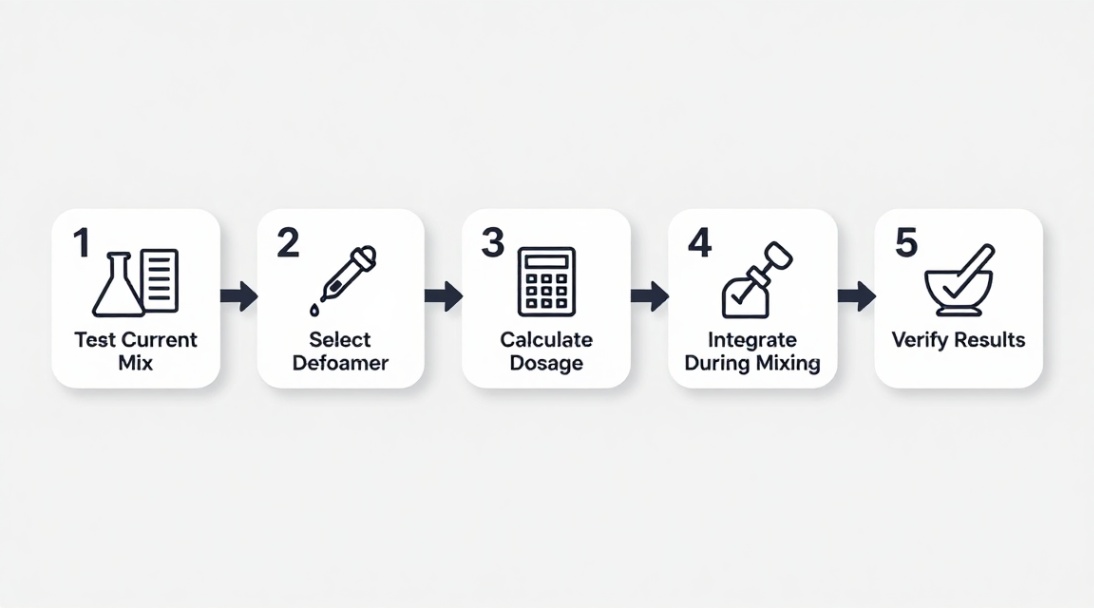
- Test First. Never use a new defoamer on a critical project without lab or field trials. Measure air content, density, and strength.
- Check Compatibility. Blend your proposed defoamer with all other admixtures (plasticizer, retarder) in water overnight. Look for separation or gel formation.
- Optimize Addition. Introduce the defoamer early in the mixing cycle with the bulk of the water for maximum dispersion.
- Monitor Shelf Life. Store defoamers in a cool, sealed container. An expired or separated product will not perform.
The goal is confidence. When you master the use of a true high efficiency defoamer for mortar applications, you move from fighting unpredictable results to commanding consistent, high-quality outcomes. You build strength in, not air. Start with a focused trial on your next mix. The data you collect will be your most trusted guide.
Supplier
We are the global leader in lightweight concrete and advanced engineered foam solutions. Known globally for its commitment to research, innovation, and applied expertise, we have been providing engineered foam solutions since the early 2012’s.
We can supply high-quality concrete admixture and foam concrete related products all over the world.
The company has a professional technical department and quality supervision department, a well-equipped laboratory, and equipped with advanced testing equipment and after-sales customer service center.
If you are interested, please feel free and contact us.