Concrete4U | Concrete Admixtures, Tools, and Production Machines

The Nano-Clay Modifier: Your Guide to Making Materials Last Longer and Work Harder
The Day the Prototype Failed
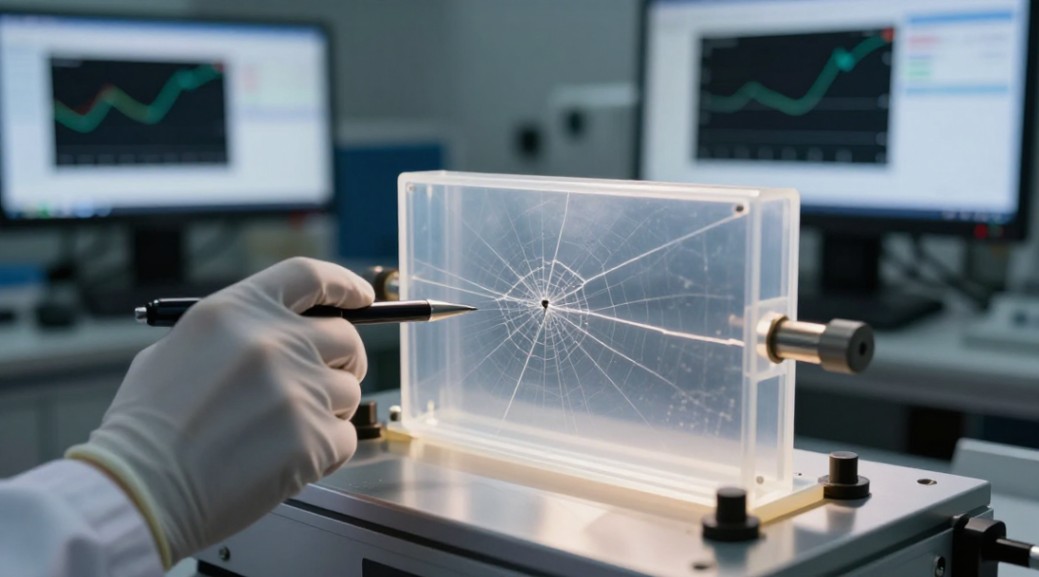
I remember watching a pressure test on a new polymer housing. The design was brilliant, the geometry perfect. But under sustained load, a hairline crack appeared. It grew. It spiderwebbed. The part failed long before its theoretical lifespan. That wasn’t a design failure. It was a material failure. The polymer lacked the internal fortitude to resist stress, creep, and environmental attack. That’s the moment many of us turn to reinforcements. We’ve tried fibers, minerals, all sorts of fillers. But one solution consistently delivers a unique combination of toughness, barrier resistance, and thermal stability without sacrificing processability: the nano-clay modifier for improved durability. Let’s talk about how it works, not in abstract terms, but in the language of the workshop and the lab bench.
What Exactly Is a Nano-Clay Modifier?
Forget complex jargon. Think of nano-clay as trillions of microscopic, plate-like particles of silicate. Each platelet is about one nanometer thick-that’s 80,000 times thinner than a human hair. Their power doesn’t come from their bulk, but from their astonishing surface area and their aspect ratio. When you properly separate and disperse these nano-platelets within a polymer like nylon, polypropylene, or an epoxy, you aren’t just adding filler. You are constructing a nano-scale reinforcement scaffold inside your material. This is the core mechanism of the nano-clay modifier for improved durability. It transforms a homogenous plastic into a sophisticated nano-composite.
A Step-by-Step Guide to Unlocking Durability
Success with nano-clay isn’t automatic. It requires methodical process. Many users on forums like Reddit and specialized polymer communities share a common thread: poor dispersion leads to poor results. Follow these steps to get it right.
Step One: Choose Your Engagement Strategy
You cannot simply dump dry nano-clay powder into your extruder. The platelets naturally stick together in stacks. You must first “intercalate” or “exfoliate” them. This often involves using a compatible surfactant or coupling agent that partially pushes the plates apart (intercalation) or fully separates them (exfoliation). Many suppliers offer pre-treated, organically modified nano-clays that are more polymer-friendly. Your first decision point is selecting the right surface chemistry for your base resin.
Step Two: Master the Mix
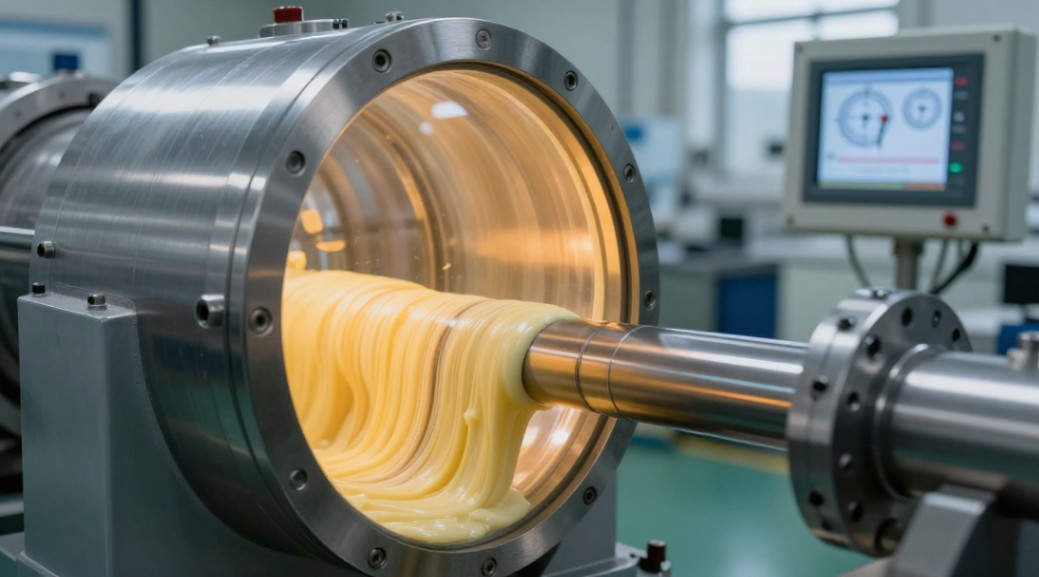
Dispersion is everything. The goal is to distribute those individual nano-platelets uniformly throughout the polymer matrix. High-shear compounding equipment is non-negotiable. Twin-screw extruders are the gold standard here. You need sufficient shear force and thermal energy to break apart the platelet agglomerates. Monitor your melt viscosity and torque. A well-dispersed nano-clay composite will often show a noticeable increase in melt strength, a good initial indicator.
Step Three: Process with Precision
Your new nano-composite will behave differently. It may have higher viscosity. It can nucleate crystallization in semi-crystalline polymers, affecting cooling rates. Adjust your injection molding or extrusion profiles accordingly. The payoff for this attention to detail is a part with fundamentally enhanced properties.
How Nano-Clay Builds Unshakeable Durability
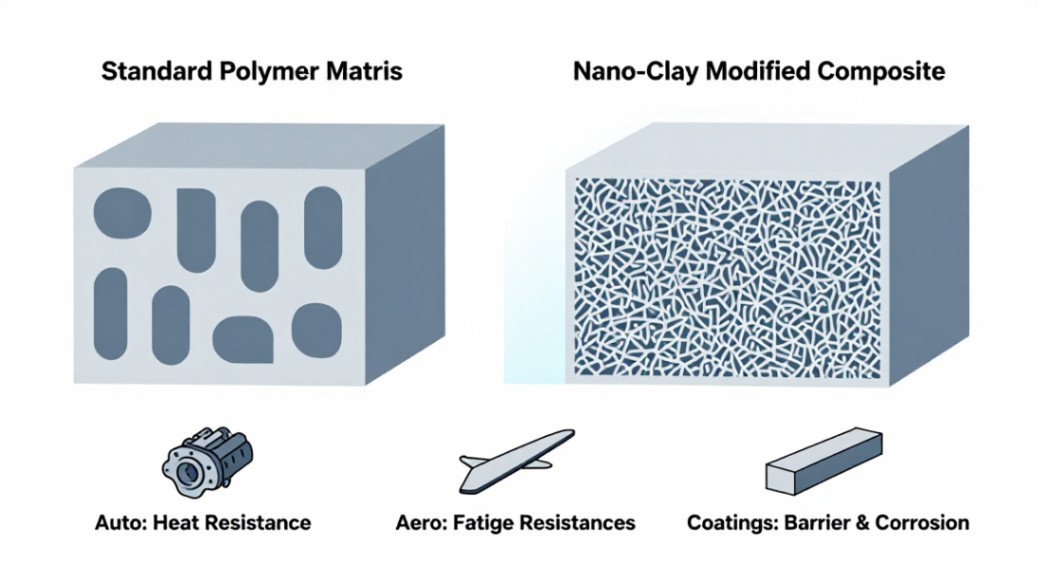
Once properly dispersed, those silicate platelets get to work. They create a tortuous path for any force or molecule trying to penetrate the material. Imagine a maze of dinner plates standing on edge inside your polymer.
- Tensile Strength and Stiffness: The platelets bond with the polymer chains, transferring load efficiently. The result is a higher modulus and improved resistance to deformation under stress.
- Barrier Fortress: Oxygen, moisture, fuel vapors-their diffusion paths become long and winding. This dramatically improves barrier properties, a game-changer for packaging and automotive fuel systems.
- Thermal Armor: The clay platelets act as insulators and mass transport barriers. They improve heat deflection temperature and can significantly slow flame spread, acting as a physical char promoter.
- Surface Hardness: The reinforced matrix better resists abrasion, scratching, and wear. This extends the life of components from automotive interior trim to industrial pipe linings.
Real-World Applications Where It Makes the Difference
This isn’t lab theory. In automotive, nano-clay modified polypropylene parts are lighter, stiffer, and more heat-resistant under the hood. In aerospace, epoxy composites with nano-clay see reduced permeability and improved fatigue resistance. For industrial coatings, the added barrier properties fight corrosion like a champion. I’ve seen packaging films achieve shelf-life extensions of 30% or more. The cost-benefit analysis consistently tilts in favour of nano-clay when long-term performance and material reduction are the goals. It often outperforms conventional fillers at lower loading levels, preserving more of the base polymer’s desirable qualities.
Your Path Forward
Start with a targeted experiment. Identify your weakest property-is it impact toughness, creep resistance, or UV stability? Select a compatible, pre-modified nano-clay grade from a reputable supplier. Partner with a compounder who understands high-shear dispersion. Run a side-by-side comparison with your current material. Test for the specific failure modes you encounter in the field. The data you gather will tell a clear story. For a deeper dive into formulation specifics and case studies, many manufacturers offer detailed technical bulletins. The journey from a failing prototype to a superior, durable product often begins with a single, well-dispersed modifier. Your materials can work harder. They can last longer. It’s time to build that capability in.
Supplier
We are the global leader in lightweight concrete and advanced engineered foam solutions. Known globally for its commitment to research, innovation, and applied expertise, we have been providing engineered foam solutions since the early 2012’s.
We can supply high-quality concrete admixture and foam concrete related products all over the world.
The company has a professional technical department and quality supervision department, a well-equipped laboratory, and equipped with advanced testing equipment and after-sales customer service center.
If you are interested, please feel free and contact us.