Concrete-mesa | Concrete Admixtures, Tools, and Production Machines

The Contractor’s Dilemma: Solve Pumpability or Sacrifice Strength?
A Shocking Reality: Up to 30% of Pumped Concrete’s Design Strength Can Vanish into Thin Air
Air is concrete‘s silent enemy during pumping. The intense shearing and pressure of the pump introduce massive amounts of unwanted air. This air doesn’t just cause blockages. It remains trapped, creating weak, porous pathways that dramatically reduce final compressive strength and surface durability. Ignoring this is not an option.
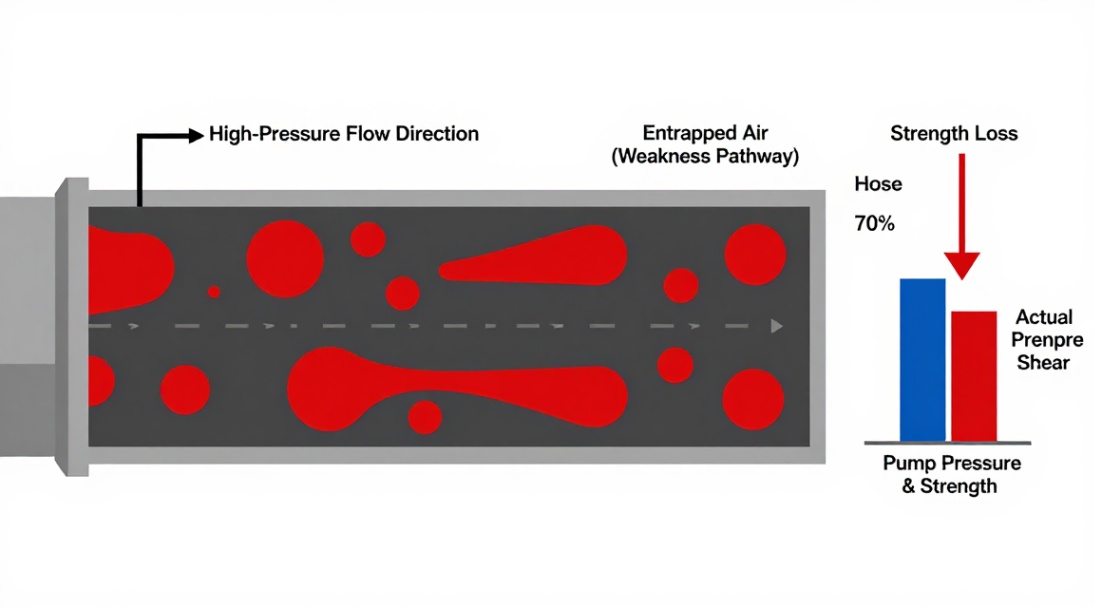
The Core Challenge: Pumping vs. Structural Integrity
Pumping concrete is a violent process. The piston action of a boom pump shears the mix, folding in air. Pressure then compresses these bubbles, but upon exiting the hose, they expand again. This creates a frothy, unstable mix with two critical defects:
- Reduced Pumpability: Excessive air acts like a compressible sponge, robbing the mix of the hydraulic pressure needed to move it efficiently. This leads to erratic flow, pressure spikes, and potential blockages.
- Compromised Strength & Durability: Each trapped air void is a point of failure. Concrete strength is inversely proportional to air content. For every 1% increase in total air, you can expect a 4-6% loss in compressive strength.
Defoamer Chemistry: Your Strategic Tool Comparison
Not all defoamers are equal. Selecting the right one requires understanding their mechanism and trade-offs. Here is a direct comparison of the two primary types used in pumping mixes.
| Type | Mechanism & Pros | Cons & Risks | Best Application |
|---|---|---|---|
| Oil-Based (Mineral Oil, Vegetable Oils) | Spreads rapidly, ruptures bubble films via incompatibility. Excellent at knocking down large, unstable air quickly. Cost-effective. | Can weaken concrete surface, cause discoloration. Effects can be temporary; air may re-entrain. Potential compatibility issues with some mix designs. | Emergency use for severe air entrainment in standard mixes where surface aesthetics are secondary. |
| Polyether-based / Special Polymer | Targets micro-air bubbles stabilized by cement fines and admixtures. Modifies bubble surface tension for permanent collapse. Compatible with superplasticizers. | Higher cost per liter. Precise dosage is critical. Under-dosing is ineffective; over-dosing can cause severe segregation. | The professional choice for high-performance, pumped mixes requiring guaranteed strength, durability, and finish quality. |
The Decision Checklist: Selecting Your Concrete Defoamer for Pumping
Use this objective list to evaluate your needs. Answering these questions eliminates guesswork.
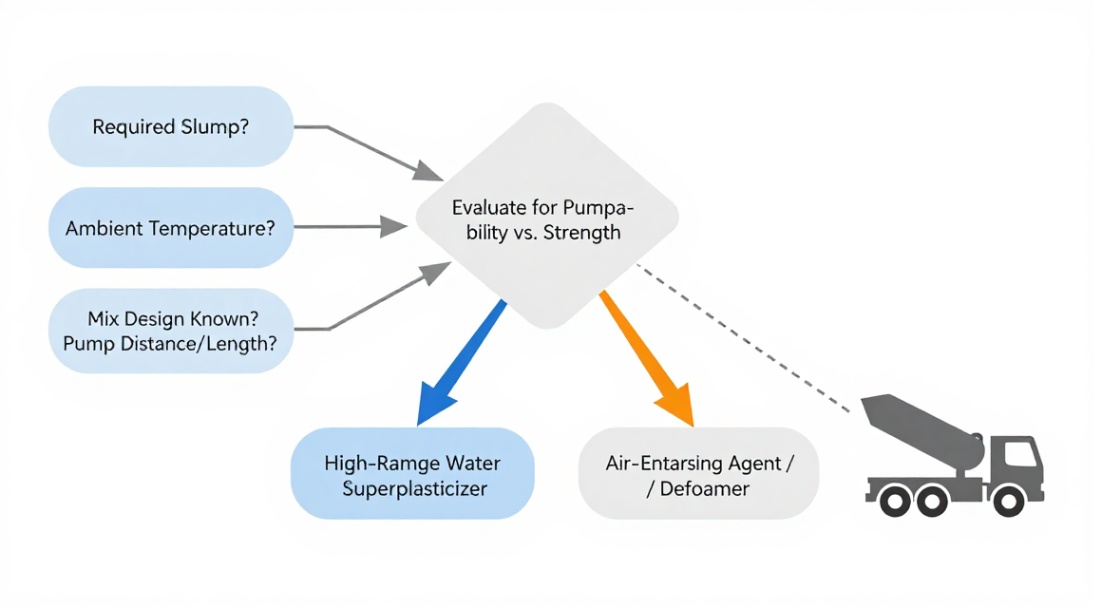
- Primary Objective: Is your goal to prevent a pump blockage today, or to ensure the 28-day strength of a structural column? For blockage prevention, an oil-based defoamer may suffice. For strength assurance, you need a polymer-based defoamer.
- Mix Design: Does your mix contain a high-range water reducer (superplasticizer)? These admixtures are powerful air-entrainers. You must use a compatible, polymer-based defoamer designed to work with them.
- Dosage Control: Can you accurately dose between 0.05% and 0.2% by weight of cement? Polymer defoamers require this precision. If you cannot measure accurately, do not use them.
- Mixing Procedure: Can you add the defoamer during the final 1-2 minutes of mixing? Late addition is critical for effectiveness. Adding it with the mix water renders it useless.
- Testing Protocol: Will you test air content with a pressure metre before and during pumping? If not, you are operating blind. Data is non-negotiable.
Operational Protocol: The 5-Step Method for Guaranteed Results
Success depends on procedure. Follow these steps precisely.
- Baseline Air Test: Measure the air content of your mixed concrete at the plant using a Type A pressure meter (ASTM C231). Record this value. Target for pumped concrete is typically 1.5-3.0%, depending on aggregate.
- Defoamer Selection & Dose: Based on the checklist above, select your defoamer. For polymer types, start at 0.1% by weight of cementitious material. Prepare the exact dose in a separate container.
- Timed Addition: Add the defoamer to the mixing drum during the final 60-90 seconds of mixing. Ensure it is poured evenly, not in one spot.
- Post-Addition Mix & Test: Mix for a full additional 2 minutes. Take a second air content measurement. You should see a 20-40% reduction from your baseline.
- Pump-Monitor-Verify: During pumping, observe the mix at the outlet. It should be cohesive and glossy, not frothy. For critical projects, test air content from the pump line outlet once per hour.
The Verdict: Why Polymer Defoamers Are the Only Logical Choice for Professionals
Oil-based defoamers are a temporary fix. They address a symptom, not the disease. For any project where structural integrity, lifecycle cost, or specification compliance matters, the logic is clear. Polymer-based concrete defoamers for pumping mixes provide a permanent, engineered solution. They protect your pump, your schedule, and most importantly, your concrete’s strength. The data does not lie.
Stop risking blockages and weak concrete. Your next step is not a choice, but a necessity. Contact a leading admixture supplier today and request a trial of their high-performance, polymer-based pumping defoamer. Provide them with your mix design and pump specifications. Insist on a site trial with before-and-after air testing. The results will make your decision final.
Supplier
We are the global leader in lightweight concrete and advanced engineered foam solutions. Known globally for its commitment to research, innovation, and applied expertise, we have been providing engineered foam solutions since the early 2012’s.
We can supply high-quality concrete admixture and foam concrete related products all over the world.
The company has a professional technical department and quality supervision department, a well-equipped laboratory, and equipped with advanced testing equipment and after-sales customer service center.
If you are interested, please feel free and contact us.